Pokies Parlour Casino Australia: Scale, Rules and Bonuses
 Available in AU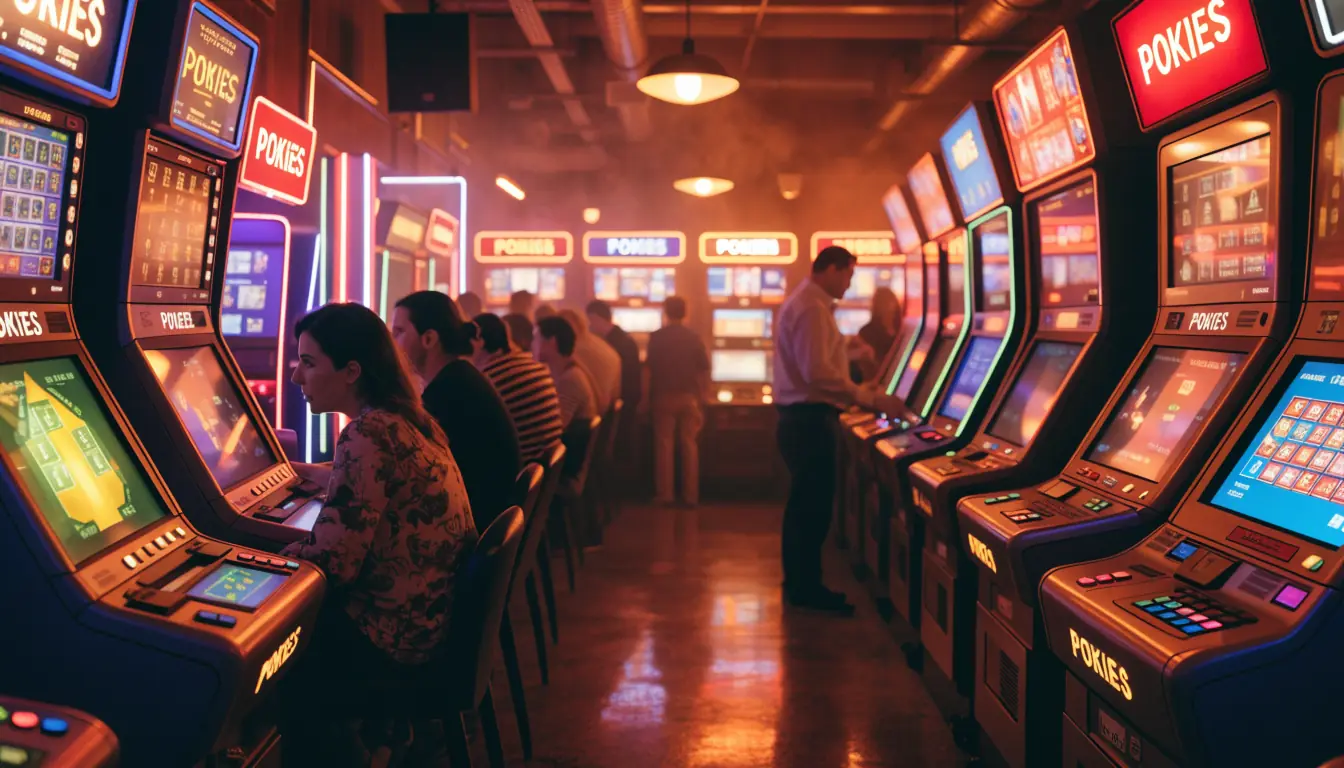
- Understanding Pokies in Australian Parlours – Scale, Impact and Regulation
- How Bonus, Deposit and Sign‑Up Offers Work at Pokies Parlours
- Parlour‑Style Casinos – Pokies Integrated into Club and Pub Settings
- VIP Parlour Casinos – What High‑Rollers Should Expect
- Decoding Pokie Parlour Bonus Offers – Terms, Wagering and Risks
Understanding Pokies in Australian Parlours – Scale, Impact and Regulation
When the term pokies parlour is used in the Australian context, it evokes a very specific image: rows of glowing screens, the persistent ambient noise of simulated coin drops, and an atmosphere engineered to maximise time-on-device. For anyone looking into a pokies parlour casino australia 2026, the conversation must begin with an honest assessment of the physical and regulatory infrastructure that governs these machines. Electronic gaming machines, known universally in Australia as pokies, are operated in all Australian states, the Australian Capital Territory and the Northern Territory. They form the backbone of the local gambling industry, embedded deeply into the social fabric of pubs, clubs, and dedicated casino floors. The scale of this network is vast, and the financial mechanics that drive it are precisely engineered to extract sustained revenue from the participating public. The regulatory environment that oversees this extraction is a complex web of state-level legislation, federal oversight, and increasingly stringent anti-money laundering protocols, all of which shape the reality of how a parlour operates today.
Choosing where to play pokies online in Australia comes down to licensing, how generous the welcome offer really is, and how fast you can get your money out — the snapshot below covers exactly that for each entry on this list.
License: Curacao OGL/2024/1335/0780 · Bonus: up to A$1,000 + 150 free spins, wager-free · Min. deposit: EUR 20 Licensed under a Curacao OGL number, this operator stands out for a wager-free welcome package worth up to A$1,000 plus 150 free spins, with a modest EUR 20 minimum deposit to get started.
License: Curacao · Bonus: 100% up to A$500 + 200 free spins, 10x wagering · Payout speed: crypto 30-60 minutes, fiat 1-5 days · Min. deposit: A$10 Curacao-licensed with a 100% match up to A$500 and 200 free spins at 10x wagering, this site is notable for quick crypto payouts within the hour and a low A$10 minimum deposit.
License: Curacao eGaming (Dama N.V.) · Bonus: up to A$10,000 + 180 free spins, 40x wagering Operating under a Curacao eGaming licence via Dama N.V., this casino offers a large welcome bonus of up to A$10,000 with 180 free spins, though the 40x wagering requirement is on the steeper side.
License: Curacao · Bonus: up to A$10,000 multi-stage + 500 free spins · Min. deposit: A$20 (POLi) Licensed in Curacao, this operator features a substantial multi-stage bonus reaching A$10,000 plus 500 free spins, with a A$20 minimum deposit via POLi.
Bonus: up to A$7,500 + 550 free spins across 10 deposits, 50x wagering · Payout speed: crypto under 1 hour, PayID 1-3 business days · Min. deposit: A$20 (A$30 to qualify for the bonus) A sizeable spread-out welcome offer of up to A$7,500 and 550 free spins across ten deposits is the headline here, backed by fast sub-hour crypto withdrawals and PayID processing within a few business days.
License: Curacao Gaming Control Board OGL/2023/176/0095 (Hollycorn N.V.) · Bonus: up to A$5,000 + 300 free spins across 4 deposits Holding a Curacao Gaming Control Board licence through Hollycorn N.V., this casino offers a multi-deposit welcome package worth up to A$5,000 plus 300 free spins.
License: Curacao · Bonus: up to A$2,000 Curacao-licensed with a straightforward welcome bonus of up to A$2,000, making it a simpler option among the choices here.
Bonus: 100% up to A$750 + 200 free spins, 35x wagering · Payout speed: crypto 30-120 minutes, fiat 24-72 hours · Min. deposit: A$30 A 100% match up to A$750 with 200 free spins comes with fast crypto payouts within a couple of hours and fiat withdrawals processed within a few days, requiring a A$30 minimum deposit.
Bonus: up to A$750 + 50 jackpot spins, 35x wagering · Payout speed: crypto ~90 minutes, fiat 1-5 days · Min. deposit: A$30 Offers up to A$750 plus 50 jackpot spins under 35x wagering, with crypto payouts around ninety minutes and fiat withdrawals taking up to five days; minimum deposit sits at A$30.
License: Curacao Gaming Control Board · Bonus: up to A$5,000 + 400 free spins Licensed by the Curacao Gaming Control Board, this operator features a generous welcome offer of up to A$5,000 combined with 400 free spins.
The National Footprint and Disputed Proportions
To understand the weight of the pokies parlour casino model, one must first look at the sheer volume of machines in operation. Electronic gaming machines are operated in all Australian states, the Australian Capital Territory and the Northern Territory. The density of these machines varies by jurisdiction, with different states applying different maximum caps and venue-level thresholds, but the national aggregate represents a massive deployment of gambling hardware.
When attempting to quantify Australia’s share of the global pokie market, sources diverge sharply. Some industry analyses indicate that Australia accounts for 3% of the world’s pub and club poker machines. However, other data suggests a significantly larger footprint, asserting that Australia accounts for about 18% of the world’s poker machines. This discrepancy is not a mere rounding error; it reflects fundamental differences in how global inventories are counted and categorised, particularly regarding the classification of pub and club machines versus dedicated casino floors. Regardless of which proportion is accurate, the domestic saturation is undeniable. Pokies are widely used in Australian pubs, clubs, and casinos, making them the most accessible form of high-frequency gambling in the country. The pokies parlour is not an exotic niche; it is a standard feature of suburban infrastructure.
The Economics of Loss: Measuring the Impact
The scale of the pokies parlour casino australia 2026 market cannot be understood without confronting the financial reality of player losses. In the financial year 2020-2021, Australians placed bets worth almost AUD 150 billion on electronic gaming machines. This figure represents the total turnover—the cumulative amount of money fed into the machines, played through, and recycled as wins that were subsequently re-wagered. Turnover, however, is an abstract number. The concrete impact is found in the net loss, which is the amount retained by the operators after payouts.

In FY 2020-2021, the total player loss from electronic gaming machines was about AUD 12 billion. This is the money that left the pockets of Australian residents and entered the balance sheets of venue operators, state governments, and club owners. The magnitude of this loss is further highlighted when broken down to the individual level. Per-capita losses from electronic gaming machines in FY 2020-2021 were AUD 608. This means that for every man, woman, and child in the country, AUD 608 was effectively transferred to the pokies industry. Given that the minimum legal gambling age in Australia is 18, and not the entire population participates in gambling, the actual average loss per participating adult is significantly higher.
The flow of money does not stop at the end of the financial year. According to complyadvantage.com, pokies generated AUD 191.2 billion in gambling turnover in 2023. This single-source report illustrates a continued upward trajectory in betting volume, demonstrating that the post-pandemic period saw an acceleration in cash flowing through these machines rather than a reversion to pre-2020 baselines. The pokie parlour model thrives on this velocity. Money is inserted, played, won, lost, and reinserted at high speeds, masking the reality that the house edge steadily erodes the player’s bankroll over time. The AUD 150 billion in bets placed in FY 2020-2021 and the AUD 191.2 billion in turnover reported by complyadvantage.com in 2023 are metrics of churn, not of player wealth. The ultimate metric remains the AUD 12 billion in net losses and the AUD 608 per-capita drain.
Taxation and the Revenue Equation
The persistence of the pokies parlour model is not accidental; it is structurally supported by state governments that rely heavily on the tax revenue generated by these machines. Taxation of gambling operators in Australia varies by state and by type of gambling service. This means that a pub in one state might remit a different percentage of its pokie revenue to the local government than a club in a neighbouring state, and a dedicated casino parlour might face an entirely different tax schedule again.
This state-level dependence creates a perverse incentive structure. State governments are tasked with regulating gambling to minimise harm, yet they simultaneously depend on the tax revenue generated by that same gambling activity. The higher the player losses, the higher the tax receipts. This dynamic ensures that while regulations are tightened to address public pressure, the fundamental model of high-density, high-frequency electronic gaming is rarely threatened at a legislative level.
For the individual player, the taxation mechanics are less opaque but still relevant. Gamblers’ winnings in Australia are not taxed. The tax burden falls entirely on the operators and venue owners. From the player’s perspective, any winnings collected from a pokies parlour are received in full. However, because the machines are pre-programmed with a return-to-player percentage that ensures long-term profitability for the house, the absence of a player-level gambling tax is a minor consolation. The mathematical design of the machine guarantees that the aggregate flow of money moves from the player to the operator, with the government taking its cut from the operator’s gross revenue.
The Physical Venue: Pubs, Clubs, and Casinos
The term pokies parlour encompasses several distinct types of physical venues, though the core activity remains identical. Pokies are widely used in Australian pubs, clubs, and casinos. Each setting provides a different wrapper for the same underlying product.
Pubs often house smaller dedicated gaming rooms, separated from the main dining and bar areas by mandatory physical barriers. These rooms are designed to be accessible yet discrete, allowing patrons to move between social drinking and solitary gaming. Clubs—often licensed sporting,Returned, or community clubs—typically operate larger gaming floors. The club environment is heavily reliant on pokie revenue to subsidise other facilities, such as restaurants, function rooms, and sporting amenities. The casino floor represents the apex of the parlour model, combining high volumes of machines with table games and hospitality services.
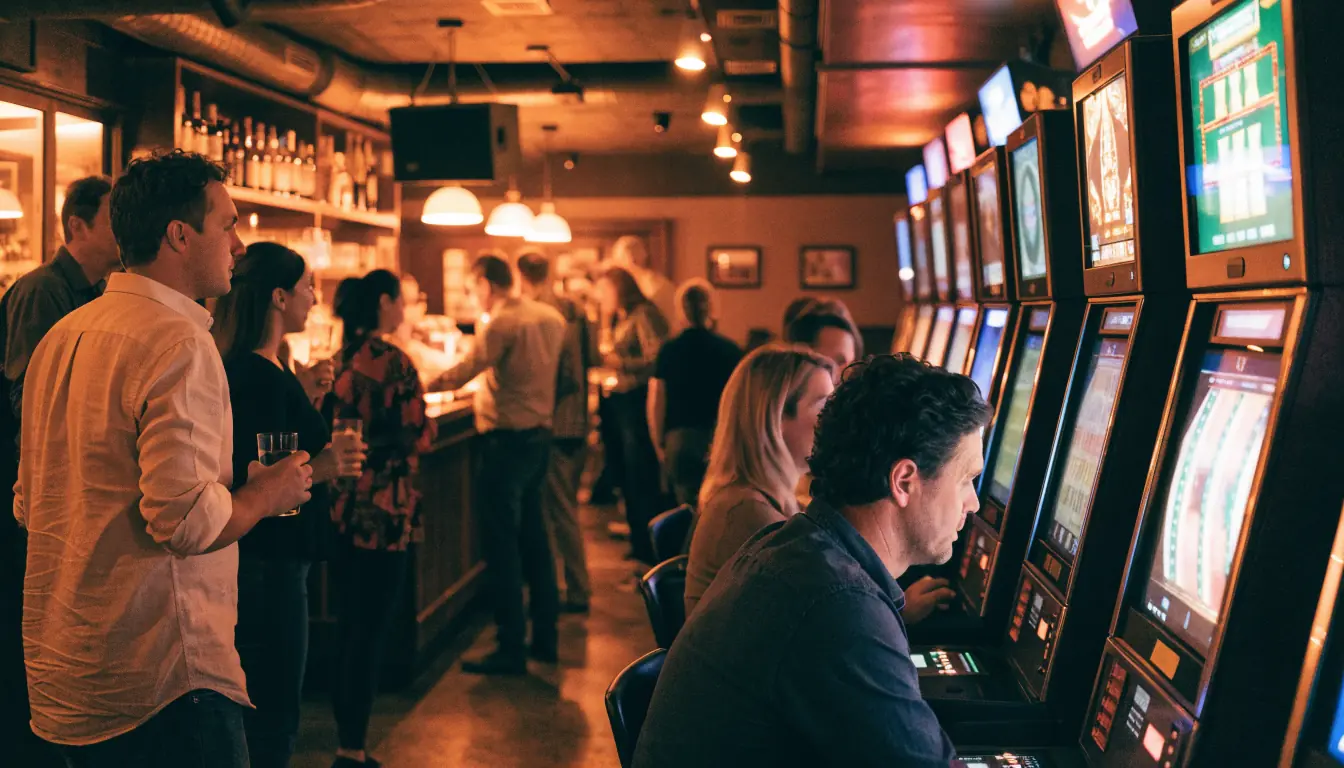
The integration of pokies into these varied settings is what creates the hybrid casino-parlour model that defines the Australian market. It is not necessary to visit a massive, standalone casino to experience a pokies parlour; a local suburban club serves the same function, operating under the same fundamental economic principles and targeting the same demographic of local residents.
Money Laundering: The Shadow Economy of the Pokies Parlour
Beneath the visible flow of AUD 150 billion in annual bets and AUD 12 billion in player losses lies a shadow economy. The high volume of cash transactions and limited traceability of pokies make them attractive for money laundering. A pokies parlour, by design, is an environment where large amounts of cash change hands rapidly, with minimal oversight regarding the source of those funds.
The basic methodology of laundering money through pokies is straightforward. Criminals insert large sums of cash into electronic gaming machines, perform minimal gambling activity, and cash out to create a false record of winnings. By feeding dirty money into a machine and immediately pressing the collect button, a criminal transforms a bag of illicit physical currency into a printed ticket or an account balance that appears to be legitimate gambling proceeds. When questioned about the source of the funds, the individual can simply claim a successful session on the pokies. The machine does not record the ratio of input to output; it merely records that a cash-out event occurred.
A more sophisticated method involves the exploitation of other players. Offenders purchase winning tickets from other players to convert dirty money into clean, traceable funds. In this scenario, a launderer approaches a player who has just won a sum on a machine and offers to buy their printed ticket for cash, often offering a slight premium or an even exchange of physical notes for the ticket. The legitimate player leaves with physical cash, while the offender takes the ticket to the cashier and receives clean funds in the form of a cheque or an account credit, which can later be withdrawn or transferred without raising suspicion.
The structural evasion of reporting limits is another primary tactic. Structuring across venues involves spreading smaller cash deposits across different venues to avoid AML reporting thresholds. Rather than walking into a single casino with a massive sum of cash that would trigger a mandatory report, a laundering operation will distribute the funds across multiple lower-tier pokie parlours, pubs, and clubs. By keeping individual transactions below the radar, the operation avoids triggering the automated alerts that compliance systems are designed to flag. Regulators recommend tighter customer due diligence, transaction monitoring, and the adoption of cashless gaming systems to combat this.
AUSTRAC Red Flags and Compliance Obligations
The financial intelligence regulator AUSTRAC issued a guide in 2024 to help firms recognise money-laundering red flags. This guide forms the backbone of modern compliance obligations for any venue operating a pokies parlour casino. The AUSTRAC red-flag indicators are specific behavioural patterns that venue staff are trained to identify.
A red flag is large or repeated cash insertions followed by minimal play and immediate cash-out. This is the most basic and easily identifiable form of pokie laundering. A patron approaches a machine, inserts a substantial sum, gambles only a fraction of it, and immediately collects the remaining balance. Frequent small redemptions across different venues within a short period are a red flag. This behaviour indicates structuring, where an individual is deliberately fragmenting their cash-outs to avoid generating a single large transaction record. Customers refusing identification or using multiple player cards constitute a red flag. Refusing to provide ID when requested by staff during a large cash-out, or possessing numerous loyalty cards under different names, suggests an attempt to obscure the true identity of the person controlling the funds. Red-flag indicators include unusually high cash access, large deposits, cash transfers, casino disbursement checks, and certain occupations.
Operators must register with AUSTRAC, keep identification records and submit suspicious matter reports.
Operators must appoint a compliance officer, conduct risk assessments, implement AML/CFT programmes, and report cash transactions over AUD 10,000.
The obligations placed on operators depend on the scale of their operations. Operators with up to 15 pokies must register with AUSTRAC, keep identification records, and submit suspicious matter reports. This represents the baseline compliance level for smaller venues, such as local pubs with modest gaming rooms. However, operators with more than 15 pokies must appoint a compliance officer, conduct risk assessments, implement AML/CFT programs, perform customer due diligence, and report cash transactions over AUD 10,000. These obligations escalate quickly, turning a large suburban club into a heavily regulated financial institution in all but name. The appointment of a compliance officer and the implementation of an AML/CFT program require systemic changes to how a venue handles cash, trains staff, and reports data.
Compliance is not a passive state; it is an active, resource-intensive process. The penalty framework for failing to uphold these standards has become increasingly severe. An amendment to the Casino Control Act 1992 allows NSW casino operators to be fined up to AUD 100 million for compliance failures. This legislative shift fundamentally altered the risk calculus for large-scale operators. Non-compliant operators may receive remedial directions, infringement notices, civil fines and suffer reputational damage. The reputational damage, in particular, can be more costly than the fines, as public trust is a necessary component of a venue’s social licence to operate.
The Push Towards Cashless Gaming
The persistent problems of money laundering and problem gambling have driven regulatory momentum towards technological reform. According to the 2022 NSW Islington Report, there is a recommendation for making all NSW pokies cashless by the end of 2028. This single-source report highlights a significant shift in regulatory philosophy. The transition to cashless systems represents the most substantial structural change to the pokies parlour model in decades.
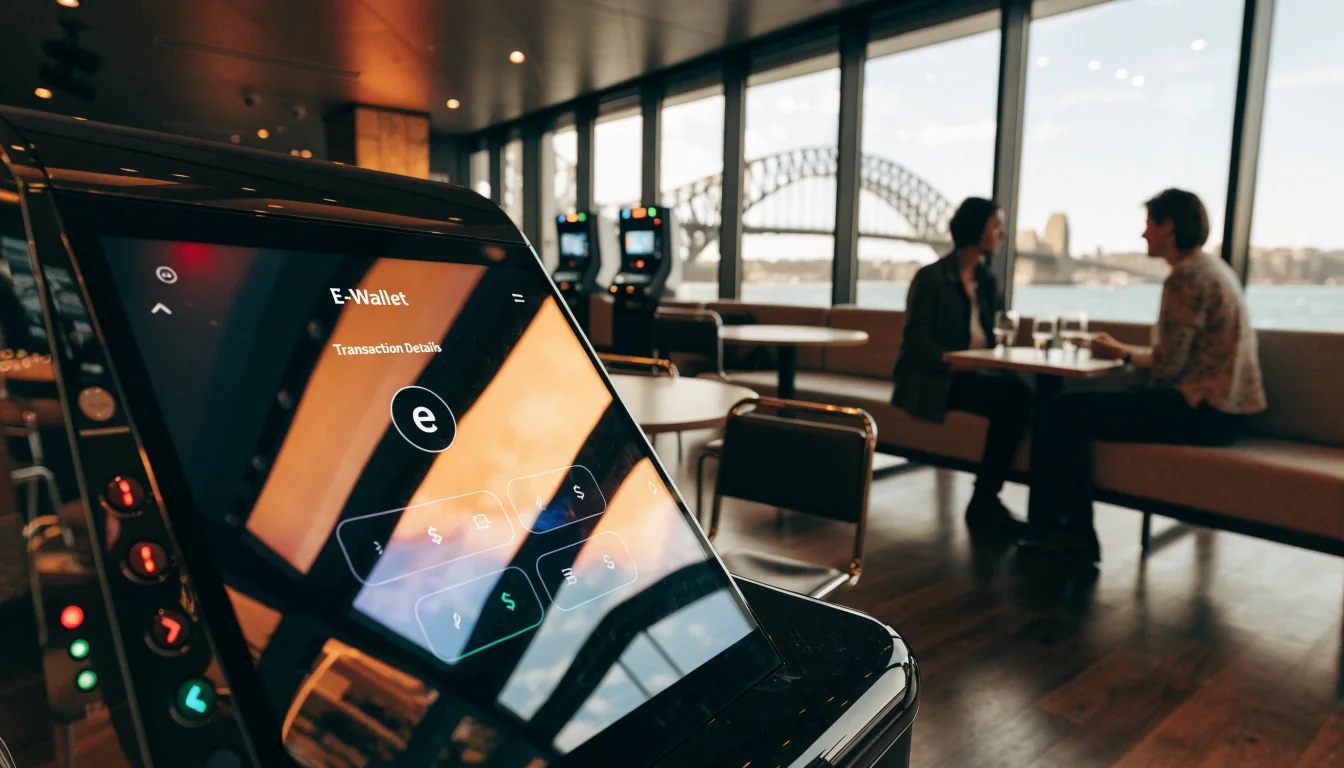
The logic behind the push is rooted in traceability. Adoption of cashless, account-based pokies improves traceability and reduces anonymity, as noted by facctum.com. When a machine operates on a physical cash-in, cash-out basis, the flow of money is opaque. Once the cash enters the machine’s hopper, its origin is effectively erased. Transparent, account-based pokies provide full traceability of deposits, gameplay, and withdrawals. By forcing players to load funds into a machine via a linked account or a pre-loaded card, the system generates a permanent, auditable record of every transaction. This makes structuring across venues virtually impossible, as the accounts are linked to a verified identity and can be monitored across different operators.
However, the transition to cashless gaming is fiercely contested. Venue operators argue that friction in the deposit process—requiring players to use cards or digital wallets rather than feeding in notes—will reduce time-on-device and subsequently reduce revenue. State governments, wary of the tax implications of falling pokie profits, approach the issue with caution. The friction between harm minimisation, AML/CFT compliance, and state revenue generation defines the legislative landscape.
For the individual considering the landscape of a pokies parlour casino australia 2026, these pending regulatory shifts are crucial context. The parlour of the near future will likely operate under stricter identity verification protocols and reduced physical cash handling than the parlour of the past decade. The era of anonymous play is being systematically dismantled by compliance requirements.
Federal Restrictions on Online Alternatives
The physical dominance of the pokies parlour is starkly contrasted by the legal status of online alternatives. The Interactive Gambling Act 2001 (IGA) is the primary Commonwealth law governing online gambling in Australia, introduced to protect the public with a focus on harm minimisation. It is not illegal for individual Australians to play at offshore-licensed online casinos; the law targets operators, not players. However, the Interactive Gambling Act 1997 prohibits provision of online casino games to Australian residents. Online casino-style games, including slots, poker, blackjack, and roulette, are prohibited under the Interactive Gambling Act 2001.
This means that while a player can walk into a physical pub or club and legally play a pokie, there are no domestically licensed real-money online casino operators available to Australian players. It is illegal to offer online casino gambling in Australia, and it is not possible to obtain a licence to operate an online casino domestically. The online space is restricted to licensed sports betting and lotteries. Online sports betting is legal in Australia under state/territory licences, but live (in-play) online betting is illegal, although live betting by phone is legal.
Illegal Online Casinos
Offering real‑money online casino games to Australian residents is prohibited and can result in severe penalties.
This legislative ban on domestic online casinos serves to insulate the physical pokies parlour model from online competition. The AUD 150 billion in bets placed on physical electronic gaming machines in FY 2020-2021 occurred in an environment where the primary digital competitor was outlawed. The Australian Communications and Media Authority (ACMA) actively works to block offshore gambling domains that attempt to offer restricted services to Australian residents, further entrenching the physical venue as the primary arena for electronic gambling. The regulatory disparity creates a captive market for the physical pokies parlour, ensuring that the vast majority of electronic gaming expenditure remains within the state-taxed, highly regulated, land-based ecosystem.
The Demographic Reality and Harm Minimisation
The aggregate statistics—billions in turnover, billions in losses, and hundreds in per-capita drain—obscure the individual reality of gambling harm. The pokies parlour model is built on the engagement of a broad demographic, but the financial weight is disproportionately carried by those experiencing gambling problems. Almost one in three (30%) 12-17-year-olds in Australia gamble, and 46% of 18-year-olds in Australia gamble. While the minimum legal gambling age in Australia is 18, these statistics indicate that engagement with gambling products begins early and normalises the behaviour before legal access is granted. The transition from adolescent gambling to adult participation in the pokies parlour is a seamless one, facilitated by the omnipresence of venues and the cultural acceptance of the activity.
Harm minimisation is the stated goal of both federal and state regulation, but the implementation of this goal is inherently compromised by the revenue generation model. The Interactive Gambling Act 2001 was explicitly introduced to protect the public with a focus on harm minimisation, yet the physical pokies parlour operates under a different legislative framework that explicitly permits and taxes the same psychological mechanisms of intermittent reinforcement that the IGA sought to regulate in the online space.
The machine itself is the engine of harm. The design—variable reward schedules, near-misses, and the illusion of control—ensures that a portion of the AUD 608 per-capita loss is derived from individuals who cannot afford to lose it. The regulatory environment attempts to mitigate this through mandatory pre-commitment systems in some jurisdictions, self-exclusion registers like BetStop, and Gambling Help Online services. Yet, these are retroactive or peripheral interventions. The core operation of the pokies parlour remains the maximisation of time-on-device and the extraction of player funds. The structural conflict between harm minimisation and state tax revenue ensures that regulatory reform is incremental and fiercely lobbied against.
Responsible Gambling Messaging and Advertising Constraints
The visibility of the pokies parlour is subject to strict, albeit porous, advertising controls. The Interactive Gambling Act 2001 makes it an offence for online operators to offer real-money gambling to Australian residents, and the physical pokies parlour operates under a different set of marketing constraints. Limit gambling advertisements to a maximum of three per hour. This cap is designed to reduce the saturation of gambling cues during broadcast media. Furthermore, regulators mandate that operators do not display gambling advertising during sporting events, recognising the intersection of sports fandom and gambling normalisation. Prohibit gambling advertisements on sports jerseys to sever the visual association between athletic performance and betting. Do not target or display gambling advertising to minors, including on TV, stadiums, or online, acknowledging the vulnerability of the demographic.
These restrictions are attempts to sanitise the public sphere, but they do not alter the internal environment of the parlour itself. Inside the venue, the marketing is the machine. The lights, sounds, and structural design of the pokies parlour are the primary advertising medium. The external restrictions on broadcast marketing simply concentrate the appeal within the physical space. A pokies parlour casino review that focuses on the bonuses, the decor, or the hospitality amenities misses the fundamental point: the venue is a mechanism for converting cash into operator revenue, and every design choice is subordinated to that goal.
The Operational Reality: Wagering Requirements and Withdrawal Mechanics
When players engage with a pokies parlour—whether a suburban club or a dedicated casino floor—the financial mechanics extend beyond the spinning reels. The system is engineered to hold funds within the venue ecosystem for as long as possible. Wagering requirements are a standard component of the parlour model. Display wagering requirements clearly up front before offering any bonus. This mandate exists because the structural design of bonuses and promotions is inherently opaque. A bonus credited to an account is not free money; it is a mechanism to extend play. The terms dictate how many times the bonus amount must be cycled through the machines before a withdrawal is permitted. Since the return-to-player percentage guarantees that a portion of each cycle is retained by the house, high wagering requirements ensure that the bonus is effectively consumed by the machine before it can be converted to withdrawable cash.
Identity verification serves as another control point. Require users to complete identity verification (government-issued ID) before any withdrawal. While this is primarily an AML/CFT compliance measure designed to prevent money laundering, it also functions as a friction point. By requiring identification only at the withdrawal stage, rather than the deposit stage, the parlour model ensures that the friction of compliance is placed precisely at the moment when money is attempting to leave the operator’s control. This can delay the return of funds to the player, during which time the funds remain accessible within the venue’s ecosystem. A player experiencing a delay in withdrawal processing is statistically more likely to return to the machines and play through the waiting period. This is the unseen architecture of the parlour: the seamless deposit and the friction-laden withdrawal.
The Role of Loyalty Programs and Player Cards
Loyalty programs are the connective tissue between the individual player and the venue’s data analytics systems. The use of player cards allows venues to track time-on-device, total turnover, and net loss on an individual basis. This data is used to tailor marketing, offer targeted bonuses, and calculate loyalty points that can be redeemed for food, beverages, or additional gaming credit. However, the loyalty system also serves a regulatory function. Customers using multiple player cards constitute a red flag for AUSTRAC. A single, verified identity linked to a single card is the baseline for compliance. The tracking of play through loyalty systems provides the transparent, account-based record that regulators desire.
The tension lies in the player’s desire for anonymity versus the regulator’s demand for traceability. A player who wishes to launder money or who simply does not want their gambling habits recorded will avoid using a card. However, the economic incentives—free meals, discounted drinks, bonus credits—are structured to make card use highly attractive. The venues are effectively purchasing compliance and data through the loyalty scheme. The more comprehensive the data, the more effectively the venue can market to the player, and the more robust the AML/CFT record becomes.
Structuring and the Cash Economy
The persistence of a physical cash economy in the pokies parlour is the primary vector for AML/CFT risk. The AUD 12 billion in player losses in FY 2020-2021 includes a significant proportion of physical cash. While larger casinos have sophisticated cash-handling protocols, the sheer volume of transactions in suburban clubs and pubs creates a porous environment.
Money mules are recruited to launder money through pokies, according to complyadvantage.com. This practice involves networks of individuals who are paid to cycle illicit funds through machines on behalf of criminal enterprises. The mule enters the parlour, plays the pokies to create a veneer of legitimate gambling activity, and cashes out. The funds are then handed back to the criminal organisation, minus a percentage retained by the mule as payment. Because the mule is using their own identity and player card, the transaction appears legitimate to the venue’s compliance system. The structuring of these deposits—keeping them below the AUD 10,000 reporting threshold for operators with more than 15 pokies—allows the operation to fly under the automated radar.
The challenge for regulators is that the behaviour mimics legitimate play. A player who enters a venue, gambles for an hour, and leaves with a cash-out is engaging in standard activity. The distinction between a legitimate player and a money mule is often only discernible through pattern analysis over time: frequent visits, consistent deposit amounts, and a win/loss ratio that defies the statistical norms of the machine. AUSTRAC’s 2024 guide emphasises these patterns, but the burden of detection falls heavily on the venue’s compliance staff, who must balance the cost of compliance against the revenue generated by the player.
The Regulatory Patchwork and Future Trajectories
The regulation of pokies in Australia is not a monolithic framework but a patchwork of state and territory laws overlaid by federal financial intelligence requirements. The ACT Gambling and Racing Commission, the NSW regulator, the Office of Liquor and Gaming Regulation, and the Australian Institute of Criminology all play roles in monitoring, researching, and enforcing the rules surrounding electronic gaming. The NSW Crime Commission, in particular, has been active in investigating the nexus between organised crime and the cash-intensive pokie parlour model.
Regulatory Summary
- State tax revenue from pokies creates a conflict between profit and player protection.
- AUSTRAC compliance requirements scale with machine count, requiring officers and reporting for venues with more than 15 machines.
- The 2022 NSW Islington Report recommends a cashless transition by 2028 to enhance traceability and curb laundering.
The 2022 NSW Islington Report’s recommendation for cashless pokies by the end of 2028 represents a potential consolidation of this patchwork into a more uniform, traceable system. If implemented, the transition would require a fundamental overhaul of venue infrastructure. Physical note acceptors would be disabled or removed, and all play would be routed through account-based systems linked to verified identities. This would eliminate the structuring tactic entirely, as every deposit and withdrawal would be tied to a specific account, and the aggregation of transactions across venues would be visible to regulators.
However, the implementation of such a system is politically contentious. The transition to cashless gaming represents a paradigm shift for the pokies parlour casino model. It redefines the relationship between the player and the machine, moving it from an anonymous cash transaction to a monitored account interaction. The venues argue that this will reduce revenue and, consequently, the tax receipts that state governments rely upon. The regulators argue that the traceability is necessary to combat the estimated billions of dollars laundered through the system annually. The tension between these positions defines the trajectory of the industry as it approaches 2026 and beyond.
The Reality of a Pokies Parlour Casino Review
When assessing a pokies parlour casino review, the focus must extend beyond the surface-level amenities. The presence of Pragmatic Play, Microgaming, NetEnt, or Evolution Gaming software is irrelevant in the physical parlour context, as these providers primarily supply the offshore online market that is prohibited domestically. The physical parlour relies on domestic manufacturers whose machines are subject to state-level certification and testing. The review of a parlour is not a review of the games; it is a review of the environment, the compliance posture, and the structural design of the gaming floor.
The Australian market is defined by its physical infrastructure. The AUD 191.2 billion in turnover reported by complyadvantage.com in 2023 underscores the velocity of money within these venues. The AUD 608 per-capita loss demonstrates the efficiency of the extraction mechanism. The regulatory framework, from the Interactive Gambling Act 2001 to the AUSTRAC guidelines of 2024, shapes the boundaries within which the parlour operates. Understanding the pokies parlour casino australia 2026 requires an acknowledgment of these underlying mechanics: the machines are designed to retain money, the venues are designed to maximise time-on-device, and the regulations are designed to mitigate the worst excesses of a system that is fundamentally predicated on loss.
The parlour is not merely a place of entertainment; it is a highly engineered financial environment. The cash flows in, the mathematics ensure it does not flow out in equal measure, and the state takes its percentage of the retained funds. The compliance obligations, the loyalty schemes, the advertising restrictions, and the pending cashless reforms are all layers of control applied to a core function that remains unchanged: the conversion of player wealth into operator revenue. The data tells the story. The billions in bets, the billions in losses, and the hundreds in per-capita drain are the quantified reality of an industry that operates in plain sight, embedded in the suburban landscape, and shielded from digital disruption by a legislative framework that prohibits the domestic provision of online alternatives. The physical pokies parlour remains the dominant force in Australian gambling, sustained by cash, regulated by necessity, and driven by the immutable mathematics of the house edge.
Financial Friction and the Architecture of Retention
Beyond the mathematical design of the machines themselves, the pokies parlour casino model relies heavily on the architecture of financial retention. This architecture is composed of deliberate friction points placed throughout the player journey. The most obvious of these is the deposit-to-withdrawal pipeline. While depositing funds into a machine—whether via cash, card, or an account-linked system—is engineered to be frictionless, the withdrawal process is deliberately cumbersome.
In a physical parlour, a large win requires a hand-pay or a trip to the cashier’s cage. This process involves identity verification, signatures, and a waiting period. During this waiting period, the player is surrounded by the sights and sounds of the gaming floor. The psychological imperative to continue playing while waiting for the payout to be processed is a well-documented phenomenon. The venue leverages this delay to encourage the player to reinvest a portion of the winnings back into the machines. By the time the cash is finally in the player’s hand, a portion of the original win has already been consumed by the house.

This retention strategy is mirrored in the compliance obligations surrounding cash transactions. The requirement for operators with more than 15 pokies to report cash transactions over AUD 10,000 creates a hard threshold. Players who win large amounts are subject to mandatory identification and reporting. This serves a dual purpose: it satisfies the AML/CFT requirements of AUSTRAC, and it forces a break in the player’s momentum. The interruption of play is a moment of clarity, but it is also a moment of exposure. The player must interact with staff, provide identification, and acknowledge the size of their win or loss. For a money launderer, this threshold is the primary obstacle to be avoided through structuring. For a legitimate player, it is a moment of friction that can either reinforce the decision to leave or provide an opportunity for staff to intervene if signs of distress or excessive loss are evident.
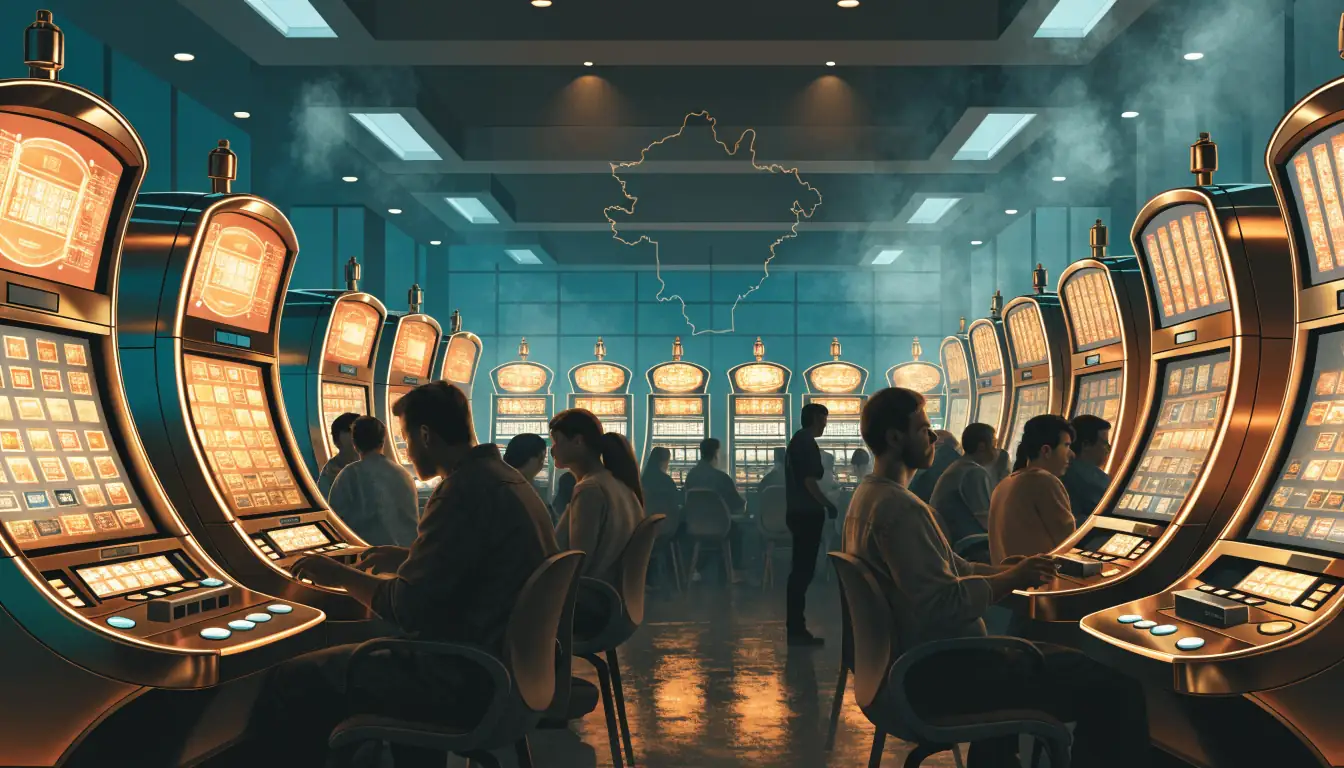
The architectural design of the parlour itself contributes to this retention. The absence of windows, the artificial lighting calibrated to mimic daytime conditions, and the deliberate absence of clocks all serve to dissociate the player from the passage of time. The layout of the machines is designed to maximise traffic flow while minimising direct observation by non-gambling patrons. The ATMs are positioned to require the player to walk past rows of pokies to access more cash. Every element of the physical space is optimised to keep the player in the seat and the money in the machines. The AUD 150 billion in annual bets is not generated by a few massive sessions; it is the aggregate of millions of individual decisions to insert another note, to press the button one more time, and to chase the next spin. The parlour is the stage upon which this behaviour is enacted, and the regulatory environment is the boundary that defines how far the venue can go to encourage it.
The Intersection of State Revenue and Harm Minimisation
The regulatory environment that governs the pokies parlour is defined by an inherent structural conflict. On one hand, state governments are responsible for protecting the public from the harms associated with gambling. On the other hand, they are the direct financial beneficiaries of the losses that generate those harms. Taxation of gambling operators in Australia varies by state and by type of gambling service, but in all cases, the revenue generated from pokie losses forms a significant component of state budgets. This revenue is often earmarked for public services, creating a dependency that makes reducing harm economically painful for the state.
The Interactive Gambling Act 2001 was introduced to protect the public with a focus on harm minimisation, but its primary effect was to restrict the online market, effectively consolidating the physical parlour’s monopoly on electronic gaming. The prohibition of domestic online casinos and the restriction of in-play betting funnel the demand for gambling into the state-taxed physical venues. The AUD 12 billion lost in FY 2020-2021 flowed directly into the coffers of operators and state governments. The per-capita loss of AUD 608 represents the average tax burden and operator profit extracted from every person in the country.
Harm minimisation efforts, such as the BetStop self-exclusion register and the provision of Gambling Help Online services, are funded by a fraction of the revenue generated by the machines. The mandatory responsible-gambling messaging, the limits on advertising frequency, and the prohibition on targeting minors are all measures designed to mitigate the visibility of the harm, but they do not address the structural cause. The cause is the availability of high-frequency, high-intensity electronic gaming machines in easily accessible locations. The regulation of these machines is a compromise between the economic reality of state dependence on gambling revenue and the political necessity of appearing to address problem gambling.
The push towards cashless gaming, as recommended by the 2022 NSW Islington Report, represents the most significant attempt to alter this structural dynamic. By making all NSW pokies cashless by the end of 2028, the recommendation targets the anonymity that facilitates both money laundering and the psychological detachment from the reality of loss. Account-based play forces the player to acknowledge their losses in a tracked, verifiable environment. It also provides regulators with the data necessary to monitor aggregate behaviour and identify patterns of harm that are invisible in the current cash-based system. The transition to cashless gaming is not merely a compliance measure; it is a fundamental reshaping of the player-machine relationship. The friction of loading funds via an app or a card, the visibility of a digital balance, and the permanence of a transaction record all serve to ground the player in the reality of their expenditure. The efficacy of this approach remains to be seen, as the political will to implement it must overcome the economic resistance of the venues and the state treasuries that rely on their revenue.
Conclusion: The Data-Driven Reality of the Parlour
The pokies parlour casino australia 2026 is an entity defined by numbers. The scale of its operation is measured in the billions of dollars that flow through its machines annually. The impact of its presence is quantified in the per-capita losses of its patrons. The regulatory environment that contains it is a complex web of state legislation, federal prohibition, and financial intelligence requirements. The parlour is a physical infrastructure designed to maximise the velocity of money, from the moment it enters the player’s hand to the moment it is retained by the house or surrendered to the state as tax.
The data provided by complyadvantage.com, facctum.com, and the official statistics of FY 2020-2021 paint a picture of an industry that is both immensely profitable and inherently problematic. The AUD 150 billion in bets, the AUD 12 billion in losses, and the AUD 608 per-capita drain are the metrics of a system that operates at the intersection of entertainment, economics, and exploitation. The money laundering risks, the structuring of deposits, and the recruitment of mules are the shadows that follow the flow of cash. The AUSTRAC guidelines, the AML/CFT obligations, and the pending cashless reforms are the regulatory responses to these shadows.
The parlour is not a static entity. It is evolving under the pressure of compliance requirements and the looming threat of cashless mandates. The distinction between a pub, a club, and a casino is blurring as the regulatory thresholds for compliance become uniform. The future of the pokies parlour is one of increased surveillance, reduced anonymity, and heightened accountability. The data that has long been obscured by the cash economy is being dragged into the light by regulatory necessity. The parlour of 2026 will be a more transparent, more traceable, and more tightly controlled environment than the one that preceded it. But the core function—the extraction of player wealth through the mathematical certainty of the house edge—will remain unchanged. The numbers do not lie; they merely shift in their granularity.
How Bonus, Deposit and Sign‑Up Offers Work at Pokies Parlours
When a venue or an offshore platform markets a "pokies parlour sign up bonus," the wording is designed to sound like free money. I have seen the backend mechanics of these promotions. In practice, a sign-up incentive is a structural commitment. The operator gives a player an initial benefit—often framed as a "pokies parlour no deposit sign up bonus"—to trigger engagement. The goal is to acquire the player’s contact details and establish a transactional relationship before any actual gambling begins. The money is never free. It is a customer acquisition cost with strict internal rules attached.
The Mechanics of Deposit and No-Deposit Promotions
Operators divide promotions into two distinct categories. A no-deposit offer grants a nominal balance to a newly registered account. A deposit offer matches a percentage of the player’s initial cash transfer. The distinction matters because they carry entirely different operational risks for the platform.
With a no-deposit promotion, the operator absorbs the initial risk. The platform provides funds, and the player wagers them. Operators manage this exposure by enforcing rigid constraints on how the funds are used. A deposit-based offer shifts the financial risk. The player must commit their own capital first. The operator then applies the promotional funds on top of the player’s deposited balance.
The term "pokies parlour casino no deposit bonus" frequently appears in promotional materials targeting Australian users. I cannot state the specific monetary value of these offers, as operators do not publish uniform figures, and any stated amount varies entirely by platform. What remains consistent is the internal architecture: the funds are placed in a separate bonus wallet, not the primary cash balance, ensuring they cannot be immediately withdrawn.
Compliance Rules Governing Promotions
In the Australian market, the legal framework overrides any marketing promises. The Interactive Gambling Act 2001 makes it an offence for online operators to offer real-money gambling services, including online casino games, to Australian residents. There are no domestically licensed real-money online casino operators available to Australian players. Any platform using the term "pokies parlour" to offer online slots is operating outside the local licensing framework.
Despite this prohibition, these promotions persist on offshore platforms. To interact with these venues, players must navigate strict operational compliance rules. Operators demand identity verification before processing any withdrawal. This requires a government-issued ID. If a player registers using a "pokies parlour no deposit bonus," they will not be able to withdraw any derived funds until this identification check is complete.
Furthermore, operators must display wagering requirements clearly up front before offering any bonus. This is a mandatory compliance measure designed to prevent misleading advertising. The operator must state the exact conditions attached to the promotion before the player accepts the terms.
Operational Restrictions on Bonus Funds
The internal logic of these offers protects the operator’s revenue. While the advertising emphasises the reward, the internal system enforces the restrictions.
Operators strictly limit the functionality of bonus balances. Promotional funds cannot simply be transferred to a player’s bank account. The system requires the player to interact with the specified games for a predetermined number of cycles before the balance converts to withdrawable cash.
Additionally, operators cannot accept credit cards or digital currencies for deposits or betting under Australian market restrictions. Any promotion implying otherwise is circumventing the established limitations. When a platform advertises a deposit match, the funding method itself must comply with the allowed transaction types.
The Reality of the Offer
A sign-up incentive is not a gift. It is a calibrated mechanism to drive player action. The marketing text promises immediate value. The compliance system enforces identity checks. The backend system restricts withdrawals.
For the player, the promotion offers extended time on the platform. For the operator, it guarantees a verified user identity and a funded account. The system works precisely because the marketing obscures the mechanics. The bonus credits function merely as a tool to secure a committed, registered user.
Parlour‑Style Casinos – Pokies Integrated into Club and Pub Settings
Most electronic gaming machines in Australia aren’t in dedicated casino floors. They sit in the back rooms of pubs and leagues clubs — venues where the main business is hospitality, and the pokies are a secondary, though profitable, adjunct. I’ve seen how this model works from the operator’s side. The machines look the same as those in a casino, but the compliance overhead depends on a simple headcount.
The threshold is physical machine count. Operators with up to 15 pokies must register with AUSTRAC, keep identification records, and submit suspicious matter reports. Operators with more than 15 pokies face a heavier compliance load: they must appoint a compliance officer, conduct risk assessments, implement AML/CFT programs, perform customer due diligence, and report cash transactions over AUD 10,000.
That threshold changes how a venue manages its floor. A small pub with a dozen machines handles basic record-keeping. A large leagues club with a sprawling gaming room is, for regulatory purposes, a different kind of business. The cash handling alone — large sums moving through machines with limited traceability — makes the bigger venues a focus for AML/CFT scrutiny.
There is ongoing regulatory pressure to change how these venues handle cash. The 2022 NSW Islington Report, as reported by complyadvantage.com, recommended making all NSW pokies cashless by the end of 2028. That is a recommendation, not a market norm — but it reflects the direction of regulatory thinking.
The appeal of pokies in clubs and pubs is straightforward: high volume, cash-based play, and limited traceability. That combination makes the machines attractive not just to players but to criminals looking to launder funds. Cash goes in, minimal play occurs, and a ticket comes out — creating a false record of winnings. Structuring deposits across different venues to avoid reporting thresholds is another known tactic. The integration of pokies into suburban clubs puts these risks into local communities, not just casino precincts.
VIP Parlour Casinos – What High‑Rollers Should Expect
A VIP parlour casino operates on the same legislative machinery as any other venue, but the financial stakes magnify the regulatory burden. When premium players demand higher deposit limits and faster withdrawals, operators have to reconcile that service model with their compliance obligations.
The regulatory tolerance for administrative shortcuts is thin. An amendment to the Casino Control Act 1992 allows NSW casino operators to be fined up to AUD 100 million for compliance failures. That figure is not a theoretical ceiling; it is a direct reflection of how severely regulators view systemic lapses in high-turnover environments.
Non-compliant operators may receive remedial directions, infringement notices, civil fines and suffer reputational damage. For a venue relying on a handful of premium clients, a suspended licence or a damaged public profile is a terminal threat. The compliance cost is simply the cost of doing business.
High-stakes play attracts stricter scrutiny. Cash-intensive betting leaves operators exposed to money-laundering risks, requiring comprehensive customer due diligence regardless of a player’s status. A VIP tier does not override identification protocols. It triggers heavier monitoring.
Decoding Pokie Parlour Bonus Offers – Terms, Wagering and Risks
A "bonus" in a parlour is never a gift. It is a conditional mechanism designed to extend play. When venues advertise these offers, the mechanics are buried in the fine print.
Wagering requirements dictate how many times a patron must cycle the bonus funds through the machines before a withdrawal is permitted. Operators are required to display these wagering requirements clearly up front before offering any incentive. Failing to do so obscures the actual cost of the promotion.
Beyond the playthrough conditions, identity verification governs access to funds. Patrons must complete identity verification using a government-issued ID before any withdrawal is processed. This is not a mere administrative formality; it is a mandatory compliance step.
These safeguards exist because financial crime risks remain. Red flags include customers refusing identification or using multiple player cards. Criminals frequently structure small cash deposits across different venues to avoid reporting thresholds. To counter this, tighter transaction monitoring is required.
Responsible-gambling safeguards must accompany these offers. Harm-reduction messaging is mandatory. Operators cannot use light-hearted language regarding problem gambling. Advisory services like BetStop exist to provide external support. The terms always protect the house. Read the conditions.
Published by the Casino Crypto Guide team.