
Best Low Volatility Slots in Australia 2026
 Available in AU
- Low‑Volatility Slots in Australia – Definitions, Benefits and Top Picks for 2026
- What Makes a Slot Machine Low‑Volatility?
- Pragmatic Play’s Low‑Volatility Slots
- Low‑Volatility Pokies in the Australian Market
- Highest RTP Low‑Volatility Slots You Should Try
- Overview of Low‑Volatility Slot Games
- Legal Framework for Online Slots and Casinos in Australia
Low‑Volatility Slots in Australia – Definitions, Benefits and Top Picks for 2026
When assessing the landscape of digital wagering, the mathematics behind the screen dictates the experience far more than the thematic graphics or soundtracks. The term "volatility" — preferred in Australian content over "variance" — represents the risk profile inherent to a specific game’s algorithm. Understanding this metric is the fundamental difference between managing a bankroll and simply hoping for a miracle. In the context of the best low volatility slots australia 2026 has to offer, the conversation shifts away from chasing isolated, life-altering jackpots and moves toward sustained engagement, frequent micro-wins, and structural longevity.
I have spent enough time looking at the operational side of gaming floors and digital platforms to know that the marketing language surrounding "frequent payouts" often obscures the underlying mathematics. A game that returns credits to the balance every second spin is not necessarily a profitable game; it is simply a low-risk mathematical model. The distinction matters profoundly. Low-volatility slots pay out more frequently but with smaller rewards. This is not a marketing claim or a theoretical assumption — it is the definitional reality of how the random number generator (RNG) and the pay table interact. Conversely, high-volatility slots pay out infrequently but with larger wins. The choice between these two paradigms is not a matter of right or wrong, but a matter of bankroll alignment, session objectives, and risk tolerance.
Since low volatility slots reward patience with steadier, smaller wins, the casino behind the games matters just as much — look for fair licensing, manageable wagering terms, and quick access to your winnings before you settle in for longer sessions.
License: Curacao OGL/2024/1335/0780 · Bonus: up to A$1,000 + 150 free spins, wager-free · Min. deposit: EUR 20 Licensed under Curacao OGL, this operator stands out with a wager-free bonus structure worth up to A$1,000 plus 150 free spins, backed by a low minimum deposit requirement.
License: Curacao · Bonus: 100% up to A$500 + 200 free spins, 10x wagering · Payout speed: crypto 30-60 minutes, fiat 1-5 days · Min. deposit: A$10 Curacao-licensed with a solid welcome package of A$500 plus 200 free spins at a manageable 10x wagering, and it offers fast crypto payouts alongside a low A$10 minimum deposit.
License: Curacao eGaming (Dama N.V.) · Bonus: up to A$10,000 + 180 free spins, 40x wagering Operating under a Curacao eGaming license via Dama N.V., this site offers one of the larger bonus ceilings on this list at up to A$10,000 with 180 free spins, though the 40x wagering is on the higher side.
License: Curacao · Bonus: up to A$10,000 multi-stage + 500 free spins · Min. deposit: A$20 (POLi) A Curacao-licensed casino with a substantial multi-stage bonus reaching A$10,000 and 500 free spins, plus a low A$20 minimum deposit via POLi.
Bonus: up to A$7,500 + 550 free spins across 10 deposits, 50x wagering · Payout speed: crypto under 1 hour, PayID 1-3 business days · Min. deposit: A$20 (A$30 to qualify for the bonus) This operator spreads a generous A$7,500 bonus and 550 free spins across ten deposits, with notably fast crypto withdrawals and PayID support for Australian players.
License: Curacao Gaming Control Board OGL/2023/176/0095 (Hollycorn N.V.) · Bonus: up to A$5,000 + 300 free spins across 4 deposits Licensed by the Curacao Gaming Control Board under Hollycorn N.V., it offers a multi-deposit bonus package worth up to A$5,000 with 300 free spins.
License: Curacao · Bonus: up to A$2,000 A Curacao-licensed casino offering a straightforward welcome bonus of up to A$2,000.
Bonus: 100% up to A$750 + 200 free spins, 35x wagering · Payout speed: crypto 30-120 minutes, fiat 24-72 hours · Min. deposit: A$30 With a A$750 bonus plus 200 free spins at 35x wagering, this operator also delivers quick crypto and fiat payout speeds for a smooth withdrawal experience.
Bonus: up to A$750 + 50 jackpot spins, 35x wagering · Payout speed: crypto ~90 minutes, fiat 1-5 days · Min. deposit: A$30 Offers a A$750 bonus with 50 jackpot spins and 35x wagering, complemented by fast crypto payout times of around 90 minutes.
License: Curacao Gaming Control Board · Bonus: up to A$5,000 + 400 free spins Licensed by the Curacao Gaming Control Board, this casino provides a strong bonus offer of up to A$5,000 plus 400 free spins.
The Anatomy of Frequency: Why Low-Volatility Functions Differently
To understand why a low-volatility slot behaves the way it does, one must look at the distribution of the prize pool. In a high-volatility model, the algorithm is heavily weighted toward the top of the pay table. A disproportionate amount of the total Return to Player (RTP) percentage is locked behind rare symbol combinations, scatters, or bonus triggers. This creates the phenomenon of "dead spins" — stretches where the balance bleeds down rapidly because the algorithm is waiting for that one high-multiplier event to reset the mathematical equilibrium.
Low-volatility online slots operate on the exact opposite principle. The prize pool is distributed heavily across the lower end of the pay table. Three-of-a-kind combinations, low-tier wild substitutions, and frequent, low-value scatter drops consume the majority of the RTP. Because these combinations are mathematically highly probable, the game returns credits to the player’s balance constantly. The trade-off is that the maximum win ceiling is drastically reduced. Players may experience smaller jackpots and payouts compared to higher volatility games. You will not hit a 5,000x multiplier on a single spin in a low-volatility environment. What you will do is maintain your starting balance through extended periods of play, as the continuous small returns offset the continuous small wagers.
This dynamic makes low-volatility slots fundamentally suited for longer playing sessions with reduced risk. When the objective is entertainment over a weekend evening, or when a player is working through a wagering requirement on a promotional offer, a high-volatility game will often destroy the balance before the bonus round is ever triggered. Low-volatility games keep the balance fluctuating within a manageable band, allowing the player to remain in the action without facing the rapid depletion characteristic of high-risk models.
The Strategic Role of Pay Tables and Bet Sizing
The pay table is the single most transparent document a game provider offers. It is the mathematical blueprint of the slot. While the visible volatility rating is often listed in the game’s information panel or help screen, the pay table itself indicates a slot’s volatility through its structural design.
A cursory examination of the top and bottom tiers of the pay table reveals the risk profile. If the gap between the lowest three-symbol payout and the highest five-symbol payout is relatively narrow, and if the top-tier payout is only a fraction of the total bet rather than hundreds of times the bet, the game is engineered for low volatility. If the top-tier payout offers thousands of times the bet, the algorithm is designed for high volatility.
In high vs low volatility slots, the approach to bankroll management must differ. With low-volatility slots, the objective is to maximize the number of spins within a given bankroll. Because the hits are frequent, it is advisable to place smaller bets on machines with multiple paylines to maximise winning chances. A machine with numerous paylines offers more pathways for these frequent, low-tier combinations to land. By keeping the bet size low relative to the total bankroll, the player ensures that the continuous small returns effectively sustain the session. In a high-volatility environment, the strategy reverses — players often increase the bet size to capitalize on the rare, large multipliers when they eventually hit. Applying a high-volatility betting strategy to a low-volatility game is a fundamental mismatch of mathematics and intent.
- Place smaller bets on machines with multiple paylines.
- Keep bet size low relative to your total bankroll.
- Place large bets on low‑volatility slots.
- Apply high‑volatility betting strategies to low‑volatility games.
Navigating the Australian Market Context
The Australian market carries specific nuances, not just in terminology but in the legal framework that governs how these games are accessed. The colloquial term “pokies” dominates the domestic lexicon, referring to both physical gaming machines in licensed venues and their digital counterparts. However, the legal reality of accessing low-volatility slots online in Australia is complex.
The regulatory environment is governed by the Interactive Gambling Act 2001 (IGA), the primary Commonwealth law governing online gambling in Australia, introduced to protect the public with a focus on harm minimisation. Under this legislation, it is illegal to offer online casino gambling in Australia, and it is not possible to obtain a licence to operate an online casino domestically. There are no domestically licensed real-money online casino operators available to Australian players. The law explicitly prohibits the provision of online casino style games, including slots, poker, blackjack, and roulette, to Australian residents.
There is a noted discrepancy in some historical reporting regarding the Interactive Gambling Act 1997 prohibiting the provision of online casino games to Australian residents, versus the established Commonwealth law of the Interactive Gambling Act 2001. The operational reality is that the 2001 Act is the active legislation enforced by the Australian Communications and Media Authority (ACMA), the federal regulator.
It is crucial to understand the boundaries of this legislation: it is not illegal for individual Australians to play at offshore-licensed online casinos; the law targets operators, not players. This creates a market dynamic where Australian players access low-volatility slots through platforms licensed and regulated by foreign jurisdictions, such as the Malta Gaming Authority or the UK Gambling Commission. This distinction between operator prohibition and player access is the defining feature of the Australian online casino landscape.
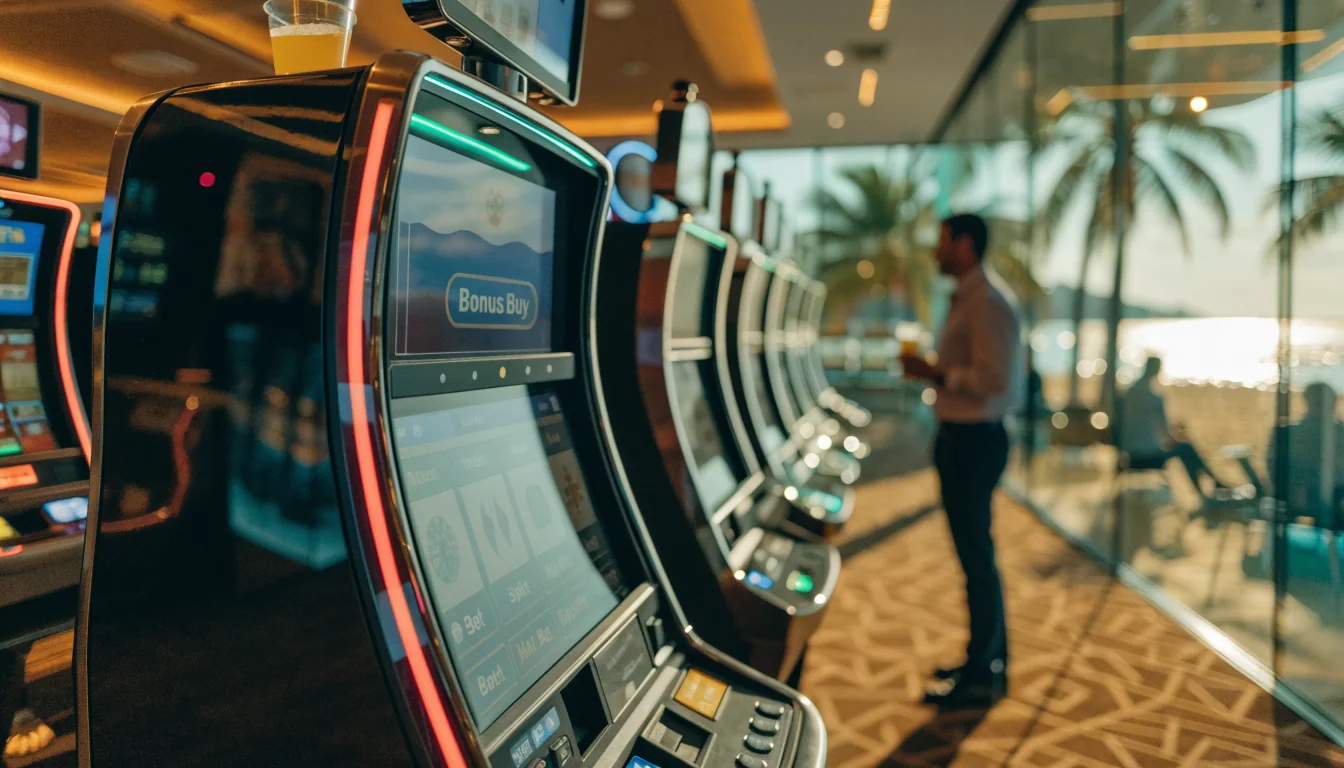
When engaging with these offshore platforms, the absence of a domestic licensing body means the traditional advice of "checking the local regulator’s registry" is obsolete. The regulatory oversight falls to the licensing jurisdiction of the operator. Consequently, understanding the mechanical realities of the games — such as volatility and RTP — becomes even more critical, as the player must rely on the technical specifications provided by the game providers and the integrity of the foreign regulator rather than local consumer protections.
High Volatility vs Low Volatility Slots: A Structural Comparison
To clarify the distinction, one must look at how the two models handle a theoretical bankroll of identical size.
In a high-volatility slot, the experience is characterized by rapid bankroll depletion punctuated by sudden, significant spikes. The math model is designed to withhold returns until a specific trigger threshold is met. This is the “high risk, high reward” paradigm. It appeals to players seeking the adrenaline of a substantial payout and those willing to absorb the cost of extended losing streaks. The trade-off is the likelihood of leaving the session with nothing. The bankroll is exposed to the risk of total loss before the high-value combination lands.
In a low-volatility slot, the experience is characterized by a rolling balance. The small, frequent returns continually offset the wagers. The bankroll graph resembles a gentle wave rather than a steep cliff. This is the "low risk" model. It appeals to players who view the wagering experience as a form of extended entertainment, where the value derived is measured in time spent on the platform rather than the pursuit of a singular jackpot.
The core difference lies in the utility of the bankroll. A high-volatility game requires a bankroll large enough to absorb the drought between significant payouts. A low-volatility game requires a bankroll designed to sustain a steady rate of wagering, bolstered by the continuous trickle of returns. Choosing between high or low volatility slots is fundamentally an exercise in matching the game’s mathematical model to the player’s bankroll size and session expectations.
Rapid bankroll depletion with infrequent large wins; requires a large bankroll to survive dry spells.
Frequent small wins maintain a rolling balance; suited for extended sessions with modest bets.
The Provider Landscape and Technical Design
The development of low-volatility titles requires a specific approach to game design. Providers must balance the frequency of wins with the visual and audio feedback to ensure the experience remains engaging despite the smaller payout sizes. The psychological reward loop in a high-volatility game relies on the anticipation of the rare event. In a low-volatility game, the reward loop relies on the continuous, small dopamine hits of frequent, minor victories.
NetEnt has historically excelled in this space, creating titles where the visual and audio cues perfectly match the low-risk mathematical model. The design ensures that even a three-symbol win feels satisfying, despite representing only a fraction of the initial bet. PlayNGo has similarly developed a portfolio that spans the volatility spectrum, offering games where the pay table structure explicitly supports a low-risk approach. Microgaming, one of the older providers in the space, has also contributed to this segment with titles designed for extended play.
The engineering of these games is not accidental. It requires precise calibration of the RNG to ensure the hit frequency aligns with the targeted volatility rating. A low-volatility game might have a hit frequency of 30% to 40% or more, meaning a winning combination lands on a significant percentage of spins. This is contrasted with high-volatility games where the hit frequency might be significantly lower, but the value of those hits, when they occur, is substantially higher.
Top Low-Volatility Titles for 2026
Moving from the theoretical to the concrete, identifying the best low-volatility slots requires examining specific titles that demonstrate the principles outlined above. These are games where the pay table and the algorithmic design align to produce a low-risk, high-frequency experience. The following titles represent the fundamental architecture of low-volatility design.
-
Starburst
- Provider: NetEnt
- Characteristics: Starburst is the archetypal low-volatility slot. The game features a pay table where the top-tier payout is modest, but the frequency of three-of-a-kind and expanding wild combinations is exceptionally high. The design relies on both-ways-pays mechanics, which increases the probability of a return on any given spin. This makes it a prime example of a game designed to sustain a balance over a long session. The absence of a complex, multi-tiered bonus round keeps the mathematical focus strictly on the base game frequency.
-
Dead or Alive
- Provider: NetEnt
- Characteristics: While often discussed in the context of its high-volatility sequel, the original Dead or Alive operates on a noticeably flatter mathematical curve. The pay table indicates a higher frequency of lower-tier returns, particularly during the sticky wilds feature. It bridges the gap between offering engaging features and maintaining a hit rate that does not rapidly deplete the bankroll. It demonstrates how a theme traditionally associated with high risk can be engineered for a more sustained, lower-risk experience.
-
Gemix
- Provider: PlayNGo
- Characteristics: Gemix departs from traditional reel spinning and employs a cluster-pays grid mechanic. This structural choice fundamentally alters the volatility profile. With multiple cascading wins possible from a single spin, the hit frequency is inherently high. The game is designed around clearing patterns and charging a world meter, which provides continuous, incremental progression. This constant feedback loop of small wins and minor progress markers is the definition of a low-volatility, extended-play experience.
-
Wild Wild Chest
- Provider: Red Tiger
- Characteristics: This title exemplifies how modern providers structure low-volatility mechanics into visually complex frameworks. The pay table is designed to yield frequent, smaller returns through standard symbol combinations and frequent wild activations. It avoids the long dead stretches characteristic of high-risk games, instead providing a steady flow of micro-wins that keep the balance stable. The game’s design proves that low volatility does not equate to a lack of features; it simply means the features are calibrated to return smaller, more frequent rewards.
-
Thunderstruck II
- Provider: Microgaming
- Characteristics: A foundational title in the low-to-medium volatility category, Thunderstruck II distributes its RTP across a wide range of features, including the Great Hall of Spins. The structure of the pay table ensures that the base game provides consistent, albeit small, returns. The bonus features are designed to trigger relatively frequently compared to high-volatility counterparts, offering multi-tiered rewards that keep the player engaged without exposing the bankroll to extreme depletion. It is a study in balancing feature richness with mathematical restraint.
-
Gonzo’s Quest
- Provider: NetEnt
- Characteristics: Utilising an avalanche mechanic, Gonzo’s Quest provides multiple opportunities for winning combinations to form from a single spin. While the base game can exhibit variance, the overarching mathematical structure, particularly with the multipliers attached to consecutive avalanches, is engineered to provide a high frequency of smaller returns. The game’s design encourages extended play by continually returning small portions of the bankroll, making it a staple for players prioritising session length over jackpot chasing.
The Reality of "Winning" in a Low-Risk Environment
The most critical adjustment a player must make when approaching low-volatility slots is redefining what constitutes a successful session. In a high-volatility environment, success is binary: you either hit the significant multiplier and profit, or you do not and your bankroll is consumed. In a low-volatility environment, success is measured by the extension of playtime.
Because low-volatility slots pay out more frequently but with smaller rewards, the player will rarely, if ever, walk away with a massive multiplier of their initial deposit. The mathematics prevent it. The same algorithmic distribution that ensures you do not lose your bankroll in ten spins also ensures you will not double your bankroll in ten spins. The cap on the top-tier payouts structurally limits the upside.
This is the unspoken reality of the "frequent wins" marketing narrative. Frequent wins of a low value are mathematically equivalent to slow losses when the house edge is factored in. The RTP, typically a fixed percentage over the infinite lifespan of the game, ensures that the casino retains its structural advantage. What the low-volatility model provides is not a pathway to overcome the house edge, but a method to experience the wagering process at a controlled pace.
Frequent small wins do not lead to substantial profits; they merely extend playtime while the house edge slowly erodes the bankroll.
For the Australian player, understanding this distinction is paramount. Engaging with low-volatility slots under the assumption that frequent small wins will accumulate into a substantial profit demonstrates a misunderstanding of the mathematics. The frequent wins are designed to keep the player in the seat, their balance gently fluctuating, while the slow mathematical grind of the house edge takes its toll over a larger number of spins. It is a slow bleed rather than a sudden execution.
Bankroll Management Specifics
Given the mathematical reality, bankroll management in a low-volatility environment is distinctly different from high-risk scenarios. The objective is to mitigate the slow bleed by ensuring the frequency of small wins provides maximum counterbalance to the wagers placed.
It is advisable to place smaller bets on machines with multiple paylines to maximise winning chances. The logic is straightforward: a higher number of active paylines increases the probability that any given spin will result in one of those frequent, low-tier payouts that the algorithm is designed to produce. By keeping the individual bet size low, the player ensures that the cost of the spin does not disproportionately outweigh the potential low-tier return.
If a player wagers a large amount on a low-volatility slot, they are effectively wasting the structural benefit of the game. The low-tier payouts will not scale up enough to justify the increased risk, and the game’s design prevents the massive top-tier payouts that would justify a high wager. The optimal approach is to treat the bankroll as a finite resource designed to be consumed slowly, with the small wins acting as a buffer that extends the total number of spins achievable before depletion.
The Distinction Between Pokies and Digital Slots
In the Australian context, the terminology warrants specific attention. The term "pokies" is the ubiquitous domestic label for poker machines, encompassing both the physical machines found in pubs, clubs, and casinos, and the digital versions accessed online. The underlying mathematics of volatility apply identically whether the game is housed in a physical cabinet in a Melbourne venue or streamed from a server in Malta.
However, the regulatory divergence between land-based and online environments is stark. Land-based casinos in Australia are regulated by state government regulators and law enforcement agencies, separate from the federal ACMA regulation of online gambling. The VGCCC (Victorian Gambling and Casino Control Commission) and Liquor & Gaming NSW monitor land-based operations and enforce compliance with state-level frameworks.
The digital space, however, falls under the federal Interactive Gambling Act 2001. This creates a bifurcated market. A player can walk into a physical venue and legally play a low-volatility poker machine under the oversight of the state regulator. That same player cannot legally access a domestically licensed online casino, because the federal framework prohibits their existence. The player must instead turn to offshore operators.
This regulatory structure means that when discussing low-volatility pokies in the Australian market, one is simultaneously discussing a legal, heavily regulated physical industry and a legally restricted, offshore-dependent digital industry. The games may be identical in mathematics — a low-volatility NetEnt title operates the same way regardless of the delivery platform — but the consumer protection environment surrounding them is fundamentally different. The domestic player accessing an offshore platform relies entirely on the licensing and dispute resolution frameworks of the foreign jurisdiction, not the Australian state or federal authorities.
Discrepancies in Regulatory Enforcement Data
When examining the efficacy of the ACMA in blocking access to offshore platforms offering prohibited online casino products, the data available from public sources presents conflicting figures. According to some reporting, ACMA has blocked access to 975 illegal gambling and affiliate websites since November 2019. Conversely, according to data from iclg.com, as of August 2025, ACMA has blocked 1,296 illegal sites and affiliates since 2019, and over 220 services have voluntarily exited the Australian market. A separate source, boomaff.com, states that over 220 illegal gambling services have ceased operations in Australia due to ACMA’s enforcement actions.
This variance in reporting highlights the opacity of the offshore enforcement landscape. The ACMA utilises its powers under the Interactive Gambling Act 2001 to request that internet service providers block domains offering games not permitted under Australian law, such as online casinos, online slots, and in-play online sports betting. The discrepancies in the exact numbers of blocked sites and exited services reflect the dynamic, whack-a-mole nature of offshore domain blocking rather than a specific industry standard. The underlying fact remains consistent: ACMA actively pursues the blocking of offshore casino domains, and this enforcement shapes the landscape of how Australian players access low-volatility games.
Game Selection and Provider Integrity
When selecting low-volatility titles, the provider’s reputation is a significant factor, particularly in a market where the regulatory oversight is external. Providers like NetEnt, PlayNGo, Microgaming, and Red Tiger are subject to the licensing requirements of their home jurisdictions and the foreign markets they supply. This means their RNGs are audited, and their published RTP and volatility metrics are subject to verification.
The importance of this cannot be overstated in the context of offshore access. A player engaging with a platform licensed by the Malta Gaming Authority or the UK Gambling Commission is interacting with games whose mathematical properties are fixed and verified. A low-volatility game will behave as a low-volatility game. In a totally unregulated environment, the theoretical integrity of the RNG is not guaranteed. Therefore, aligning with established providers and platforms operating under recognized foreign licenses is the only method of ensuring that the pay table and volatility metrics presented are accurate.
The Illusion of the "Hot Streak"
A common misconception in low-volatility play is the interpretation of frequent small wins as a "hot streak." The marketing language of "frequent payouts" often leads players to believe they are on the verge of a significant breakout. In the low-volatility model, this is a mathematical illusion. The frequent wins are the baseline operating state of the game, not a precursor to a larger event.
Bet size increase
Increasing your bet after a series of small wins is a critical mistake that exposes more of your bankroll to the same low‑ceiling returns, accelerating losses.
The algorithm is not "building up" to something. It is simply executing its program of returning a high frequency of low-value combinations. When I review player behavior data, the most common error in low-volatility environments is the decision to increase the bet size after a series of small wins, based on the assumption that the game is "hot." This is a fundamental misreading of the volatility. The small wins are the extent of the game’s design intent. Increasing the bet exposes more bankroll to the same low-ceiling returns, accelerating the slow bleed of the house edge.
The disciplined approach is to recognise the low-volatility structure for what it is: a mechanism for extended play. The frequency of wins is the feature. The size of the wins is the limitation. Attempting to force a high-volatility outcome from a low-volatility game violates the basic principles of the math model.
Concluding the Mechanical Overview
The landscape of low-volatility slots is defined by frequency over magnitude. The structural design of the pay table, the distribution of the RTP across lower-tier combinations, and the resulting high hit rate create an environment fundamentally distinct from the high-risk, high-reward paradigm. For the Australian player in 2026, accessing these games requires navigating a bifurcated regulatory environment where domestic provision is prohibited, but individual play via offshore licenses is not illegal.
The value proposition of a low-volatility slot is not wealth generation. It is the preservation of bankroll for the purpose of extended engagement. Games like Starburst, Gemix, and Wild Wild Chest exemplify this design philosophy, offering mathematical models where the steady trickle of small returns keeps the player in the action. Understanding the mechanics behind these titles — the pay table indicators, the role of multiple paylines, and the strategic necessity of smaller bets — transforms the experience from one of hoping for a miracle to one of managing a mathematical reality. The house edge remains, the slow bleed persists, but the session extends. That is the product.
What Makes a Slot Machine Low‑Volatility?
When looking at a slot machine, the most critical metric for understanding its behaviour is its volatility. In the industry, we use the term "volatility" instead of "variance," though both refer to the same mathematical concept: the level of risk associated with a specific game. To directly answer the question of what is a low volatility slot machine, one must look past the marketing veneer and examine the underlying mathematics of the reels.
Defining what does low volatility mean on a slot machine requires separating two distinct factors: hit frequency and payout size. Low-volatility slot machines are engineered to pay out more frequently than their highly volatile counterparts. The trade-off for this increased frequency is the size of the rewards. These machines dispense smaller rewards per winning spin. A high-volatility machine, by contrast, pays out infrequently but with larger wins. Understanding this balance is the core of low volatility slot machines meaning.
This behavioural profile makes low-volatility casino games fundamentally different from high-risk alternatives. By providing a steady drip of small returns, low-volatility slots allow for longer playing sessions with reduced risk. A player’s bankroll stretches further because the game continually replenishes a fraction of the wagered amount, preventing the rapid drawdowns typical of high-volatility games. For players who prefer extended entertainment over the fleeting thrill of chasing a massive jackpot, these machines are the standard choice.
The Mathematics of Frequent Payouts
To understand what are low volatility slot machines in practice, one must look at the mechanics of the reels. The behaviour of slot machines with low volatility is dictated by the configuration of symbols across the reels and the weighting of individual symbols.
hit frequency
Hit frequency is the proportion of spins that result in any winning combination, indicating how often a slot pays out.
In a low-volatility configuration, the random number generator is paired with a reel stripping that includes a higher concentration of low-paying symbols and a higher probability of landing matching combinations on active paylines. By weighting the reels to produce frequent adjacent symbol matches, the software ensures that the hit frequency—the percentage of spins that result in a payout—remains high.
Consequently, the maximum payout for any single spin is capped at a lower multiplier. The prize distribution is compressed. A high-volatility game might have a top prize that multiplies the bet by thousands of times, but the probability of hitting that combination is minuscule. A low-volatility machine spreads the return to player (RTP) across a wider range of small, frequent wins, ensuring the player receives a portion of their wager back on a regular basis rather than losing spin after spin while waiting for a rare large payout.
How Pay Tables Signal Volatility
You do not need to spin the reels for an hour to determine a game’s risk profile. Pay tables can indicate a slot’s volatility. Reading the pay table provides the structural blueprint of the game, revealing exactly how the machine is programmed to distribute its payouts. I always examine the top-tier symbol payouts before placing a wager.
The most reliable indicator is the ratio between the highest paying symbol and the lowest paying symbol. In low-volatility games, the payouts across the symbol hierarchy are compressed. If the top prize for five wild symbols is only ten or twenty times the payout for five low-tier symbols, the machine is structurally designed to distribute wealth evenly.
Conversely, a highly volatile game exhibits a steep payout curve. The lowest symbols pay out almost nothing, while the highest symbols offer massive multipliers. When the top award represents a disproportionate share of the total return to player, the game requires a massive volume of spins to achieve its theoretical payout percentage.
Another structural indicator is the presence and behaviour of bonus rounds. If a game’s free spins or multiplier features trigger frequently but offer modest multipliers, it is built for low volatility. If the base game is entirely barren of wins and the entire payout structure relies on triggering a rare free spins round, the machine is highly volatile. The pay table reveals the frequency of these triggers, providing an unmistakable signal of the game’s inherent risk.
Bet Sizing and Payline Mechanics
The mechanics of low volatility are not determined solely by the software’s internal mathematics; the player’s configuration of the bet also matters. It is advisable to place smaller bets on machines with multiple paylines to maximise winning chances. This strategy aligns the player’s bet configuration with the mathematical design of the game.
Slot machines with multiple paylines offer a dense grid of possible winning combinations. By activating all available paylines, a player ensures that every possible line is monitored for a payout. In low-volatility games, where the hit frequency is high, this means a greater proportion of spins will yield a return.
Placing smaller bets per line allows the player to cover the entire grid without exhausting their bankroll prematurely. If a player places a large bet on a limited number of paylines, they artificially increase the volatility of the session. They rely on a few specific lines hitting big, which contradicts the entire premise of a low-volatility machine. By distributing the total wager across a smaller per-line bet covering a wider net, the player captures the frequent, small wins the machine is designed to produce.
Engineering the Session
The purpose of low-volatility slot machines is not to make a player wealthy in a single session. The entertainment value lies in the longevity of the play. By securing a high hit frequency, the game mitigates the psychological drain of consecutive losses. The reduced risk profile appeals to players who want to monitor their bankroll carefully and avoid the sharp downturns associated with high-volatility environments.
The structural compression of the prize pool ensures that the game’s variance remains stable. While a high-volatility game can swing wildly, producing sudden bankroll depletion or massive spikes, low-volatility casino games are anchored by their constant trickle of returns. This consistency is their defining characteristic.
Reading the pay table, configuring the bet to cover the available lines, and understanding the payout distribution are the steps required to identify and utilise these machines effectively. The mathematics are transparent for those willing to look past the reels and examine the numbers that govern them. Understanding the blueprint is the difference between playing a game and being played by it. Match the math.

Pragmatic Play’s Low‑Volatility Slots
Identifying a Low‑Volatility Release in a Provider’s Lineup
When analysing a game studio’s portfolio, the architectural difference between a highly volatile release and a low-volatility Pragmatic Play slot becomes apparent by examining the underlying mathematics. I have spent enough time reviewing these configurations to recognise the patterns immediately. Low-volatility slots pay out more frequently but with smaller rewards. This frequency fundamentally alters the player experience. Instead of draining a budget rapidly while waiting for a massive bonus trigger, the balance sustains itself through a steady trickle of small returns that keep the session active.
The Mechanics Behind the Frequency
Pay tables can indicate a slot’s volatility long before a single spin occurs. In a low-volatility Pragmatic Play product, the distribution of prizes on the pay table skews heavily toward the lower end. I look at the gap between the highest paying symbol and the lowest. When the top reward is merely a small multiple of the triggering bet, the engine is engineered for constant micro-wins rather than exponential windfalls. The system relies on these nominal distributions to keep the return cycle tight, effectively preventing long dry spells but strictly capping the maximum payout ceiling.
A Notable Entry
Consider Gemix. While often associated with Pragmatic Play’s broader portfolio discussions, the title functions as a textbook example of this category. The grid mechanics drop symbols continuously, paying out small, structured clusters that sustain play. It removes the agonising dead spins characteristic of high-variance engines. The math is transparent: steady, metered returns. No massive multipliers. Just persistent engagement.
Low‑Volatility Pokies in the Australian Market
In the local market, the term "pokies" is the standard vernacular for poker machines, covering both the physical machines found in venues and their digital equivalents. While international platforms and broader discussions often use "slots", the Australian market operates almost exclusively on this localized terminology. When looking at low-volatility pokies, the underlying mechanics remain identical to the generic slot machines discussed earlier, even if the nomenclature changes.

From the other side of the industry, the distinction is purely linguistic. A low-volatility pokie is engineered identically to any other low-volatility slot: these machines pay out more frequently but with smaller rewards. This structure allows for longer playing sessions with reduced risk, as a player’s bankroll is steadily chipped away at a slower rate rather than being subjected to rapid, high-variance swings. Because the mathematical model prioritizes frequent, minor returns over rare, substantial jackpots, these games are often positioned as a safer entry point for newer players or a relaxed option for experienced ones.
The hardware and software of a low-volatility pokie do not differ from an international low-volatility slot. A game like Starburst, built by a provider such as NetEnt, operates on the exact same math whether an Australian venue calls it a pokie or an offshore platform categorises it under generic slots. The name is a regional wrapper.
Identifying the Machines
When evaluating which pokie machines are low-volatility, the same technical rules apply. The pay table is the primary indicator of a machine’s behaviour. A top-heavy pay table that promises massive multipliers for rare symbol combinations signals high volatility, whereas a flattened pay table that pays out smaller amounts for more frequent, lower-tier combinations indicates a low-volatility machine. Locating low-volatility pokies in the Australian market comes down to reading those pay tables and recognising the frequency of the base-game returns. The terminology shifts, the math does not.
Highest RTP Low‑Volatility Slots You Should Try
Matching a high Return-to-Player percentage with a low-volatility engine is a specific technical combination. In these configurations, the mathematical model sustains the bankroll over longer sessions, capitalising on the fact that low-volatility slots pay out more frequently but with smaller rewards. Players may experience smaller jackjots and payouts compared to higher volatility games, but the steady return rate reduces the net erosion of the initial deposit.
Among the titles that fit this profile are:
- Starburst — A benchmark for low-volatility design, built around frequent small wins and expanding mechanics.
- Thunderstruck II — A title that balances steady baseline returns with extended feature cycles.
- Wild Wild Chest — Engineered for consistent hit rates, keeping the session alive through regular line wins.
The practical outcome is straightforward. Lower volatility provides the frequency; the RTP preserves the capital. Both factors must be present in the game’s underlying mathematics to sustain the session without rapid depletion.
Overview of Low‑Volatility Slot Games
The appeal of low-volatility slot games lies entirely in the pacing. These titles are engineered to pay out more frequently, though with smaller rewards. The architecture is deliberate: smaller, consistent returns keep a bankroll ticking over, making these games a natural fit for extended play sessions where reducing overall risk takes priority.
When I look at how these games actually function, the design mechanics are straightforward. The prize distribution is flattened across the paytable rather than concentrated at the top. You trade the prospect of a sudden, balance-altering jackpot for the structural certainty of remaining in the game longer. It is a genre built for sustainability.
This overview serves as a bridge. Having established what low-volatility slots are, the focus now shifts from the general genre mechanics to the specific machines that fit this profile and the regulatory environment governing their provision.
Legal Framework for Online Slots and Casinos in Australia
There is no single overarching statute or single overarching gambling authority regulating gambling in Australia. The regulatory environment is split, with enforcement occurring at both the state/territory and federal levels.
The federal layer is governed by the Interactive Gambling Act 2001 (IGA), which prohibits the provision of online casino-style games—including slots, poker, blackjack, and roulette—to Australian residents. The Australian Communications and Media Authority (ACMA) is the federal regulator that enforces the Interactive Gambling Act 2001.
When researching the Interactive Gambling Act, sources occasionally diverge on its citation. Some historical references cite an Interactive Gambling Act 1997, while the established Commonwealth law currently governing online gambling harm minimisation is the Interactive Gambling Act 2001.

The IGA targets operators, not individual players. It is not illegal for individual Australians to play at offshore-licensed online casinos, but it is illegal to offer online casino gambling domestically. It is not possible to obtain a licence to operate an online casino in Australia, which means there are no domestically licensed real-money online casino operators available to Australian players.
State and territory regulators oversee land-based casinos, as well as legal online sports betting. The Northern Territory Racing Commission (NTRC) functions as a de-facto online gambling regulator because it licenses most national online bookmakers. The Victorian Gambling and Casino Control Commission (VGCCC) monitors wagering service providers for compliance with the National Consumer Protection Framework, and each Australian state and territory maintains its own separate gambling regulator. However, these state and territory regulators have limited power over offshore online casinos.
To enforce the federal ban, ACMA can request internet service providers to block websites offering games not permitted under Australian law, such as online casinos and in-play online sports betting.
Data regarding the scale of ACMA’s enforcement actions varies by reporting source. As of publication in 2024, ACMA has blocked access to 975 illegal gambling and affiliate websites since November 2019. However, data from iclg.com indicates that as of August 2025, ACMA has blocked 1,296 illegal gambling sites and affiliates since 2019, and 220 illegal services have voluntarily exited the Australian market. This latter figure of voluntary market exits is corroborated by boomaff.com, which reports that over 220 illegal gambling services have ceased operations in Australia due to ACMA’s enforcement actions. Earlier reporting from theiaga.org noted that more than 100 illegal gambling services, including online casinos, exited the Australian market after ACMA began enforcing new rules in 2017.
The structure is deliberate.
Are online casinos legal in Australia in 2026?
No — under the Interactive Gambling Act 2001 it is illegal to offer online casino games such as slots, poker, blackjack and roulette to Australian residents, and no domestic online casino licence exists. However, the law targets operators, not players, so individual Australians are not breaking the law by playing at offshore-licensed casinos.
How can I verify if a gambling operator is legal?
Check whether the service holds an Australian state or territory licence — for example from the Northern Territory Racing Commission, which licenses most national online bookmakers. Online casinos cannot be legally licensed in Australia at all, and ACMA (the federal regulator enforcing the Interactive Gambling Act 2001) publishes enforcement actions and has blocked over a thousand illegal gambling sites since 2019.
How do I file a complaint against a casino?
For online gambling, complaints go to ACMA, the federal regulator that enforces the Interactive Gambling Act 2001 and acts against illegal offshore services. For land-based casinos and licensed wagering providers, the relevant state or territory regulator handles complaints — such as the VGCCC or Liquor & Gaming NSW — though their power over offshore online casinos is limited.
Written by the editors at Casino Crypto Guide.