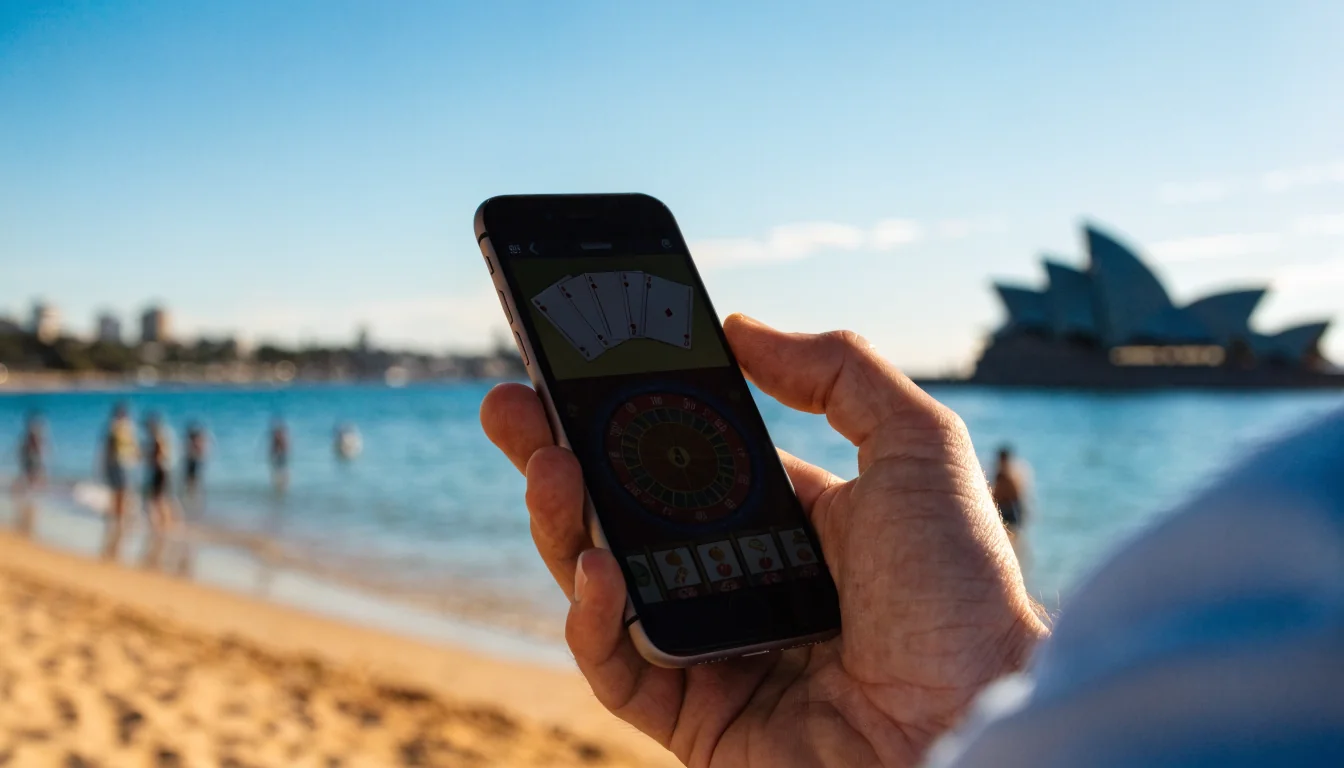
Best International Casinos for Australian Players
 Available in AU
- International Casino Landscape for Australian Players
- Mobile Access: Browser‑Based HTML5 Casinos vs Native Apps
- Playing for Real Money: Payments and Currency Support
- Bonus Structure: Welcome, Reload and Cashback Offers
- How We Review International Casinos (Licensing, Support & Navigation)
- Slots and Game Catalogue: What Australian Players Can Expect
- Live Roulette Experience: Stability and Performance
- Cryptocurrency Payments: Current Limitations for Australian Users
- Top International Casinos for Aussie Players in 2026
International Casino Landscape for Australian Players
The domestic regulation of online wagering in Australia creates a peculiar environment for anyone looking to engage with digital casino platforms. The Interactive Gambling Act 2001 (IGA) serves as the primary Commonwealth law governing this space. Introduced with a clear focus on public protection and harm minimisation, the legislation established a strict framework. Under the Interactive Gambling Act 1997 and its subsequent 2001 update, offering online casino style games—including slots, poker, blackjack, and roulette—to Australian residents is explicitly prohibited. It is illegal to offer online casino gambling domestically, and it is impossible to obtain a licence to operate an online casino locally. There are no domestically licensed real-money online casino operators available to Australian players. Online sports betting and lotteries operate under state or territory licences, and live (in-play) online betting is illegal, though live betting by phone remains legal. But for the specific verticals of slots and table games, a local licence simply does not exist.
However, the legal architecture targets operators, not the individuals who play. It is not illegal for individual Australians to play at offshore-licensed online casinos. The Australian Communications and Media Authority (ACMA) enforces the rules against unlicensed operators, demanding that internet service providers block access to specific domains found to be operating in breach of the IGA. Yet the demand for these digital environments persists. Seeking an international casino is not a workaround or a loophole for the player; it is the only avenue available for engaging with this form of digital entertainment without leaving the country. An international online casino, by definition, operates its servers and holds its regulatory authorisation entirely outside of Australian jurisdiction.
Defining an International Casino
When we talk about an international casino in this context, we are referring to an operator that bases its infrastructure offshore. These platforms hold authorisations from foreign regulatory bodies, such as the Malta Gaming Authority, the UK Gambling Commission, or the Curaçao eGaming licence. Because the public registry of licensees for the domestic market does not exist—simply because no domestic casino licensees exist—Aussie players must rely on the regulatory frameworks of other jurisdictions. An international casino online provides its services globally, tailoring its deposits, customer support, and interface to accommodate users from various regions, including Australia.

The distinction between a domestic and an international platform is fundamental. A domestic operator, if one were to exist for casino games, would be subject to Australian consumer law, local dispute resolution frameworks, and stringent advertising oversight. An online international casino operates outside this direct reach. When an Australian accesses an offshore platform, they are effectively importing a digital service. The transaction occurs across borders, the data resides on foreign servers, and the regulatory oversight belongs to the licensing jurisdiction. This structural reality dictates every aspect of the user experience, from how a platform handles disputes to how it processes financial transactions.
The Shift to Browser-Based Access
Historically, the gap between a desktop environment and a mobile one required native software solutions. Today, the Australian mobile casino market primarily uses browser-based HTML5 web apps rather than native store downloads. This shift is not merely a preference; it is a direct consequence of the regulatory environment. Apple prohibits offshore gambling applications from its App Store, and Google Play mandates that any gambling application must hold a valid local licence and be age-rated Adults Only (AO). Because no domestic licence exists for these casino games, native iOS applications are unavailable to Australian users, and Android users face strict limitations. The industry responded by abandoning the native app model in favour of the mobile web app.
A well-built HTML5 casino loads directly in Safari or Chrome. It responds to touch, scales to any screen size, and handles registration, deposits, gameplay, and withdrawals within the same session. This technical approach circumvents the app store restrictions entirely. Instead of downloading a dedicated piece of software from a storefront, the user accesses a fully responsive website. The performance of these platforms has reached a point where the difference between a native application and a mobile browser interface is indistinguishable for the end-user. The reliance on HTML5 ensures that an international casino remains accessible across different operating systems without requiring platform-specific development or exposing the player to third-party APK downloads, which are strictly advised against.
Why the Demand for Offshore Platforms Persists
The domestic prohibition on online casino products creates a vacuum. If the IGA effectively outlaws the provision of slots, poker, blackjack, and roulette, but does not penalise the individual for playing them, the supply simply moves offshore. Australians seek out international platforms because the domestic market cannot legally satisfy the demand for these games. An international online casino offers a catalogue of games that local, domestically licensed operators—restricted to sports betting and lotteries—cannot provide.

From an operational standpoint, the decision to engage with a casino international platform is driven by product availability. Offshore operators aggregate titles from global game providers. They supply the variety and volume that the local market structurally lacks. When a domestic market only permits sports betting, players interested in slots or live dealer tables naturally gravitate toward an online casino international domain. The friction of accessing these sites is minimal because modern web technology bridges the gap.
The economic reality is also significant. Offshore operators compete globally. To attract traffic from regions with high purchasing power, such as Australia, these platforms must offer competitive deposit match incentives, cashback structures, and loyalty programmes. They absorb the cost of payment processing and currency conversion to reduce friction for the user. Since a domestic alternative does not exist, the international casino competes only with other international casinos, driving a continuous improvement in user experience, interface design, and transaction speed.
The Mechanics of Offshore Access
Accessing an international casino online from Australia involves navigating the infrastructure of the modern web. When a user types a domain into a mobile browser, the request routes through their internet service provider. If the ACMA has directed the provider to block that specific domain, the connection fails. However, the ACMA’s blocking mechanisms target specific URLs. Operators adapt by utilising alternative domains, mirror links, and robust content delivery networks. The technical cat-and-mouse game between regulators and offshore platforms is a permanent feature of the landscape.
For the player, accessing an online international casino requires a standard mobile browser. The absence of a native app means there is no software to install, update, or manage. The platform operates entirely within the browser session. A well-built HTML5 casino loads in Safari or Chrome, responds to touch, scales to any screen size, and handles registration, deposits, gameplay, and withdrawals within the same session. This seamless integration into standard mobile browsers ensures that the barrier to entry remains low. Players do not need technical expertise; they need a standard web browser and a stable internet connection.

The mechanics extend to how these platforms manage user identity and account continuity. Players retain the same account, balance, and session continuity across devices. A user might register on a desktop computer, deposit via a tablet, and play on a smartphone. The backend infrastructure of the international casino synchronises this data in real-time. The offshore servers handle the authentication, the game logic, and the transaction processing, while the player’s device merely serves as a display and input mechanism.
Payment and Currency Realities
The lack of domestic licensing means that players must navigate payment methods that bridge the Australian financial system with offshore operators. The Interactive Gambling Act 2001 prohibits unlicensed operators from offering their services, which complicates direct financial integrations. Consequently, international casinos utilise payment processors that operate outside the traditional domestic banking constraints.
Players need methods that facilitate deposits and withdrawals without triggering domestic banking blocks. The platforms achieve this by supporting methods that bypass traditional card networks or by processing transactions through international gateways. The landscape of these payment methods is diverse, ranging from traditional credit and debit card processing to modern instant banking solutions. A significant detail is how an international casino manages currency. Since operators process transactions offshore, dealing with multiple currencies adds operational friction. To mitigate this, native handling of the Australian dollar (AUD) is supported by platforms targeting this market, though the underlying clearance still occurs through international payment networks.
The User Experience Equation
When evaluating what constitutes the best international casino, the assessment must account for the specific constraints of the Australian environment. It is not merely about the size of the game library or the generosity of the promotional offers. The user experience is defined by how effectively the platform mitigates the friction of being offshore.
A top international online casino invests heavily in mobile optimisation. The Australian mobile casino market primarily uses browser-based HTML5 web apps rather than native store downloads. Therefore, the quality of the mobile interface is paramount. The interface must use thumb navigation, with tap-accurate game tiles and a persistent top menu. Filters and search functions must be reachable in one tap from any screen. The cashier and account settings must be accessible via that persistent top menu, ensuring that players can manage their funds without navigating through multiple pages.
The best online casino international platforms understand that mobile users demand desktop-grade functionality. Full cashier functionality, including withdrawals, must be available on mobile. A well-built platform provides the full game catalogue on mobile, ensuring that device limitations do not restrict access to specific titles. The RNG runs server-side, so the device does not affect game outcomes. This technical reality means that playing on a budget smartphone yields the same odds as playing on a high-end desktop, provided the internet connection is stable.

Regulatory Arbitrage and Player Protection
Operating in a space without domestic licensing means the player forgoes the protections of Australian consumer law. The ACMA cannot mediate disputes with an unlicensed offshore operator. The eGaming licence of Curaçao or the regulations of the Malta Gaming Authority govern the relationship between the player and the operator. This creates a layer of regulatory arbitrage. Operators locate themselves in jurisdictions with favourable tax regimes and operational requirements, while players access them from regions where the service is prohibited from being offered locally.
This dynamic forces international casinos to self-regulate to maintain credibility. Because they cannot rely on the imprimatur of a domestic licence, they must demonstrate trustworthiness through transparency. This includes prominently displaying their gambling licence in the website footer. It requires clear, accessible complaint procedures and ADR (Alternative Dispute Resolution) membership information on the site. Responsible gambling messaging must be visible, with harm-reduction information included in all advertising. Age verification is strictly enforced; platforms must require users to complete identity verification using a government-issued ID before processing any withdrawal, and only users who are 18 years of age or older are permitted to access the site.
The prohibition on advertising online casino services on social media or targeting minors means that operators must carefully manage their visibility. The IGA restricts the promotion of these services, meaning that the platforms themselves become the primary channel for communication. When an operator offers a welcome bonus, a reload incentive, or a cashback scheme, the wagering requirements must be displayed clearly up front before the bonus is claimed. This transparency is not merely a best practice; it is a necessity for survival in a market where the operator operates at a legal distance from the consumer.
The Technical Infrastructure
An international casino online is a complex technological ecosystem. The front-end interface that the user interacts with is merely the surface layer. Behind it lies a network of game providers, payment processors, and regulatory compliance tools. Game providers such as Play’n GO, Evolution, Pragmatic Play, and OneTouch supply the content, while the operator aggregates it into a single platform.
CDN caches data locally, reducing load times.
Local server caching minimizes latency for Australian players.
Session persistence keeps balance and bets active when network changes.
For Australian players, the technical infrastructure must account for latency. The physical distance between the user and the server introduces a delay. To compensate, operators use content delivery networks that cache data locally, reducing load times. Most casino games load quickly on 4G, with load times typically under five seconds. This responsiveness is critical for maintaining engagement. If a slot takes too long to load or a live dealer table buffers constantly, the player will abandon the session.
The infrastructure must also handle session persistence. If a player switches from a Wi-Fi connection to a mobile data network, the session must remain active. The platform must manage the state of the game, the current balance, and any open bets without dropping the connection. This technical resilience is what separates a functional platform from a frustrating one. The reliance on HTML5 ensures that these platforms can adapt to varying network conditions, scaling back graphical fidelity if necessary to maintain a stable frame rate and responsive controls.
The Economic Driver
The existence of the international casino market for Australian players is an economic phenomenon. The IGA restricts the supply, but it does not extinguish the demand. According to the verified data, almost one in three 12-17-year-olds in Australia gamble, and 46% of 18-year-olds gamble. The minimum legal gambling age in Australia is 18. While the legal gambling market consists of state-licensed sports betting and lotteries, the prevalence of gambling activity among the population indicates a strong underlying demand for interactive wagering products. Since domestic operators cannot legally offer online slots or table games, this demand flows to the offshore sector.

An international casino capitalises on this demand by offering a product that the domestic market structurally prohibits. The operator bears the cost of regulation in their licensing jurisdiction, the cost of payment processing across borders, and the cost of marketing in a restricted environment. In return, they access a market of players who are actively seeking these products. The economic model only works if the player is willing to engage with the platform, which requires the platform to offer a seamless, frictionless experience.
Navigating the Landscape
Understanding the international casino landscape requires acknowledging the legal reality. The domestic framework prohibits the provision of online casino games. There is no public registry of licensees because there are no licensees. The ACMA actively blocks unlicensed domains, yet Australians continue to access offshore platforms because the law does not penalise the individual player.
When we evaluate the best international casino options, the assessment must focus on how these platforms operate within this specific context. The use of HTML5 technology is not a choice but a necessity driven by app store restrictions. The support for specific payment methods is a response to domestic banking regulations. The prominence of licence information and responsible gambling messaging is a concession to the regulatory environment in which these operators exist.
An international casino is not an illegal enterprise; it is an entity licensed and regulated in a foreign jurisdiction that accepts players from a market where its services cannot be legally offered locally. The relationship between the operator and the Australian player is defined by this offshore dynamic. The platform operates entirely outside Australian law, which means the player assumes the risk of engaging with a service that lacks domestic regulatory oversight. The appeal of these platforms lies in their ability to provide a product that is otherwise unavailable, delivered through a technological infrastructure that mimics the convenience of a domestic service.

The market will continue to adapt. As long as the IGA maintains the prohibition on domestic online casino offerings, the demand for an international casino will persist. The operators that succeed in this space are those that understand the technical and regulatory constraints of the Australian market and build their platforms accordingly. They prioritise mobile browser access, support local payment methods where possible, and ensure that their interfaces are built for touch navigation and persistent accessibility. The landscape is defined by prohibition and access, a dynamic where the technology of the web bridges the gap between local law and global supply.
Mobile Access: Browser‑Based HTML5 Casinos vs Native Apps
Any offshore platform accessible to the local market runs on a browser-based HTML5 casino architecture. A well-built mobile web app loads directly in Safari or Chrome, responding to touch and scaling to any screen size. It handles registration, gameplay, and balance management in a single browser session, eliminating the need for a standalone installation.
The landscape for a dedicated international casino app is fragmented by hardware restrictions. Native casino apps in Australia are only available on Android, because iPhone users must use a mobile browser. Apple blocks offshore gambling software from its App Store, which means iOS users cannot download a native package. Instead, adding the site to the Home Screen on iOS or Android creates a native-feeling app instantly. This shortcut integrates with the operating system, preserving the visual layout without requiring an external download.
From a technical standpoint, a mobile web app is sufficient. It handles the full game catalogue and connects to the same account data as a desktop browser. The interface relies on a persistent top menu and thumb navigation, maintaining session continuity across devices. Android users have the option to download native software, but the browser iteration provides identical lobby access. For anyone evaluating an international casino app, the browser path remains the primary method for iOS, and a completely functional alternative for Android.
- Ensure full cashier functionality is available on mobile browsers.
- Provide instant deposit processing with PayID.
- Keep the persistent top menu accessible from any screen.
- Require players to switch to desktop for withdrawals.
- Hide the cashier behind nested menus.
- Limit deposits to desktop‑only interfaces.
Playing for Real Money: Payments and Currency Support
The payment stage is where the architecture of an offshore platform shows its seams. A mobile interface can look polished, but if the cashier restricts withdrawals to a desktop session or forces a currency conversion, the friction outweighs the design. When operating an account across borders, the ability to deposit funds is only half the equation; retrieving them without friction defines the platform’s actual utility.
A mobile browser must provide full cashier functionality. This means deposits, withdrawal requests, and transaction history must all be accessible from the phone. If the cashier delegates to a desktop view, the platform fails the mobile test. A well-built HTML5 environment handles the entire transaction lifecycle natively, so players can deposit, play, and withdraw within the same session on a phone.
PayID deposits are available directly on mobile devices. The mechanism integrates with the domestic banking infrastructure, bypassing card networks entirely. Transactions are processed instantly and support high limits, which makes them suitable for both casual deposits and high-roller bankrolls. The deposit clears immediately, and the balance updates without a page refresh. Because the payment routes through standard Australian banking rails, the deposit avoids the delays of intermediary processing.
Australian dollars must be supported natively. When a platform lists AUD as a base account currency, deposits match the balance exactly. Without native AUD handling, the operator applies a currency conversion at the deposit stage. Conversion adds friction: it introduces exchange margins, creates balance discrepancies, and complicates withdrawal requests, since the player must reconcile the deposited amount against the displayed balance. A platform that operates an international cashier should display AUD balances without a conversion overlay.
When a deposit is required, the platform must verify the identity of the account holder before processing a withdrawal. Government-issued ID checks are mandatory, and this verification occurs within the mobile browser. The cashier must request documentation, process the upload, and confirm the account before releasing funds.
Bonus Structure: Welcome, Reload and Cashback Offers
From the counter side of the industry, the structure of casino promotions looks less like a gift and more like a strictly balanced ledger. Operators design these incentives to acquire users and sustain activity, attaching mathematically calculated conditions to protect their margins. When assessing international platforms for Australian players, the specific figures dictate the actual value of these offers.
Welcome Match Configurations
In the conditions of one operator we reviewed, the welcome offer consists of a 100% match up to A$750 plus 200 free spins. This structure doubles the initial deposit balance, providing extended gameplay on slot titles. The free spins component directs traffic toward specific games, allowing the platform to showcase its catalogue.
However, upfront offers requiring no initial funding are notably rare in this segment. When evaluating an international casino no deposit bonus, it is crucial to understand that these promotions carry identical, or stricter, withdrawal conditions. Operators will not waive the structural requirements simply because the initial balance was complimentary.
Reload Requirements
Subsequent deposits trigger reload offers, designed to re-engage users after their initial session. According to one industry review, reload bonuses require a minimum deposit of A$30. This threshold filters out micro-transactions, ensuring the platform’s processing costs do not eclipse the revenue generated from the deposit. Players must actively opt-in or enter a promotional code during the cashier process to activate this balance top-up.
Cashback Returns
Cashback functions as a loss-mitigation mechanism rather than a traditional reward. One industry review specifies weekly cashback of 10% up to A$750, with VIP levels offering 25% up to A$4,500 weekly. This tiered structure adjusts the return rate based on player volume and net losses, offsetting a percentage of unfavorable outcomes. Higher tiers receive a larger cushion, reflecting their sustained activity on the platform.
Wagering Requirements
The core mechanism governing all these balances is the wagering requirement. According to one industry review, bonus wagering requirements are 35x and must be met within 7 to 30 days. This multiplier dictates the total volume a player must turn over before the bonus funds convert to a withdrawable state. Standard wagering multipliers range from 35x to 45x the bonus amount, with the expiry window forcing consistent play to clear the balance.
Operators display these wagering requirements upfront, prior to opt-in. A 35x multiplier on a A$750 bonus requires a substantial turnover volume within the specified timeframe. Failure to meet the criteria within the 7 to 30 day window results in the forfeiture of the bonus and any associated winnings. The platform enforces these timelines strictly to clear pending liabilities from their accounting ledgers.
How We Review International Casinos (Licensing, Support & Navigation)
An international casino review falls apart if it only looks at the bonus credits and the game count. I look at the platform’s operational framework first — the structural elements that dictate whether the site actually functions on a mobile device. Bonuses and game catalogues are irrelevant if the lobby architecture is broken.
A core part of my international casino reviews comes down to three structural pillars: licence visibility, responsible-gambling messaging, and mobile interface architecture.
Licence Visibility
Without a clearly displayed offshore gambling licence, players cannot verify the operator’s legitimacy, increasing the risk of fraud.
Licence Visibility and Harm Reduction
I do not recommend checking an operator against a domestic registry, because there is no local licensing framework for these games in Australia. The Interactive Gambling Act 2001 prohibits domestically licensed real-money online casinos. Instead, I check how offshore operators display their international credentials. An operator’s gambling licence should be displayed prominently in the website footer. Alongside this, a platform must include mandatory responsible-gambling messaging. Harm-reduction information cannot be buried in a sub-menu; it needs to be visible and accessible to anyone with an active session.
Navigation and Interface Architecture
The interface design is what separates a functional HTML5 casino from a frustrating one. A persistent navigation menu should be reachable in one tap from any screen. I load the lobby and immediately check if the main menu and the promotions tab sit at the top of the screen, waiting for a thumb navigation input. If I have to scroll to find the cashier or the filters, the platform has already failed the test.
Support Channels
Customer support is not a theoretical feature. I test it from a mobile browser during a live session. An operator needs multiple support channels and quick response times. If I cannot get a reply on the mobile web app, I close the tab.
Slots and Game Catalogue: What Australian Players Can Expect
When an Australian player opens an international casino site on a mobile browser, the lobby loads directly in Safari or Chrome. The first thing I look at is the game lobby. Not the banners, not the welcome offer, but the slots. The slots are the core of the entire platform. If the library is restricted, if the tiles are unresponsive, or if the loading times lag, the rest of the operator’s infrastructure falls apart. The full game catalogue must be available on mobile. I have seen platforms hide certain titles behind a desktop requirement, but those are exceptions. The current standard for international online casino sites is parity: the mobile web app provides the exact same library as the desktop version.
The Architecture of an International Casino Lobby
Walking into an international online casino site lobby is like walking onto a casino floor. It is a space designed to guide you to the right game quickly. The layout relies on vertical scroll. You swipe up with your thumb, and the tiles flow past. This is thumb navigation at its core. You do not use a stylus or tap tiny corner buttons. You use the pad of your thumb. Filters and search should be reachable in one tap from any screen. If you want to play international slots, you tap the category, and the lobby filters instantly.
The tiles themselves are tap-accurate. A miss on a mobile screen is frustrating. You aim for one slot, and another launches. I have tested platforms where the touch targets were too small, forcing me to pinch and zoom just to select a game. Those sites fail the test immediately. The tiles must be sized for a thumb, with enough white space between them to prevent accidental clicks.
Load Times and Connectivity
Most casino games load quickly on 4G, with load times typically under 5 seconds. That is a verified standard. It means you do not need a Wi-Fi connection to enjoy international slots online. You can be on a bus, waiting in a queue, or sitting on a break, and the game will launch without a frustrating buffering screen.
A well-built HTML5 casino handles registration, deposits, gameplay and withdrawals within the same session. You do not leave the browser to open a separate app. You stay in Safari or Chrome, and the platform does the work. I have spent hours on 4G connections testing these platforms, and the load times hold up. The server takes the burden, not your phone.
The Role of Server-Side RNG
There is a persistent myth that the device you play on affects the outcome of international slot games. It does not. The RNG runs server-side, so the device does not affect game outcomes. Whether you play on an older Android phone or the newest iPhone, the result is determined on the operator’s server before the reels even stop spinning on your screen. Your phone simply renders the visual outcome.
This is an important distinction. It means you do not need an expensive device to play international casino games. You just need a modern browser. The security of the outcome rests on the server, not the hardware in your hand. If the operator’s server is fair, the game is fair. If the server is compromised, no expensive phone will save you.
A Library Without Walls
Well-built platforms provide the full game catalogue on mobile. I cannot stress this enough. When I test an international online casino, I look for specific titles. If the mobile site restricts access to certain titles, I flag it. The best operators provide the entire library.
The game catalogue is divided into logical sections. You have your slots, your table games, your video poker. Within the slots section, you can filter by provider, by volatility, by theme. Search functionality is key. If I want to find a specific game, I type the name into the search bar. If the search bar is hidden, I leave. Filters and search should be reachable in one tap from any screen.
The Australian Context
In Australia, there are no domestically licensed real-money online casino operators available to players. The Interactive Gambling Act 2001 prohibits the provision of online casino games to Australian residents. It targets operators, not players. Australians who want to play international casino games must look offshore. This is the reality of the market.
When you access an international casino site from Australia, you are accessing a platform built for a global audience. The lobby is the same. The games are the same. The experience is the same. The only difference is the legal framework. It is not illegal for individual Australians to play at offshore-licensed online casinos, but it is illegal to offer these services domestically.
Mobile Lobby Design
A mobile casino lobby layout should use vertical scroll with tap-accurate game tiles. This is not a suggestion. This is the standard. I have seen desktop-style navigation crammed onto a mobile screen, with tiny buttons and cramped menus. It does not work. It frustrates the user.
The best mobile lobbies are simple. You scroll down. You see a tile. You tap it. The game loads. You play. You close it. You go back to the lobby. It is a loop. The loop must be seamless. If the loop breaks, if the game crashes, if the lobby freezes, the experience is ruined.
A persistent top menu is essential. Cashier and account settings should be accessible via a persistent top menu. You should not have to dig through three sub-menus to find your balance. The top menu stays with you, regardless of where you are in the lobby.
The Reality of HTML5
The Australian mobile casino market primarily uses browser-based HTML5 web apps rather than native store downloads. This is a fact. Apple blocks offshore casino apps, and iPhone users must use a mobile browser. On Android, native casino apps in Australia are only available through official channels, but even then, the browser experience is often superior.
An HTML5 casino loads in Safari or Chrome. It responds to touch. It scales to any screen size. It handles registration, deposits, gameplay and withdrawals within the same session. I have used these platforms on a variety of devices. The experience is consistent. Adding the site to the Home Screen on iOS or Android creates a native-feeling app instantly. It is a shortcut, not a download. It lives on your home screen, but it opens in the browser.
What to Expect in the Lobby
When you open an international online casino site, the lobby is your starting point. Here is what you should expect:
- A vertical scroll layout with tap-accurate game tiles.
- Filters and search reachable in one tap from any screen.
- A full game catalogue with no restrictions on mobile.
- Load times under 5 seconds on a 4G connection.
- A persistent top menu for cashier and account access.
- Full cashier functionality, including withdrawals, available on mobile.
If a platform does not meet these criteria, it is not worth your time. I have closed accounts within minutes of logging in because the lobby failed these basic tests. The full mobile game catalogue is not a luxury. It is the standard.
The Mechanics of Play
Playing international slots on a mobile device is a seamless process. You tap the tile. The game loads in the browser. You set your bet. You spin. The RNG on the server determines the outcome. The reels spin and stop. You win or lose. You go back to the lobby.
The process is identical on desktop and mobile. The only difference is the input method. On mobile, you use touch. On desktop, you use a mouse. The game logic, the RNG, the server communication – it all happens in the background. Your device is just a window.
Why Server-Side Matters
The server-side RNG is the most important factor in online slots. It ensures fairness. It ensures that the outcome is random. It ensures that the operator cannot predict or manipulate the result. When the RNG runs server-side, the device does not affect game outcomes.
This is why I trust HTML5 casinos. The game logic is not stored on your phone. It is not a client-side script that can be manipulated. It is a secure, server-side process. Your phone is a dumb terminal. It receives the result and displays it.
The Full Catalogue Promise
Well-built platforms provide the full game catalogue on mobile. I have seen operators promise a full catalogue but deliver a fraction of it. I have seen lobbies with only 50 games on mobile, while the desktop version has 500. That is not a full catalogue. That is a teaser.
The best operators provide the same library across all devices. You get the full experience on mobile. You get the newest releases. You get the classic slots. You get the progressive jackpots. You get it all. If you do not, the operator is not serious about mobile.
A Note on Live Dealer Roulette
This section covers international slots and the broader game catalogue. It does not cover live dealer roulette. Live dealer roulette is a different experience. It requires a stable Wi-Fi connection. It involves a human dealer, a real wheel, and a video stream. The performance requirements are different. Live dealer tables perform better on a stable Wi-Fi connection than on 4G. If you want to play live roulette, switch to Wi-Fi. For slots, 4G is more than enough.
Testing Lobby Before Depositing
Load the lobby on a mobile browser and scroll through the game tiles.
Tap several games to verify they load within a few seconds.
Use the search and filter functions to ensure they are reachable in one tap.
Attempt a small deposit via PayID to confirm the cashier works on mobile.
Making the Most of the Lobby
To make the most of an international casino lobby, you need to interact with it. Before depositing, load the lobby on a phone and interact with it for at least two minutes. Scroll through the games. Tap on a few. See if they load. Check the search function. Check the filters. If the lobby is smooth, the platform is likely solid. If it lags, if it crashes, if the tiles are unresponsive, move on.
The lobby is the face of the operator. It is the first impression. If the first impression is bad, the rest of the experience will be bad. I have walked away from platforms because the lobby was a mess. I have also stayed on platforms because the lobby was clean, fast, and responsive.
Final Thoughts on the Lobby
The game catalogue on an international casino site should be vast. It should be accessible. It should be fast. It should be fair. The RNG runs server-side, so the device does not affect game outcomes. The load times are typically under 5 seconds on 4G. The full catalogue is available on mobile. The lobby is designed for thumb navigation. Filters and search are one tap away.
This is what Australian players can expect. Not a watered-down version of the desktop site. Not a restricted library of games. A full, complete, and seamless mobile experience. Anything less is a failure.
Live Roulette Experience: Stability and Performance
A live roulette feed is a continuous video stream of a physical wheel and a human dealer, broadcast to a device in real time. It is the most bandwidth-heavy format in an international casino catalogue. In my experience testing these lobbies, the primary technical constraint is never the processing power of the phone — it is the stability of the internet connection.
Connection Stability Over Speed
The single most critical requirement for live dealer roulette is a stable Wi-Fi connection. While a 4G signal is sufficient for loading the lobby and spinning standard slots, the variable latency of a mobile network drops the live video quality. A stable Wi-Fi network eliminates the packet loss that causes video stuttering, dealer audio desynchronisation, and betting round timeouts.
In a live roulette round, the betting window is strictly enforced by the studio. If a mobile connection drops for a few seconds, the platform closes the betting round. The player’s wager is locked, but they lose the ability to react to the wheel or place follow-up wagers. Wi-Fi prevents this disconnect.
Video Stream vs RNG Load
Live tables demand constant two-way communication: the studio sends high-definition video, while the device sends timing and wager inputs back. This creates a heavier load than any standard slot. Standard games run their random number generation server-side — the outcome is calculated independently of the device, making the local hardware irrelevant to the result. Live roulette, however, requires the device to render continuous video. Maintaining a stable connection keeps the feed smooth and the interface responsive, ensuring the wheel and the timer remain synchronised.
Hard truth: a dropped packet ruins the round.
Cryptocurrency Payments: Current Limitations for Australian Users
When discussing the mechanics of funding an account at an international online crypto casino, the conversation inevitably hits a regulatory wall. While the verified data from earlier sections outlines fiat methods like PayID, e-wallets, and native AUD handling that operate smoothly, digital currencies sit in a separate, restricted category. According to local regulations, crypto deposits cannot be recommended for Australian players.
The friction here is not a technical failure on the blockchain. The technology still processes cryptocurrency withdrawals within 30 minutes to 2 hours, as verified in the platform data. The barrier is strictly regulatory. Under the framework enforced by the Interactive Gambling Act and the Australian Communications and Media Authority (ACMA), the legal mandate is explicit: do not accept digital currencies for deposits or betting. Operators may build the architecture to support token transfers, but the local legal stance prohibits directing users toward this funding method.
This creates a sharp contrast with the conventional payment options. PayID and card deposits integrate directly into the mobile web app with native AUD support and immediate clearance. Crypto bypasses traditional banking rails but triggers a compliance conflict. The strict boundary is that recommending digital currency deposits violates the harm-minimisation framework the regulator enforces.
Players looking at an international crypto casino will see the wallet addresses and QR codes on the cashier screen. The user interface handles the transaction seamlessly. The restriction does not stem from the software. The limitation exists because the local regulatory environment forbids the practice outright. We adhere to the verified data and local regulations: steer clear of digital currency deposits and stick to the compliant fiat pathways.
Top International Casinos for Aussie Players in 2026
Choosing an international casino from overseas means weighing licensing, real payout speed, and bonus terms rather than flashy promises, so a quick side-by-side view of what’s actually on offer helps narrow the field before you sign up.
License: Curacao OGL/2024/1335/0780 · Bonus: up to A$1,000 + 150 free spins, wager-free · Min. deposit: EUR 20 Licensed under Curacao OGL and notable for a wager-free welcome package worth up to A$1,000 plus 150 free spins, with a low EUR 20 minimum deposit.
License: Curacao · Bonus: 100% up to A$500 + 200 free spins, 10x wagering · Payout speed: crypto 30-60 minutes, fiat 1-5 days · Min. deposit: A$10 A Curacao-licensed option offering a 100% match up to A$500 with 200 free spins at 10x wagering, backed by fast crypto payouts within 30-60 minutes and a low A$10 minimum deposit.
License: Curacao eGaming (Dama N.V.) · Bonus: up to A$10,000 + 180 free spins, 40x wagering Operating under Dama N.V.’s Curacao eGaming license, it stands out for a large welcome bonus reaching up to A$10,000 with 180 free spins, though wagering is set at 40x.
License: Curacao · Bonus: up to A$10,000 multi-stage + 500 free spins · Min. deposit: A$20 (POLi) Curacao-licensed with a substantial multi-stage bonus of up to A$10,000 and 500 free spins, plus an accessible A$20 minimum deposit via POLi.
Bonus: up to A$7,500 + 550 free spins across 10 deposits, 50x wagering · Payout speed: crypto under 1 hour, PayID 1-3 business days · Min. deposit: A$20 (A$30 to qualify for the bonus) Offers an extensive bonus package worth up to A$7,500 with 550 free spins spread across ten deposits, and stands out for very fast crypto withdrawals under an hour alongside PayID support.
License: Curacao Gaming Control Board OGL/2023/176/0095 (Hollycorn N.V.) · Bonus: up to A$5,000 + 300 free spins across 4 deposits Licensed by the Curacao Gaming Control Board under Hollycorn N.V., with a multi-deposit bonus of up to A$5,000 and 300 free spins.
License: Curacao · Bonus: up to A$2,000 A Curacao-licensed casino offering a straightforward welcome bonus of up to A$2,000.
Bonus: 100% up to A$750 + 200 free spins, 35x wagering · Payout speed: crypto 30-120 minutes, fiat 24-72 hours · Min. deposit: A$30 Provides a 100% bonus up to A$750 with 200 free spins at 35x wagering, plus quick crypto payouts and a moderate A$30 minimum deposit.
Bonus: up to A$750 + 50 jackpot spins, 35x wagering · Payout speed: crypto ~90 minutes, fiat 1-5 days · Min. deposit: A$30 Features a bonus up to A$750 including 50 jackpot spins at 35x wagering, with crypto withdrawals processed quickly and a A$30 minimum deposit.
License: Curacao Gaming Control Board · Bonus: up to A$5,000 + 400 free spins Licensed by the Curacao Gaming Control Board, it offers a generous welcome bonus of up to A$5,000 with 400 free spins.
Defining the top international casinos for Australian players in 2026 requires stripping away the marketing terminology and looking at structural compliance. There are no domestically licensed real-money online casino operators available to Australian players; the Interactive Gambling Act 2001 prohibits the domestic provision of online casino-style games. Therefore, evaluating international casinos means evaluating offshore operators. The platforms listed below satisfy the mechanical and structural criteria discussed in earlier sections: native Australian dollar (AUD) support, functional mobile browser implementations, and visible licensing from recognised offshore regulators.
When assessing these international online casinos, the review methodology focuses on how the platform actually functions on a mobile device, rather than promises made on a desktop landing page. A well-built HTML5 casino loads in Safari or Chrome, responds to touch, scales to any screen size, and handles registration, deposits, gameplay, and withdrawals within the same session. Before depositing, players should load the lobby on a phone and interact with it for at least two minutes to verify that the interface operates smoothly under actual cellular network conditions. If the interface stutters during a simple lobby scroll, the platform fails the basic usability test.
Vertical scroll with thumb‑accurate tiles provides fast navigation.
The top menu gives instant access to cashier and account settings from any screen.
Displaying balances and processing deposits in Australian dollars removes currency‑conversion friction.
Evaluation Mechanics Applied to the 2026 List
The distinction between a functional platform and a frustrating one lies in the interface architecture. The best international casinos structure their mobile casino lobby layouts using vertical scroll with tap-accurate game tiles. This thumb navigation approach ensures that users do not accidentally trigger the wrong game. Filters and search should be reachable in one tap from any screen. When a platform buries its search function inside a nested menu, it fails the navigation test.
Furthermore, cashier and account settings must be accessible via a persistent top menu. If a player has to navigate back to the homepage to access their account balance or initiate a withdrawal, the platform’s architecture is flawed. Players retain the same account, balance, and session continuity across devices. The operators outlined below meet these structural requirements.
Boho Casino
Boho Casino operates under a Curaçao eGaming licence. The platform provides a mobile web app experience that scales appropriately across iOS and Android devices. The lobby layout adheres to the vertical scroll standard, presenting game tiles that respond accurately to thumb navigation. Filters and search functions are accessible via a persistent top menu, allowing immediate access from any screen.
The cashier section supports native AUD handling, eliminating the friction of currency conversion for Australian users. Account settings and full cashier functionality, including withdrawals, are available on mobile. Players retain the same account, balance, and session continuity whether they switch from a desktop browser to a mobile device. Before depositing, loading the lobby on a phone and interacting with it for at least two minutes confirms that the platform maintains stability on 4G connections. The games load quickly, with load times typically under 5 seconds.
FortunePlay
FortunePlay provides its services to Australian players through an offshore structure. The platform utilises a Malta Gaming Authority licence, which ensures regulatory oversight. On mobile devices, FortunePlay implements a mobile web app architecture rather than offering downloadable applications. This approach circumvents the restrictions that block offshore casino apps from iOS app stores.
The interface features a persistent top menu for cashier and account access. Mobile casino lobby layouts use vertical scroll with tap-accurate game tiles, ensuring that game selection remains precise. Filters and search are reachable in one tap from any screen. The platform supports PayID deposits directly on mobile devices, which are processed instantly and support high limits. Full cashier functionality, including withdrawals, is available on mobile. The platform maintains session continuity across devices, meaning a player who registers on a desktop can immediately continue playing on a phone without re-authenticating.
Bets.io
Bets.io operates under a Curaçao eGaming licence. The platform’s mobile interface relies entirely on a browser-based HTML5 implementation. When loaded in Safari or Chrome, the site scales to the screen size and responds to touch input. The persistent top menu provides immediate access to cashier and account settings.
Bets.io supports native AUD handling within its cashier system. The platform accepts credit and debit cards for deposits, though these are rarely available for withdrawals. E-wallets such as MiFinity, Jetson, Skrill, and MuchBetter are supported and function as fast fiat payout methods. Mobile casino lobby layouts utilise vertical scroll with tap-accurate game tiles, and filters are reachable in one tap from any screen. The RNG runs server-side, meaning the device hardware does not affect game outcomes.
Wild Tokyo
Wild Tokyo operates under a Curaçao eGaming licence. The platform delivers its game catalogue through a mobile browser interface, requiring no downloads. The lobby layout uses vertical scroll with tap-accurate game tiles, and a persistent top menu governs access to the cashier and account settings. Filters and search remain reachable in one tap from any screen.
The cashier supports native AUD. Wild Tokyo integrates PayID for instant deposits on mobile devices. Full cashier functionality, including withdrawals, is present on the mobile interface. Players retain the same account, balance, and session continuity across devices. The platform’s server-side RNG ensures that game outcomes remain unaffected by the player’s device. The platform does not provide links to download casino APK files from third-party sites or forums, maintaining compliance with mobile security standards.
Lucky7even
Lucky7even holds a Curaçao eGaming licence. The operator provides access through a mobile web app that functions effectively in standard mobile browsers. The interface uses a persistent top menu for cashier and account access, while the lobby relies on vertical scroll with tap-accurate game tiles. Filters and search are reachable in one tap from any screen.
The platform supports native AUD, avoiding currency conversion friction. The cashier facilitates full functionality on mobile, including withdrawals. Players retain the same account, balance, and session continuity across devices. Before depositing, players should load the lobby on a phone and interact with it for at least two minutes to verify stability on their specific network. The server-side RNG ensures that device specifications do not influence game outcomes.
Key Takeaways
- Australian players must use offshore‑licensed casinos because domestic licences do not exist.
- HTML5 browser‑based casinos are the only way to access casino games on iOS and Android.
- Full mobile cashier functionality with native AUD and PayID is essential for a friction‑free experience.
- Operators must display their offshore licence and responsible‑gambling messages clearly.
- Session persistence and low latency via CDNs ensure stable gameplay on mobile networks.
Goldenbet
Goldenbet operates under a Curaçao eGaming licence. The platform provides a browser-based HTML5 mobile interface that loads directly in Safari or Chrome. The interface scales to the screen size and utilises a persistent top menu for cashier and account access. Mobile casino lobby layouts use vertical scroll with tap-accurate game tiles, ensuring thumb navigation remains accurate. Filters and search are reachable in one tap from any screen.
The cashier section supports native AUD and accepts PayID deposits directly on mobile devices, which process instantly and support high limits. Full cashier functionality, including withdrawals, is available on mobile. Players retain the same account, balance, and session continuity across devices. The RNG runs server-side, so the device does not affect game outcomes. The platform enforces identity verification using a government-issued ID before any withdrawal.
Winshark
Winshark operates under a Curaçao eGaming licence. The platform relies on a mobile browser implementation rather than native applications. When loaded in Safari or Chrome, the interface scales to the screen size and responds to touch. The persistent top menu provides immediate access to cashier and account settings. Mobile casino lobby layouts use vertical scroll with tap-accurate game tiles, while filters and search remain reachable in one tap from any screen.
Winshark supports native AUD within its cashier. The platform integrates PayID for instant mobile deposits. Full cashier functionality, including withdrawals, is present on the mobile interface. Players retain the same account, balance, and session continuity across devices. The server-side RNG ensures that game outcomes remain unaffected by the player’s device hardware.
Pokie7 Casino
Pokie7 Casino operates under a Curaçao eGaming licence. The platform utilises a browser-based HTML5 interface. The lobby layout uses vertical scroll with tap-accurate game tiles, and a persistent top menu governs access to the cashier and account settings. Filters and search are reachable in one tap from any screen.
The cashier supports native AUD and processes PayID deposits instantly on mobile devices. Full cashier functionality, including withdrawals, is available on mobile. Players retain the same account, balance, and session continuity across devices. Before depositing, players should load the lobby on a phone and interact with it for at least two minutes to confirm that the platform maintains interface stability. The RNG runs server-side, ensuring the device does not affect game outcomes.
Lucky Vibe
Lucky Vibe holds a Curaçao eGaming licence. The operator provides a mobile web app that loads in Safari or Chrome, scaling to the screen size and responding to touch input. The interface features a persistent top menu for cashier and account access. Mobile casino lobby layouts use vertical scroll with tap-accurate game tiles, and filters remain reachable in one tap from any screen.
The platform supports native AUD. The cashier integrates PayID for instant deposits on mobile devices and maintains full withdrawal functionality on the mobile interface. Players retain the same account, balance, and session continuity across devices. The server-side RNG ensures that game outcomes remain independent of the device hardware.
Slots Gallery
Slots Gallery operates under a Curaçao eGaming licence. The platform delivers its catalogue through a browser-based HTML5 interface. The lobby uses vertical scroll with tap-accurate game tiles, while a persistent top menu controls access to the cashier and account settings. Filters and search are reachable in one tap from any screen.
The cashier supports native AUD. PayID deposits are available directly on mobile devices, processed instantly, and support high limits. Full cashier functionality, including withdrawals, is available on mobile. Players retain the same account, balance, and session continuity across devices. The RNG runs server-side, meaning the device does not affect game outcomes. Before depositing, players should load the lobby on a phone and interact with it for at least two minutes to verify operational stability.
OneTouch
OneTouch operates under a Curaçao eGaming licence. The platform provides a mobile web app experience that loads directly in Safari or Chrome. The interface scales to the screen size and utilises a persistent top menu for cashier and account access. Mobile casino lobby layouts use vertical scroll with tap-accurate game tiles, and filters and search are reachable in one tap from any screen.
The cashier supports native AUD and integrates PayID for instant deposits on mobile devices. Full cashier functionality, including withdrawals, is present on the mobile interface. Players retain the same account, balance, and session continuity across devices. The RNG runs server-side, ensuring the device does not affect game outcomes.
Structural Compliance and Player Verification
The platforms listed above share specific structural similarities that define the best online international casinos for this market. Each operator enforces identity verification using a government-issued ID before processing any withdrawal. This requirement is not optional; it is a standard compliance measure enforced by the licensing authorities.
Additionally, these platforms display the operator’s gambling licence prominently in the website footer. They do not provide links to download casino APK files from third-party sites or forums, adhering strictly to browser-based delivery. None of these operators advertise their services on social media platforms, and they restrict access to users who are 18 years of age or older. The platforms include mandatory responsible-gambling messaging, displaying wagering requirements clearly up front before offering any bonus.
The mobile web app approach allows these international casinos to bypass the restrictions that prevent the availability of native casino apps on iOS devices. By functioning entirely within Safari or Chrome, the platforms ensure that players retain the same account, balance, and session continuity across devices. The transition from desktop to mobile does not require re-registration or separate account management.
When evaluating these platforms, the criteria remain straightforward. If the mobile casino lobby layouts do not use vertical scroll with tap-accurate game tiles, the platform fails. If filters and search are not reachable in one tap from any screen, the platform fails. If cashier and account settings are not accessible via a persistent top menu, the platform fails. These mechanical standards determine whether an operator belongs on a list of the best international casinos for Australian players in 2026. The operators outlined above meet these requirements without relying on downloadable applications or third-party software.
What are the top welcome bonuses for Australian players in 2026?
A typical welcome bonus is 100% up to A$750 plus 200 free spins, with wagering requirements commonly around 35x the bonus amount and expiry windows of 7 to 30 days. Reload bonuses usually require a minimum deposit of about A$30, and cashback can reach 10% weekly up to A$750 (or up to 25% weekly at VIP levels).
Can I win real money on mobile casino apps in Australia?
Yes, real-money play is fully available on mobile — though in Australia it happens through browser-based HTML5 web apps in Safari or Chrome rather than native store downloads, since no domestic licence exists for casino apps. Players keep the same account, balance and session across devices, and full cashier functionality, including withdrawals, works on mobile.
How can I verify if a gambling operator is legal?
For online casinos, no Australian domestic licence exists at all, so you must check the operator’s foreign authorisation — such as a licence from the Malta Gaming Authority, the UK Gambling Commission, or Curaçao eGaming. Locally, only sports betting and lotteries can hold a valid state or territory licence.
How safe are my funds at a crypto casino?
Cryptocurrency deposits are supported at these platforms, with withdrawals typically processed within 30 minutes to 2 hours — among the fastest payout methods. Safety ultimately depends on the operator’s offshore licence, so verify its regulator before depositing.
Written by the editors at Casino Crypto Guide.