
Best High Volatility Slots in Australia
 Available in AU
- Understanding Slot Volatility and the Australian Regulatory Landscape
- High‑Volatility Slot Machines: How They Work and What to Look For
- High‑Volatility Online Pokies in Australia – Legal Realities
- What Defines a High‑Volatility Slot?
- High‑Volatility Slot Games You Might Want to Try
- Is High or Low Volatility Better for Your Play Style?
Understanding Slot Volatility and the Australian Regulatory Landscape
When looking for the best high volatility slots australia 2026, the conversation inevitably divides into two distinct halves. On one side sits the mathematics of the game—the engine that dictates how a slot behaves, how often it pays, and how much it pays when it finally does. On the other side sits the legal and regulatory framework of the market itself—a complex, multi-layered system that determines whether a game can be offered legally, who can offer it, and what protections or restrictions apply to the player.
Understanding either half in isolation leaves the player unprepared. A slot’s volatility only matters if the player understands the nature of the session they are entering, and the regulatory framework only makes sense if one understands what it is attempting to regulate. The following breakdown examines the mechanics of slot volatility and maps the realities of the Australian regulatory landscape, stripping away the marketing terminology to show how the system actually operates.
The Mechanics of Volatility
Volatility, in the context of slot machines, is a mathematical measure of risk inherent to a specific game. It describes the relationship between the frequency of winning spins and the size of those winning spins. In the industry, volatility is the blueprint of the game’s payout structure, determining how the machine distributes its returns over time. Understanding the high volatility slots meaning requires contrasting it with its opposite: low-volatility slots.
Since high volatility slots demand bigger bankrolls and patience for those rare big hits, the operators below are worth checking for their deposit terms, bonus structures and payout handling before you commit real money.
License: Curacao OGL/2024/1335/0780 · Bonus: up to A$1,000 + 150 free spins, wager-free · Min. deposit: EUR 20 Holds a Curacao OGL license and offers a sizeable wager-free welcome package with free spins, plus a low minimum deposit, making it easy to test high volatility titles without bonus-clearing pressure.
License: Curacao · Bonus: 100% up to A$500 + 200 free spins, 10x wagering · Payout speed: crypto 30-60 minutes, fiat 1-5 days · Min. deposit: A$10 Licensed in Curacao with a solid welcome bonus and free spins package, backed by fast crypto payouts and a low minimum deposit for quick entry into volatile slot sessions.
License: Curacao eGaming (Dama N.V.) · Bonus: up to A$10,000 + 180 free spins, 40x wagering Operating under a Curacao eGaming license from Dama N.V., this casino stands out for a large potential bonus ceiling and free spins, suited to players chasing bigger high-volatility wins.
License: Curacao · Bonus: up to A$10,000 multi-stage + 500 free spins · Min. deposit: A$20 (POLi) Curacao licensed with a generous multi-stage bonus and substantial free spins allowance, plus a modest minimum deposit via POLi for straightforward funding.
Bonus: up to A$7,500 + 550 free spins across 10 deposits, 50x wagering · Payout speed: crypto under 1 hour, PayID 1-3 business days · Min. deposit: A$20 (A$30 to qualify for the bonus) Offers one of the larger bonus packages spread across multiple deposits with hundreds of free spins, and notably fast crypto withdrawals alongside PayID support for Australian players.
License: Curacao Gaming Control Board OGL/2023/176/0095 (Hollycorn N.V.) · Bonus: up to A$5,000 + 300 free spins across 4 deposits Licensed under the Curacao Gaming Control Board via Hollycorn N.V., with a multi-deposit bonus structure and a healthy free spins allotment for extended play.
License: Curacao · Bonus: up to A$2,000 A Curacao-licensed operator with a straightforward bonus offer, providing a general option for players wanting a simple entry point into slot play.
Bonus: 100% up to A$750 + 200 free spins, 35x wagering · Payout speed: crypto 30-120 minutes, fiat 24-72 hours · Min. deposit: A$30 Features a solid welcome bonus with free spins and quick crypto payout turnaround, plus an accessible minimum deposit for getting started.
Bonus: up to A$750 + 50 jackpot spins, 35x wagering · Payout speed: crypto ~90 minutes, fiat 1-5 days · Min. deposit: A$30 Combines a bonus with jackpot-specific free spins and relatively fast crypto payout speed, backed by a low minimum deposit requirement.
License: Curacao Gaming Control Board · Bonus: up to A$5,000 + 400 free spins Licensed under the Curacao Gaming Control Board, offering a large bonus ceiling paired with a substantial free spins package for extended slot sessions.
Low-volatility slots pay out more frequently but with smaller rewards. The mathematics of these games are designed to keep the bankroll fluctuating gently, providing a steady stream of small returns that keep the player engaged. Because the payouts are smaller and more frequent, low-volatility slots allow for longer playing sessions with reduced risk. The player’s bankroll resists rapid depletion, as the game constantly feeds small amounts back into the balance. In this environment, players may experience smaller jackpots and payouts compared to higher volatility games.
High-volatility slots operate on the exact opposite principle. These are slots with high volatility designed to pay out infrequently but with larger wins. The game’s mathematics withhold payouts over a longer sequence of spins, accumulating the contributions from losing spins to fund larger, more significant payouts when the winning combination finally lands. Playing a high-volatility slot involves periods of sustained loss—the industry refers to this as a "dry spell"—punctuated by the possibility of a substantial return.
The appeal of high-volatility online slots lies in the potential for a single spin to yield a return that covers previous losses and provides a substantial profit. This dynamic inherently requires a larger bankroll and a higher tolerance for risk, as the player must be prepared to weather the periods where the game simply takes the bet without returning anything of substance. The difference between the two is not a matter of one being inherently better than the other; it is a matter of matching the game’s mathematical profile to the player’s risk tolerance, bankroll size, and expectations for the session.

Reading the Pay Table
A slot’s volatility is not a hidden property, though it is rarely advertised explicitly on the loading screen. Instead, the indicators are found in the game’s pay table. Pay tables can indicate a slot’s volatility. The logic is straightforward: if the gulf between the payout for a standard low-value symbol combination and the payout for a high-value or top-symbol combination is massive, the game is inherently high-volatility. The machine is programmed to rarely hit the high-value combinations, but when it does, the payout is substantial enough to justify the long wait.
Conversely, if the pay table shows a relatively flat distribution, where the highest possible line bet multiplier is not significantly larger than the payout for the lowest winning combination, the game is low-volatility. The machine is mathematically compelled to hit those lower-value combinations frequently to maintain its return-to-player percentage over time. Examining the maximum potential win on a pay table, and comparing it to the minimum bet, provides a reliable proxy for the game’s risk profile. High volatility RTP slots—games that combine a high theoretical return to player percentage with high volatility—attempt to offer the best of both worlds, but the high volatility aspect dictates that the RTP is realized over a much larger, and often unachievable in a single session, number of spins.
Bet Sizing and Multi-Payline Considerations
The way a player interacts with volatility is heavily influenced by betting strategy, particularly on machines that offer multiple paylines. It is advisable to place smaller bets on machines with multiple paylines to maximise winning chances. The logic here is tied to the relationship between the number of active lines and the variance of the game.
Bankroll Risk
High‑volatility slots can deplete a player’s bankroll quickly; a sufficient bankroll and tolerance for dry spells are essential.
When a player activates more paylines, they increase the probability of landing a winning combination on any given spin. However, activating more lines costs more per spin. If a player maintains their total bankroll but reduces the individual line bet to accommodate the activation of all available paylines, they effectively spread their risk. They ensure that any winning combination that lands on the reels has a chance of being counted, rather than missing out on a win because the active payline was not engaged. On a multi-payline high-volatility slot, missing a large winning combination because a payline was inactive is a costly error. Smaller bets across all available lines mitigate this risk, ensuring the player is covered when the game’s mathematics finally trigger a payout.
The Federal Regulatory Framework
Moving from the mathematics of the games to the laws that govern them requires a shift in perspective. The Australian gambling market is not governed by a single overarching statute or a single overarching gambling authority. Regulation occurs at both state/territory and federal levels, creating a dual system where the legality of a game depends on where it is hosted, how it is delivered, and who is playing it.
At the federal level, the Interactive Gambling Act 2001 (IGA) is the primary Commonwealth law governing online gambling in Australia. The act was introduced to protect the public with a focus on harm minimisation, establishing a framework that dictates what types of online gambling are legally permissible and what types are prohibited.
The IGA specifically prohibits the provision of online casino style games, including slots, poker, blackjack, and roulette, to Australian residents. Online casino gambling, poker, and in-play betting are prohibited federally under the Interactive Gambling Act 2001.
However, researching the history of Australian gambling legislation reveals conflicting information regarding the originating statute. Some sources reference an Interactive Gambling Act 1997 that prohibits the provision of online casino games to Australian residents, while others maintain that the Interactive Gambling Act 2001 is the primary Commonwealth law governing these prohibitions. This discrepancy highlights the often-confusing nature of legislative histories; regardless of the originating year cited, the established reality is that the Interactive Gambling Act 2001 is the operative statute currently enforced by the federal government.
Under the IGA, it is illegal to offer online casino gambling in Australia. Consequently, it is not possible to obtain a licence to operate an online casino domestically. There are no domestically licensed real-money online casino operators available to Australian players. The federal government made a deliberate policy choice to prohibit online casino style games, distinguishing them from other forms of gambling that are permitted under specific conditions.
Legal Sports Betting and Prohibited Live Betting
The IGA does not ban all forms of online gambling. Online sports betting is legal in Australia under state/territory licences. This distinction is crucial to understanding the market. A corporate bookmaker can legally offer online sports betting services to Australian residents, provided they hold the appropriate licence issued by an Australian state or territory.
Live, in-play online betting, however, presents a different set of rules. While sports betting itself is legal, live (in-play) online betting is illegal in Australia. The IGA prohibits accepting bets on events that have already begun if those bets are placed over the internet. There is a specific carve-out for this prohibition: live betting by phone is legal. The regulatory logic behind this distinction relates to the speed of digital transactions and the potential for corruption; the law requires that a human being interacts with the betting system to verify the odds at the moment the bet is placed, which a phone call facilitates but a fully automated online system does not.
Live Betting Prohibited
Online live (in‑play) betting is illegal in Australia under the Interactive Gambling Act 2001.
The Role of the ACMA
Enforcement of the Interactive Gambling Act 2001 falls to the Australian Communications and Media Authority (ACMA). The ACMA is the federal regulator tasked with investigating suspected breaches of the act and taking action against illegal online gambling services. Since the federal government has prohibited domestic online casino licensing, the ACMA’s primary target is offshore operators who attempt to offer online slots and casino games to Australian residents.
The ACMA does not act as a gatekeeper for online casinos, because there are no legal online casinos to gatekeep. Instead, its role is primarily punitive and restrictive, focusing on blocking access to platforms that violate the IGA. The regulator maintains a register of illegal offshore gambling services and works with internet service providers to disrupt access to these sites.
Blocking and Enforcement
The ACMA has ordered internet service providers to block illegal offshore gambling sites since November 2019. This enforcement mechanism relies on Section 313 of the Telecommunications Act 1997, which allows the ACMA to request that internet service providers block access to specific domains that host prohibited gambling services.
According to data reported by iclg.com, as of August 2025, the ACMA has blocked 1,296 illegal gambling sites and affiliates since 2019. The same reporting indicates that 220 illegal services have voluntarily exited the Australian market. These figures are specific to the source cited; the ACMA’s ongoing blocking regime is a continuously evolving enforcement action, and the exact numbers change as new sites are identified and existing sites migrate to new domains.
Regardless of the specific, shifting numbers, the enforcement mechanism is clear: the ACMA identifies an offshore site offering prohibited casino games to Australian residents, adds the site to its blocklist, and compels domestic internet service providers to sever the connection. This approach treats the symptoms rather than the root cause; the operators remain legal in their home jurisdictions, but the Australian government attempts to sever the digital bridge between the operator and the player.
The Player’s Position
A key distinction in the IGA is that the law targets operators, not players. It is not illegal for individual Australians to play at offshore-licensed online casinos. The framework places the legal liability squarely on the entities providing the prohibited services, not the individuals consuming them.
This creates a unique dynamic in the Australian market. The federal government has made it impossible for an operator to legally offer online casino games domestically, and the ACMA actively works to block offshore operators, but an Australian resident who bypasses these blocks to play on an offshore site is not committing a crime under the IGA. The government relies on blocking access and pursuing the operators, rather than prosecuting individuals for playing the games.
The State and Territory Regulatory System
Beneath the federal framework sits the state and territory regulatory system. Each Australian state and territory has its own separate gambling regulator. Land-based casinos in Australia are regulated by state government regulators and law enforcement agencies, separate from the federal ACMA regulation of online gambling.
The state regulators are responsible for the physical gambling infrastructure within their borders. They issue licences for land-based casinos, pokie venues, and retail sports betting shops. The Victorian Gambling and Casino Control Commission (VGCCC), Liquor & Gaming NSW, and similar bodies in other states oversee the operation of physical gaming machines and ensure compliance with local laws regarding venue density, opening hours, and responsible gambling obligations.
State and territory regulators oversee land‑based casinos and pokie venues, while the ACMA enforces the Interactive Gambling Act by blocking illegal offshore online gambling sites.
The NTRC and Online Bookmakers
While land-based gambling is strictly a state concern, the online sports betting market operates under a specific arrangement. The Northern Territory Racing Commission (NTRC) is Australia’s de-facto online gambling regulator, since it licenses most national online bookmakers.
The reason for this concentration is economic. The Northern Territory offers a favorable tax regime and a streamlined licensing process for corporate bookmakers. Because online sports betting is legal under the IGA, operators can legally provide services to the entire country, provided they hold a valid Australian license. Most operators choose the Northern Territory license due to the lower tax burden, effectively making the NTRC the primary regulator for the national online sports betting industry.
Inter-Regulator Dynamics
The interaction between state and federal regulators creates a complex oversight environment. The Victorian Gambling and Casino Control Commission (VGCCC) monitors all wagering service providers, including those based in other states, for compliance with the National Consumer Protection Framework. This framework establishes baseline standards for how wagering operators interact with customers, regardless of which state issued their license.
However, the power of state regulators is limited geographically and legally. State/territory gambling regulators like VGCCC and Liquor & Gaming NSW have limited power over offshore online casinos. If an operator holds no Australian license and bases their servers overseas, a state regulator has no jurisdiction over them. The state regulator can act against a local venue or a licensed bookmaker, but they cannot compel an offshore casino to cease operations. That responsibility falls to the ACMA at the federal level.
Offshore Jurisdictions
In the absence of domestic licensing, the offshore casino market operates in a legal grey zone. The law prohibits the provision of the service, but the consumption of the service by an Australian resident is not criminalized. This leaves players to navigate the complexities of playing on platforms licensed by foreign authorities.
Operators in this space typically hold licenses from international regulatory bodies. These bodies are not recognized under Australian law, but they serve as the operational standard for the offshore platforms. A platform licensed in one of these jurisdictions is legally operating within its home territory, but is violating the IGA the moment it accepts a bet from an Australian resident. The player, however, is not violating the IGA by placing that bet.
The Disconnect Between Games and Platforms
A critical distinction must be made between the companies that develop slot games and the platforms that host them. Game developers are software providers; the platforms are the operators. A developer like Pragmatic Play, Evolution Gaming, NetEnt, or RTG creates the mathematical models, the graphics, and the volatility profiles of their games. They supply these games to operators worldwide.
If a player is searching for high volatility Pragmatic slots, they are searching for a specific product developed by a specific provider. However, the legality of accessing that product depends entirely on the platform hosting the game, not the developer. A Pragmatic Play slot is a mathematical product; it operates identically whether hosted by a legal domestic sports bookmaker (if it were legal to offer casinos) or an offshore unlicensed casino. The regulatory framework applies to the act of offering the game for money, not the game itself. The ACMA targets the hosting platforms, not the software providers.
Operator
An operator is the entity that offers the slot game to players for real‑money wagering, responsible for complying with the relevant gambling regulations.
Volatility and the Australian Market
The enforcement actions by the ACMA and the regulatory framework of the IGA shape the landscape for Australian players interested in high-volatility online slots. Because there are no domestic operators, any platform offering these games is doing so from an offshore jurisdiction. The player must understand that the protections offered by Australian law—such as the National Consumer Protection Framework that applies to licensed wagering operators—do not apply to these offshore platforms. If a dispute arises over a payout on an offshore high-volatility slot, the player cannot appeal to the ACMA or a state regulator, as those bodies have no jurisdiction over the operator.
The regulatory reality is that high-volatility online slots are only accessible to Australian players through platforms that the federal government is actively attempting to block. The federal government maintains that these games are prohibited, the ACMA works to sever access to the sites that host them, yet the law explicitly does not penalize the player for accessing them if the blocks are bypassed.
Responsible Gambling and Harm Minimisation
The federal framework, heavily focused on harm minimisation, requires a mention of the resources available to players. The regulatory system, while prohibiting online casinos, does not abandon the player. Services exist outside the direct regulatory chain to provide support. Gambling Help Online operates as a resource for individuals affected by gambling harm, providing a point of contact that operates independently of the operators and the regulators. The existence of such services underscores the regulatory reality: the government acknowledges the presence of gambling, legal and otherwise, and provides a safety net that does not require the player to self-incriminate by admitting to playing on an offshore site.

The emphasis on harm minimisation is the core of the IGA. The prohibition of online casinos is itself a form of harm minimisation, an attempt to reduce the accessibility of high-risk, high-volatility games. The ACMA’s blocking regime is an extension of this principle, attempting to sever access to platforms that the government views as inherently more dangerous due to their accessibility and speed of play.
High RTP and High Volatility Dynamics
When players discuss the best high volatility slots, the conversation often centers on the Return to Player (RTP) percentage. High RTP high volatility slots are highly sought after because they theoretically return a high percentage of all wagered money over time, while still offering the potential for large, high-volatility payouts.
The regulatory framework, however, does not distinguish between a high RTP game and a low RTP game. The IGA does not contain provisions that allow high RTP games to be offered legally while prohibiting low RTP games. The prohibition is absolute: online casino style games are illegal to offer, regardless of their mathematical properties. The ACMA does not evaluate the RTP of a slot before requesting a block; the presence of the game on an unlicensed platform is sufficient for enforcement action.
The intersection of high RTP high volatility slots and the Australian regulatory landscape is therefore entirely theoretical from a legal perspective. The law regulates the platform, not the math. A high-volatility slot with a high RTP is treated identically to a low-volatility slot with a low RTP under the IGA—both are prohibited if offered online for real money by an operator targeting Australian residents.
The Role of Cryptocurrency
In the context of offshore platforms operating outside the Australian regulatory framework, the methods of deposit and withdrawal become relevant. While not a condition explicitly outlined in the domestic regulatory statutes for legal wagering, the use of cryptocurrency is a notable feature of the offshore online casino market. Bitcoin is frequently utilized as a payment method on platforms that have been blocked by the ACMA, as it operates outside the traditional banking system and can circumvent the financial blocks that accompany the technical blocking of domains.
Cryptocurrency Use
Using cryptocurrencies such as Bitcoin can obscure financial trails, making it harder for regulators to enforce blocks on offshore gambling transactions.
This creates a secondary layer of regulatory friction. The ACMA can block a domain, but if the player and the operator are transacting via a decentralized cryptocurrency, the financial trail is obscured. This does not change the legal status of the game—the provision of the online casino game remains illegal under the IGA—but it complicates the enforcement mechanism, as financial institutions cannot be compelled to block transactions that do not pass through their systems.
Session Length and Volatility Choice
The regulatory environment dictates where a game can be played, but the mathematics of volatility dictate how the game will behave. Low-volatility slots allow for longer playing sessions with reduced risk, providing a steady, if modest, return that sustains the bankroll. High-volatility slots, conversely, demand a tolerance for rapid bankroll depletion, offering the chance of a substantial return in a shorter, more intense burst of play.
For an Australian player navigating the complex, dual-regulatory landscape, understanding this distinction is paramount. The lack of domestic licensing means that any online casino experience is happening outside the protective umbrella of the state regulators and the National Consumer Protection Framework. The player is engaging with an offshore entity, one that the federal government is actively working to block. In this environment, the risk is compounded: the inherent mathematical risk of the high-volatility slot is layered on top of the legal and operational risk of using a platform that operates without Australian oversight.
Concluding the Landscape
The search for the best high volatility slots australia 2026 is not a simple matter of finding a list of games and their RTP percentages. It requires an understanding of what volatility means for a bankroll, how pay tables indicate the risk profile of a game, and how the mechanics of multi-payline betting affect the frequency of returns.
More importantly, in the Australian context, it requires a clear-eyed understanding of the regulatory landscape. The federal government prohibits the provision of online casino games, the ACMA actively blocks offshore sites, and state regulators have no jurisdiction over the unlicensed operators hosting these games. The law targets the operators, not the players, leaving a gap where the activity is prohibited but not criminalized for the individual.
This dual system of federal prohibition and state-level oversight of land-based gambling creates a market where the only legal access to slot machines is at a physical venue, while the online space is a legally contested territory. The mathematics of high-volatility slots remain constant—a game will pay infrequently but with larger wins, regardless of the jurisdiction it is hosted in—but the legal realities of accessing those games in Australia add a layer of complexity that the player must navigate without the protections of a domestic regulator.
High‑Volatility Slot Machines: How They Work and What to Look For
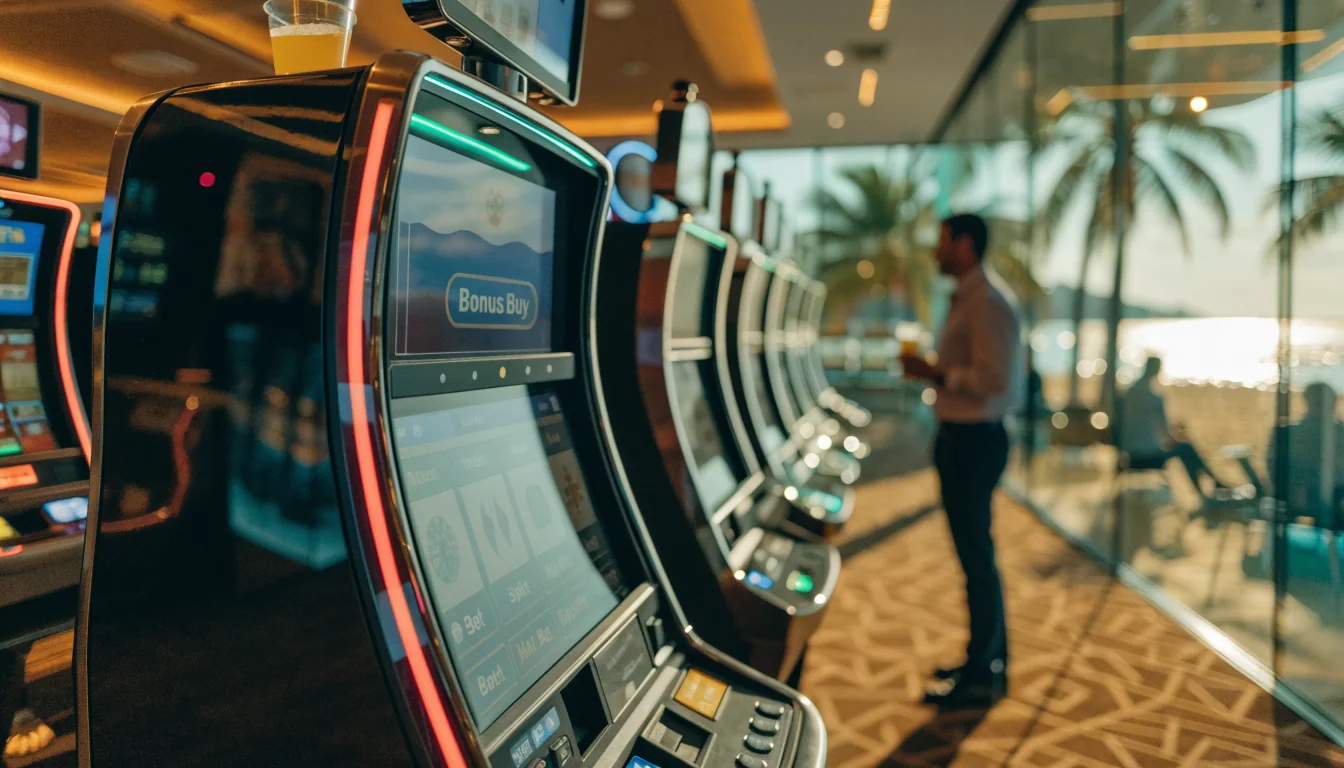
Working with the mathematics of game design reveals exactly what does a high volatility slot machine mean in practical terms. High volatility casino games operate on a mathematical model where the distribution of payouts is heavily skewed toward the top of the prize tier. The software handles the probability distribution by ensuring that the combined frequency of all winning outcomes remains low, while the monetary value of those individual outcomes is substantially elevated. When asking what is a high volatility slot machine, the answer lies in the internal hit frequency metric and the maximum payout multiplier programmed into the game’s core. Slot machines with high volatility are engineered to withstand prolonged intervals without returning any wager to the player, preserving the bankroll liquidity necessary to fund the eventual high-tier payouts. The hardware requirements for running these mathematical models are standardised; modern digital cabinets and digital interfaces simply process the random number generation sequences. The actual volatility is entirely a software construct, dictated by the pay table mathematics and the programmed weightings assigned to each symbol on the virtual reels.
Reading a Pay Table
Find the highest possible win listed in the pay table.
Locate the payout for the lowest‑value winning symbol combination.
A large difference between the maximum payout and the minimum winning payout indicates high volatility; a smaller, flatter distribution suggests low volatility.
The pay table is the primary diagnostic tool for identifying volatility. Pay tables can indicate a slot’s volatility through the structural disparity between the base game payouts and the maximum potential payouts. A pay table that lists substantial top-tier prizes relative to the lower-tier wins signals high volatility. If the highest standard symbol combination pays out a sum that vastly dwarfs the frequent lower-tier symbol combinations, the software requires a lower hit frequency to maintain the target return to player percentage. This structural configuration forces the game to withhold payouts over extended sequences to accumulate the necessary pool for the high-value wins. Conversely, a pay table exhibiting a compressed and narrow distribution between the lowest and highest payouts distributes the probability across a wider field, resulting in frequent but smaller returns. Examining the pay table for disproportionate gaps between symbol values provides a direct read on the software’s underlying volatility configuration.
The mechanics of bonus features and symbol interactions further differentiate high volatility slot machines from low-volatility alternatives. In low-volatility games, the software distributes frequent, low-value wins that continuously replenish the player’s balance, allowing for extended play. High-volatility designs rely on specific feature triggers—such as scatter symbols or designated wild combinations—to unlock the game’s highest paying modes. During the base spins, the software suppresses the overall hit frequency to sustain the budget required for the bonus rounds or jackpot features. This design means that the bonus trigger functions as the primary payout mechanism for the game. The base game operates at a structural deficit, returning less per spin than a low-volatility alternative, specifically to balance the ledger when the high-paying features eventually activate.

Operating slot machines with high volatility requires a different approach to bankroll management compared to managing low-volatility casino games. Because the software withholds payouts for extended durations, the primary risk is depleting the session bankroll before the high-tier payouts or bonus features trigger. The size of the wager relative to the total bankroll dictates the survival rate through these non-paying intervals. A larger bankroll provides the necessary buffer to absorb the statistical variance inherent in the game’s design. The objective is to maintain wagering capacity long enough for the probability distribution to align with a high-value payout. Operating with an insufficient bankroll for a high-volatility game results in exhausting funds before the mathematical model pays out.
For machines equipped with multiple paylines, the betting strategy must account for the software’s payout distribution across those active lines. It is advisable to place smaller bets on machines with multiple paylines to maximise winning chances. Activating all available paylines spreads the wager across the entire reel grid, ensuring that every possible symbol combination has the potential to register a payout. Reducing the individual line bet while maintaining the maximum number of active paylines preserves the overall wagering capacity. This approach mitigates the risk of missing a high-value combination on an inactive payline, an outcome that defeats the purpose of enduring the high-volatility base game. By lowering the per-line denomination, the total wager remains manageable while the statistical coverage of the grid remains absolute.
Federal regulator that enforces the Interactive Gambling Act and blocks illegal offshore online gambling sites.
Northern Territory Racing Commission that licences most national online sports‑betting operators.
Victorian Gambling and Casino Control Commission that oversees land‑based casinos and monitors wagering service providers for compliance with the National Consumer Protection Framework.
The regulatory framework governing the software and hardware of these machines operates across multiple tiers. Each Australian state and territory has its own separate gambling regulator responsible for overseeing the physical hardware and software compliance within their specific jurisdictions. These regulators mandate that the random number generators and the physical cabinets adhere to strict technical standards. For online platforms, the regulatory structure shifts. The Northern Territory Racing Commission (NTRC) is Australia’s de-facto online gambling regulator, since it licenses most national online bookmakers who benefit from lower tax. The NTRC sets the compliance benchmarks that govern the software infrastructure utilized by licensed national wagering operators.
This division of regulatory authority creates a fragmented oversight environment. The Victorian Gambling and Casino Control Commission (VGCCC) monitors all wagering service providers, including those based in other states, for compliance with the National Consumer Protection Framework. The VGCCC’s mandate extends to auditing the software configurations of machines operated by providers falling under its jurisdictional reach, ensuring that the technical standards match the approved industry metrics. This cross-border monitoring ensures that the volatility configurations and pay tables deployed by operators maintain the harm minimisation and consumer protection standards mandated by the Commonwealth.
High volatility slot machines function as a rigid mathematical proposition. The software engineers a specific variance profile, and the hardware simply displays the outcome. Understanding what does high volatility mean on a slot machine requires examining the disparity between the frequency of play and the size of the return. The pay table dictates the parameters of the variance, and the multi-payline betting strategy dictates the player’s capacity to endure the software’s non-paying cycles. Read the pay table. Calculate the bankroll.

High‑Volatility Online Pokies in Australia – Legal Realities
When the Interactive Gambling Act 2001 was introduced, its stated purpose was harm minimisation and public protection. The legal mechanics of how high-volatility pokies exist in the Australian market today are a direct result of how that law is structured. It is illegal to offer online casino gambling in Australia, and it is not possible to obtain a licence to operate an online casino domestically. There are no domestically licensed real-money online casino operators available to Australian players. The law prohibits the provision of online casino style games—including slots, poker, blackjack, and roulette—to Australian residents.
I often see offshore platforms using language that implies local authorisation. This is a structural impossibility. No Australian regulator issues a licence for an offshore operator to provide online pokies to Australians. When a site claims to hold a valid international licence—such as one from the Malta Gaming Authority or the UK Gambling Commission—that licence only permits them to offer services in the specific foreign jurisdictions where they are registered. It does not grant them any legal right to offer high-volatility online pokies to Australians. For the Australian player accessing these sites, the regulatory void is absolute.
The law targets operators, not players. It is not illegal for individual Australians to play at offshore-licensed online casinos.
This distinction creates a peculiar market dynamic. The supply side is heavily restricted, while the demand side remains unlegislated. The Australian Communications and Media Authority (ACMA) is the federal regulator tasked with enforcing the Interactive Gambling Act 2001. Since November 2019, ACMA has the power to request internet service providers to block access to illegal offshore gambling sites.
The scale of this enforcement is subject to reporting discrepancies. Some sources cite ACMA blocking access to 975 illegal gambling and affiliate websites by 2024. However, according to iclg.com, as of August 2025, ACMA has blocked 1,296 illegal gambling sites and affiliates since 2019, and 220 illegal services have voluntarily exited the Australian market. Similarly, boomaff.com reports that over 220 illegal gambling services have ceased operations in Australia due to these ACMA enforcement actions. The exact, universally agreed-upon figure is not published as an established market norm, but the trajectory of the regulator’s blocking requests is unambiguous.
Main Takeaways
- High volatility slots offer infrequent but large wins and require a sizable bankroll.
- The Interactive Gambling Act prohibits online casino games; the ACMA blocks offshore providers.
- State regulators manage land‑based gambling, while the NTRC licences online sports betting.
- Players are not criminally liable for accessing offshore sites, but they lack consumer protections.
- Cryptocurrency can be used to bypass financial controls but does not change the legal status of the games.
For those attempting to play high-volatility pokies Australia, this enforcement landscape means accessibility is unstable. Domains are routinely added to blocking lists. An offshore operator hosting high-volatility titles today might find its primary domain inaccessible tomorrow. To bypass these blocks, operators frequently rotate URLs. Users often rely on VPNs or alternative DNS servers to reach the platforms. The gameplay itself remains untouched by the regulator once a player is connected to the server, but the friction of simply reaching the lobby has increased.
The ACMA’s enforcement powers do not extend to penalising the individual player. The law firmly places the legal liability on the entity providing the prohibited service. If an Australian resident loses money on a high-volatility pokie hosted on a site that is later blocked or exits the market, the domestic legal framework offers no recourse. The interactive gambling legislation does not recognise the player’s activity as a protected consumer transaction.
State and territory regulators handle land-based casino compliance, while the ACMA focuses entirely on the online space. This division leaves offshore online pokies operating entirely outside the domestic consumer protection net. Operators do not face domestic audits, and players do not have access to local dispute resolution schemes.
Practical market reality.
What Defines a High‑Volatility Slot?
A high volatility slot is defined by its payout rhythm. It pays out infrequently but with larger wins. Low-volatility slots operate on the opposite principle: they pay out more frequently but with smaller rewards. When sitting at a high-volatility machine, the bankroll swings drastically. A player might spin dozens of times without a single return, only to hit a payout that recovers the balance in one stroke. On a low-volatility machine, the balance moves in a tighter, more predictable band, keeping the session alive longer with reduced risk.
The defining trait is the relationship between hit frequency and jackpot size. In high-volatility games, the mathematical model concentrates the potential returns into fewer, substantial drops. In exchange, players may experience smaller jackpots and payouts in base games compared to higher volatility games—but the trade-off is a steady trickle of credits that prevents a rapid bust. A high-volatility slot demands patience and a deeper bankroll, waiting for the one event that justifies the session.
High‑Volatility Slot Games You Might Want to Try
When looking at high volatility slot games, the appeal lies in the structure of the payouts: these titles withhold returns over extended stretches, then deliver substantial sums when features finally align. The contrast is sharp — low-volatility slots pay out more frequently but with smaller rewards, which makes them a completely different session experience.
The following titles serve as concrete examples of this mechanic in practice.
- Dead or Alive — A staple for volatile play, relying heavily on sticky bonus features to drive the larger returns.
- Gonzo’s Quest — Built around avalanche mechanics and multipliers that scale during bonus sequences, demanding patience during base spins.
- Thunderstruck II — Utilises a layered bonus structure where sustained play unlocks progressively larger payout potential.
- Wild Wild Chest — Combines expanding features and high variance, structuring returns around specific triggered events rather than steady line hits.
These are established examples of the format, not an absolute "best" list. The titles merely illustrate how providers design for variance and delay gratification.
Is High or Low Volatility Better for Your Play Style?
The choice between high and low volatility comes down to bankroll tolerance and patience. Low-volatility slots pay out more frequently but with smaller rewards. This steady drip of returns sustains a bankroll through extended sessions, absorbing the cost of play without forcing rapid decisions. It is the mechanics of endurance, designed for time at the machine rather than sudden balance shifts.
High-volatility slots pay out infrequently but with larger wins. They operate on a different premise: absorbing dry spells to fund occasional substantial payouts. A session can end quickly if the mechanics do not align with available funds. The structure demands patience and a tolerance for gaps in returns.
Neither is objectively better. One trades capital for time, the other trades time for the possibility of capital. The choice depends entirely on which constraint a player prefers to manage.
Created by the ”Casino Crypto Guide” editorial team.