
Best Pokies in Brisbane: The Regulatory Landscape Explained
The Australian pokies landscape and regulatory framework
The split market: what operates where, and under what authority
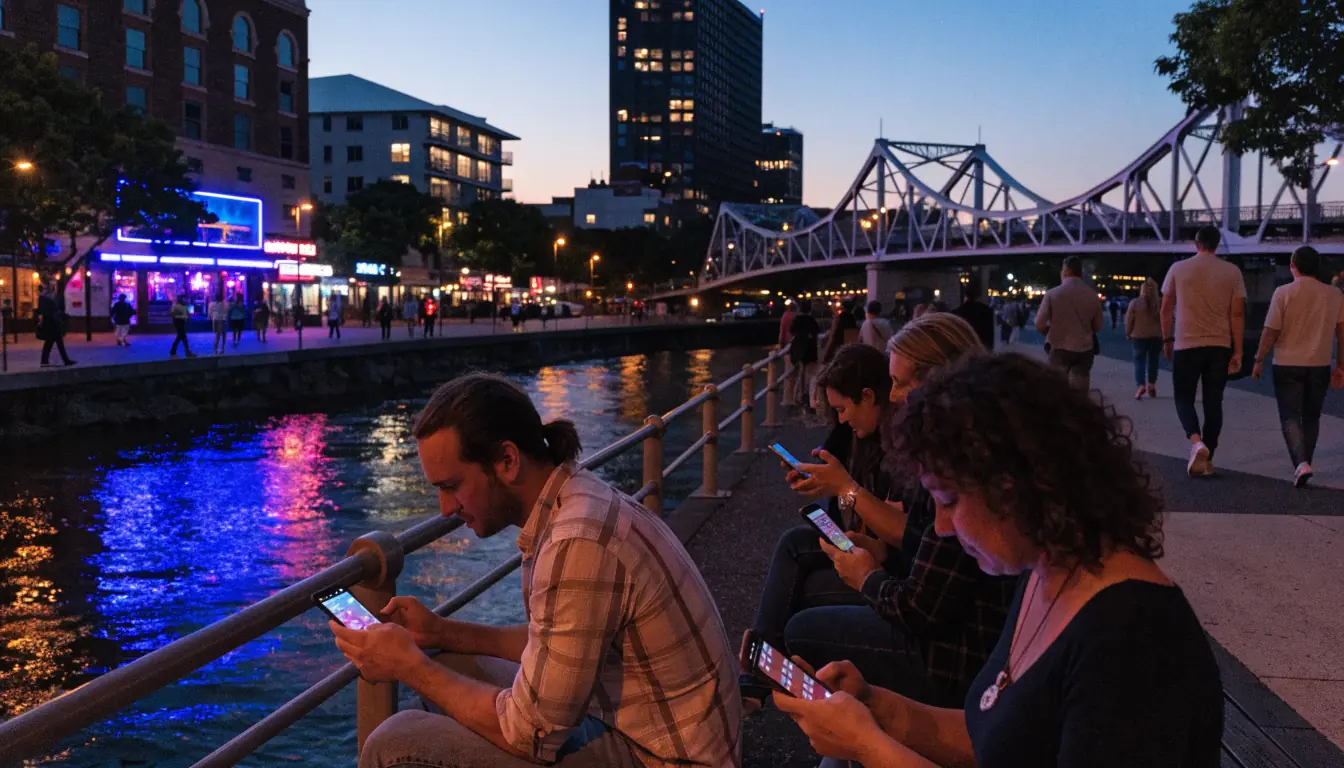
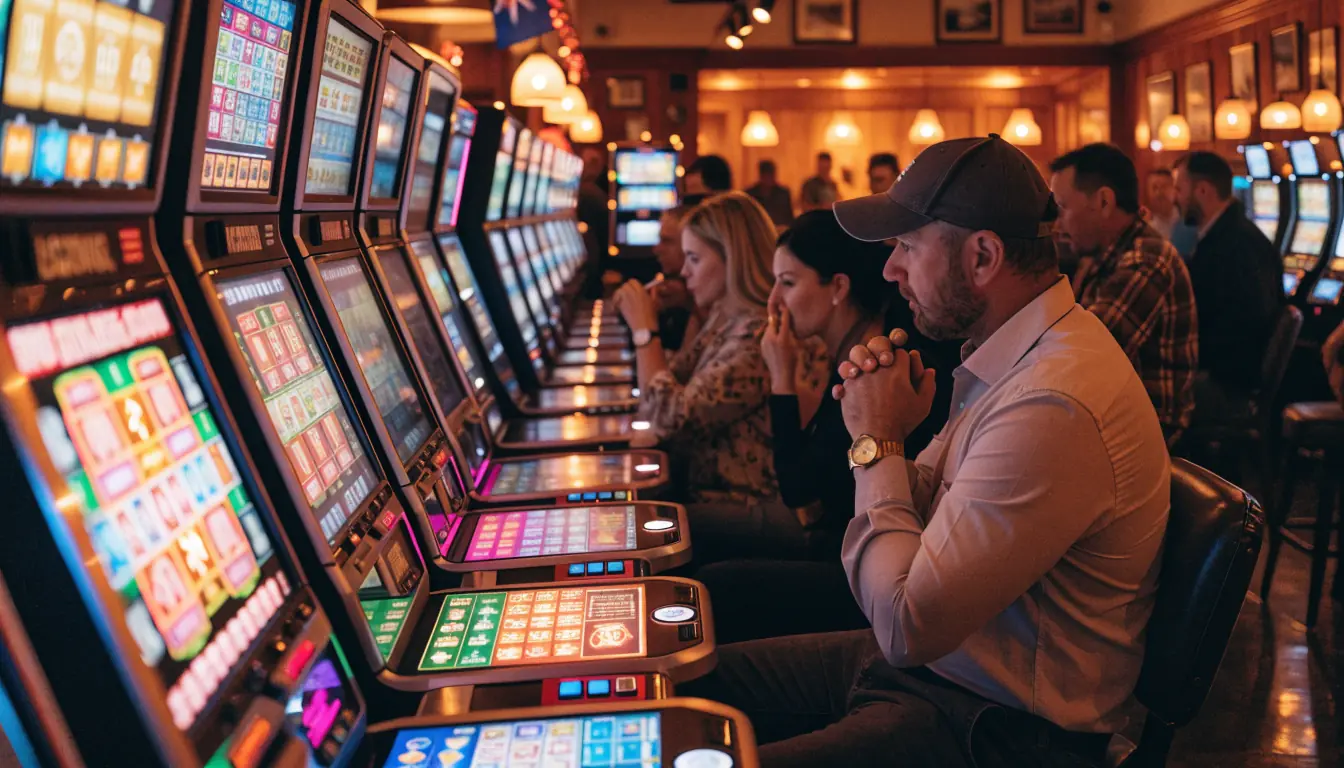
Walk through the Queen Street Mall or over the Goodwill Bridge into South Bank, and the mechanics of the Brisbane pokies market are visible within a few hundred metres of walking. Clubs with brightly lit signage, pubs with dedicated gaming rooms inside, and individuals on their phones spinning digital reels while sitting on benches near the Brisbane River. The physical pokies installed inside venues throughout Brisbane—machines in clubs, pubs, and the larger casino precincts—function under a completely different legal and regulatory framework than the digital pokies accessed on phones and laptops by individuals physically located in Brisbane.
These are not two branches of the same tree. They operate under entirely separate statutes, are enforced by entirely different regulatory bodies, and cater to audiences that overlap heavily in geography but are treated as legally distinct by the Commonwealth and state governments.
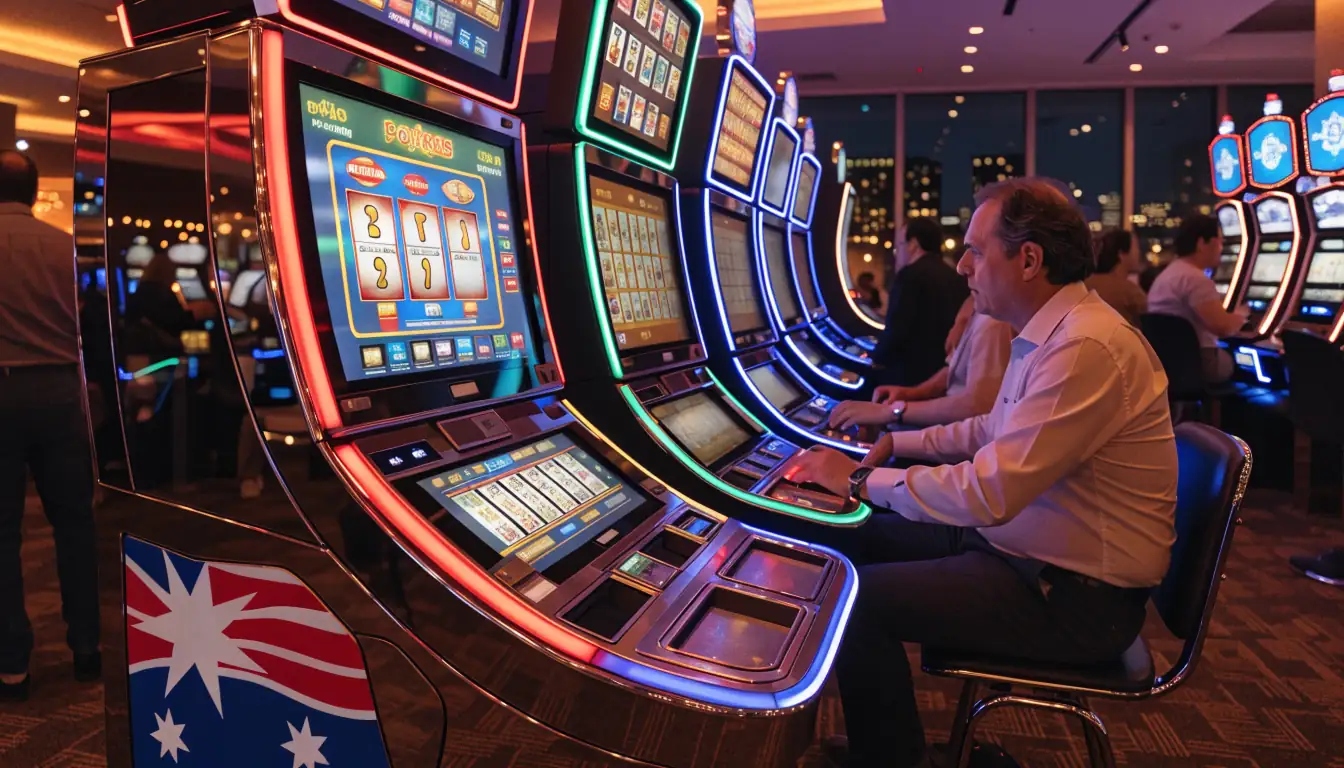
On the land-based side, the physical machines found inside Brisbane clubs, pubs, and the primary casino precincts in the city are regulated by state government agencies. Specifically, the Office of Liquor and Gaming Regulation (OLGR) within the Queensland state government oversees these operations. The OLGR is responsible for administering the legislation that governs land-based gambling, including the licensing of venues, the approval of specific gaming machines, and the enforcement of harm minimisation measures inside physical premises. Land-based casinos in Australia are regulated by state government regulators and law enforcement agencies, a structure entirely separate from the federal regulation of online gambling.
Before spinning the reels at any online venue, it helps to check licensing, bonus terms and payout reliability side by side — here’s a quick rundown to guide your choice.
License: Curacao OGL/2024/1335/0780 · Bonus: up to A$1,000 + 150 free spins, wager-free · Min. deposit: EUR 20 Holds a Curacao OGL license and offers a sizeable welcome package worth up to A$1,000 plus 150 free spins with no wagering requirement, making the bonus straightforward to use. A relatively low minimum deposit of EUR 20 keeps entry accessible.
License: Curacao · Bonus: 100% up to A$500 + 200 free spins, 10x wagering · Payout speed: crypto 30-60 minutes, fiat 1-5 days · Min. deposit: A$10 Licensed in Curacao, this operator pairs a 100% match bonus up to A$500 with 200 free spins at a moderate 10x wagering requirement. Payouts are quick via crypto within the hour, while fiat withdrawals take up to five days, and the minimum deposit is a low A$10.
License: Curacao eGaming (Dama N.V.) · Bonus: up to A$10,000 + 180 free spins, 40x wagering Operating under a Curacao eGaming license via Dama N.V., it stands out for a large welcome offer of up to A$10,000 plus 180 free spins, though the 40x wagering requirement is on the higher side.
License: Curacao · Bonus: up to A$10,000 multi-stage + 500 free spins · Min. deposit: A$20 (POLi) Curacao-licensed with a substantial multi-stage bonus reaching up to A$10,000 and 500 free spins, giving players plenty of value across several deposits. A minimum deposit of A$20 via POLi keeps it easy to get started.
Bonus: up to A$7,500 + 550 free spins across 10 deposits, 50x wagering · Payout speed: crypto under 1 hour, PayID 1-3 business days · Min. deposit: A$20 (A$30 to qualify for the bonus) Offers one of the larger bonus structures on this list, up to A$7,500 plus 550 free spins spread over ten deposits, with a 50x wagering requirement. Crypto payouts land in under an hour, PayID takes a few business days, and a A$30 deposit is needed to qualify for the bonus.
License: Curacao Gaming Control Board OGL/2023/176/0095 (Hollycorn N.V.) · Bonus: up to A$5,000 + 300 free spins across 4 deposits Licensed by the Curacao Gaming Control Board under Hollycorn N.V., it provides a multi-deposit bonus package worth up to A$5,000 plus 300 free spins across four deposits.
License: Curacao · Bonus: up to A$2,000 A Curacao-licensed operator with a welcome bonus of up to A$2,000, offering a straightforward entry point for new players.
Bonus: 100% up to A$750 + 200 free spins, 35x wagering · Payout speed: crypto 30-120 minutes, fiat 24-72 hours · Min. deposit: A$30 Provides a 100% bonus up to A$750 plus 200 free spins with a 35x wagering requirement. Crypto withdrawals process within a couple of hours and fiat within a few days, with a A$30 minimum deposit.
Bonus: up to A$750 + 50 jackpot spins, 35x wagering · Payout speed: crypto ~90 minutes, fiat 1-5 days · Min. deposit: A$30 Features a bonus of up to A$750 including 50 jackpot spins, carrying a 35x wagering requirement. Crypto payouts are quick at around ninety minutes, fiat withdrawals take up to five days, and the minimum deposit is A$30.
License: Curacao Gaming Control Board · Bonus: up to A$5,000 + 400 free spins Licensed by the Curacao Gaming Control Board, this operator offers a generous bonus of up to A$5,000 along with 400 free spins.
On the digital side, the landscape shifts from state jurisdiction to federal law. The Australian Communications and Media Authority (ACMA) is the federal regulator that enforces the Interactive Gambling Act 2001, the primary Commonwealth law governing online gambling in Australia. The legislation was introduced to protect the public with a focus on harm minimisation. The ACMA does not regulate the physical pokies inside Brisbane venues; its jurisdiction begins where the internet begins.
The legislative roots: resolving the 1997 and 2001 discrepancy
When tracing why certain types of digital gambling are banned while others operate openly, examining the foundational statutes is necessary. Sources occasionally reference the Interactive Gambling Act 1997 as the legislation that prohibits the provision of online casino games to Australian residents. However, other verified records show that the Interactive Gambling Act 2001 serves as the primary Commonwealth law governing online gambling in Australia, explicitly prohibiting online casino-style games.
The discrepancy between the 1997 and 2001 dates stems from how the legislative framework was constructed and amended. The 2001 Act is the operative statute currently enforced by the ACMA. Under the provisions of the Interactive Gambling Act 2001, online casino-style games, including slots, poker, blackjack, and roulette, are explicitly prohibited from being provided to Australian residents.
The law makes a critical distinction regarding the subjects of enforcement. It is illegal to offer online casino gambling in Australia, and it is not possible to obtain a licence to operate an online casino domestically. There are no domestically licensed real-money online casino operators available to Australian players. However, it is not illegal for individual Australians to play at offshore-licensed online casinos; the law targets operators, not players.
The architecture of the law builds a wall around the supply side. Operators cannot legally base their servers in Australia and offer real-money casino games. Players, conversely, are not criminalised for consuming services hosted outside the territorial jurisdiction.
The federal and state division of power
There is no single overarching statute or single overarching gambling authority regulating gambling in Australia. Instead, regulation occurs at both the state/territory and federal levels, creating a patchwork of overlapping and sometimes disconnected jurisdictions.
In the physical realm, each Australian state and territory has its own separate gambling regulator. In New South Wales, Liquor & Gaming NSW manages the state’s gaming laws. In Victoria, the Victorian Gambling and Casino Control Commission (VGCCC) monitors all wagering service providers, including those based in other states, for compliance with the National Consumer Protection Framework. In Queensland, the OLGR handles the corresponding state responsibilities for Brisbane and the surrounding regions.
In the digital realm, the federal government holds the power through the ACMA. Yet, even within the online space, federal authority is not absolute. The Northern Territory Racing Commission (NTRC) has emerged as Australia’s de-facto online gambling regulator, primarily because it licenses most national online bookmakers who benefit from a more favourable tax structure in that territory.
This creates a reality where online sports betting is legal in Australia under state/territory licences. A bookmaker licensed by the NTRC can legally offer services to a punter sitting in Brisbane. However, the same bookmaker cannot legally offer digital pokies, digital blackjack, or digital roulette to that same Brisbane resident. Online casino, poker, and in-play betting are prohibited federally under the Interactive Gambling Act 2001.
The limitations on live betting further illustrate this regulatory fragmentation. Live, in-play online betting is illegal in Australia, yet live betting by phone is legal. The law specifically prohibits the rapid placement of bets via a digital interface once a sporting event has begun, but explicitly permits the same wager to be placed by telephoning the operator’s call centre.
The offshore boundary and the limits of state reach
Because the Interactive Gambling Act 2001 prevents domestic licensing, the market for digital pokies accessible to individuals in Brisbane is entirely offshore. When a person in Brisbane searches for digital pokies, they encounter platforms hosted in jurisdictions outside Australia, licensed by authorities such as the Malta Gaming Authority, the UK Gambling Commission, the Curacao Gaming Control Board, or the Kahnawake Gaming Commission.
State and territory gambling regulators like the VGCCC and Liquor & Gaming NSW have limited power over offshore online casinos. Their mandates end at the territorial border. The Queensland OLGR can police the machines inside a Brisbane pub, but it possesses no statutory authority over a server sitting in Malta or Kahnawake providing digital pokies to a Brisbane resident over the internet.
This jurisdictional limitation is exactly why the ACMA was given federal enforcement powers. The ACMA operates at the national level, giving it the theoretical capacity to address cross-border digital services. However, the ACMA’s enforcement mechanism is structural and indirect rather than punitive at the individual level.
ACMA enforcement: blocking the supply chain
Since November 2019, the ACMA has ordered internet service providers (ISPs) to block illegal offshore gambling sites. This mechanism does not fine the offshore operator or seize their servers; it mandates that Australian ISPs block their domestic customers from resolving the domain names of the offending platforms.
Since August 2025 the ACMA has blocked 1,296 illegal gambling sites and affiliates, and more than 220 illegal gambling services have voluntarily exited the Australian market.
Data on the scale of these blocks varies depending on the reporting timeline and the source. According to data from the International Comparative Legal Guides, as of August 2025, the ACMA has blocked 1,296 illegal gambling sites and affiliates since 2019. Other reports indicate that over 220 illegal gambling services have voluntarily exited the Australian market due to ACMA’s enforcement actions. These enforcement actions and voluntary exits are reported by specific industry monitoring sources rather than serving as a stable, universal market average.
The ACMA does not maintain a public, real-time registry of blocked IP addresses in a way that ensures absolute transparency for the end-user. What is known is that the federal regulator focuses on the accessibility layer of the internet. When an offshore casino fails to comply with Australian law, the domain is added to a blocklist that ISPs are legally compelled to enforce.
State regulators handle the physical premises. The ACMA handles the digital borders. When an offshore casino targets the Brisbane market, the state OLGR has no mechanism to act, leaving the ACMA to address the breach. Yet, even this federal power has hard limits.
The land-based ecosystem in Brisbane
Shifting away from the digital boundary, the physical pokies ecosystem in Brisbane operates on a highly structured, state-regulated model. Venues across the city, from local rugby clubs to large entertainment precincts, must obtain approval from the state regulator to install and operate gaming machines.
The physical pokies found in South Brisbane, South Bank, Southbank, and Northside Brisbane are subject to the same Queensland state legislation. The specific suburb or geographic designation within the city does not alter the underlying regulatory framework; a venue in South Bank operates under the same OLGR regulations as a venue in Northside Brisbane.
The density of physical machines is managed through state-level caps and community impact assessments. Venues are required to adhere to strict operational standards, including mandatory closures, physical security, and responsible gambling signage. The machines themselves are connected to a central state monitoring system that tracks revenue and ensures compliance with technical standards.
The term "24 hour pokies" in Brisbane requires regulatory clarification. Queensland state law governs the operating hours of gaming machines in licensed venues. While some venues may hold extended trading hours, the continuous, legally uninterrupted operation of physical pokies is subject to state licensing conditions rather than an inherent right of the venue.
The mechanics of physical pokies versus offshore digital platforms
The experience of playing a physical pokie inside a Brisbane venue differs fundamentally from accessing an offshore digital platform. Physical machines in Australia are legally required to adhere to technical standards set by the state regulator. These standards dictate the physical integrity of the machine, the display of odds, and the mechanisms for calculating payouts. The hardware is physically sealed and audited.
Offshore digital platforms operate outside the technical jurisdiction of the Queensland government. Many software providers are used in Australian-accessible online casinos, including offshore platforms. Providers such as Pragmatic Play, Microgaming, and Evolution Gaming supply the code that runs these digital platforms. Evolution Gaming specifically provides the live casino games that allow players to watch the action in real-time and chat with the dealer and other players.
These digital platforms are not subject to the physical hardware constraints of land-based venues. They do not need to be physically sealed or inspected by the OLGR. Instead, they rely on their offshore licences and internal Random Number Generation (RNG) audits to establish credibility.
Some Australian pokies accessible on these offshore platforms are based on popular TV shows and movies, utilising intellectual property licensing agreements that transcend national borders. A digital pokie based on a globally recognised film franchise operates legally under its offshore licence, accessible to a Brisbane resident, while simultaneously being entirely outside the regulatory reach of the Queensland state government.
The South Brisbane and South Bank physical ecosystem
In the specific context of South Brisbane and the South Bank precinct, the physical gambling market is characterised by its integration with hospitality and entertainment venues. The area, known for its cultural institutions and riverfront location, houses venues that combine dining, live entertainment, and physical gaming rooms.
Venues in South Bank and South Brisbane offering pokies operate under the same state regulatory framework as the rest of the city. The Office of Liquor and Gaming Regulation (OLGR) in Queensland administers the laws that allow these venues to install machines. A venue in South Bank must comply with the same responsible gambling codes, physical security requirements, and tax structures as a venue in Northside Brisbane.
The consumer experience in these physical venues is strictly controlled. Cash handling occurs over the counter or through regulated ticket-in, ticket-out machines. The introduction of cashless pokies in Brisbane venues is a state-level regulatory shift aimed at modernising the physical infrastructure and enhancing harm minimisation by creating digital transaction trails. This is a state initiative, separate from the federal laws governing digital platforms.
In a physical venue in South Brisbane, the state regulator mandates the display of responsible gambling messaging. Venues must provide access to support services. The physical environment is controlled by the state, monitored by law enforcement agencies, and audited by the OLGR. The contrast with the offshore digital market is absolute. One is a physical space regulated by the state; the other is a digital service accessed across borders, regulated by federal blocklists, and hosted under foreign law.
Northside Brisbane: the suburban club network
Moving away from the inner-city precincts, the pokies market in Northside Brisbane relies heavily on the suburban club network. Rugby league clubs, community clubs, and pubs form the backbone of the land-based market in these areas. The economic model of these venues often depends on the revenue generated by physical gaming machines to subsidise other community services, such as dining facilities or junior sports programs.
The OLGR regulates the number of machines a venue can operate through a system of entitlements and authorisations. A club in Northside Brisbane cannot simply purchase an unlimited number of machines; they must hold the specific state authorisation. The physical transfer of entitlements between venues is also regulated by the state, ensuring that the overall density of machines in a given community does not exceed state-mandated caps.
In these clubs, the interaction between the patron and the machine is a physical one. The notes are inserted into a slot, the buttons are physically pressed, and the outcome is displayed on a screen embedded in a cabinet. The hardware is audited by the state. If a machine malfunctions, a licensed technician must physically open the cabinet to repair it, and the state regulator is notified. This level of physical oversight is entirely absent in the offshore digital market.
The capital city divide: Brisbane and the state framework
Brisbane, as the capital city of Queensland, sits at the centre of the state’s land-based gambling infrastructure. The regulatory framework applied in Brisbane applies equally to regional areas of Queensland, but the density of venues and the concentration of high-turnover casino precincts are highest in the capital.
The state regulator, the OLGR, maintains a presence in the city, conducting audits and ensuring compliance with the legislation. The law requires that all individuals seeking to gamble in physical venues are verified to ensure they meet the minimum legal gambling age in Australia, which is 18 years of age or older.
Almost one in three (30%) of 12-17-year-olds in Australia gamble, and 46% of 18-year-olds in Australia gamble, according to data highlighting the prevalence of underage and youth gambling. The state regulator focuses on the physical venues to mitigate these risks. The OLGR mandates that physical venues check identification to prevent minors from accessing the gaming floors.
The digital offshore market, by its nature, lacks this physical checkpoint. An offshore platform hosted in Curacao or Malta relies on digital identity verification protocols established by its licensing jurisdiction, which may or may not align with Australian standards. The ACMA cannot enforce physical ID checks on a server located outside Australia. It can only block the domain if the operator fails to adhere to Australian law regarding the provision of services.
Responsible gambling: the state and the border
The regulatory framework surrounding land-based pokies in Brisbane is deeply intertwined with state-mandated harm minimisation. The OLGR requires venues to display signs encouraging problem gamblers to seek help. Services like Gambling Help Online and BetStop are promoted within physical venues.
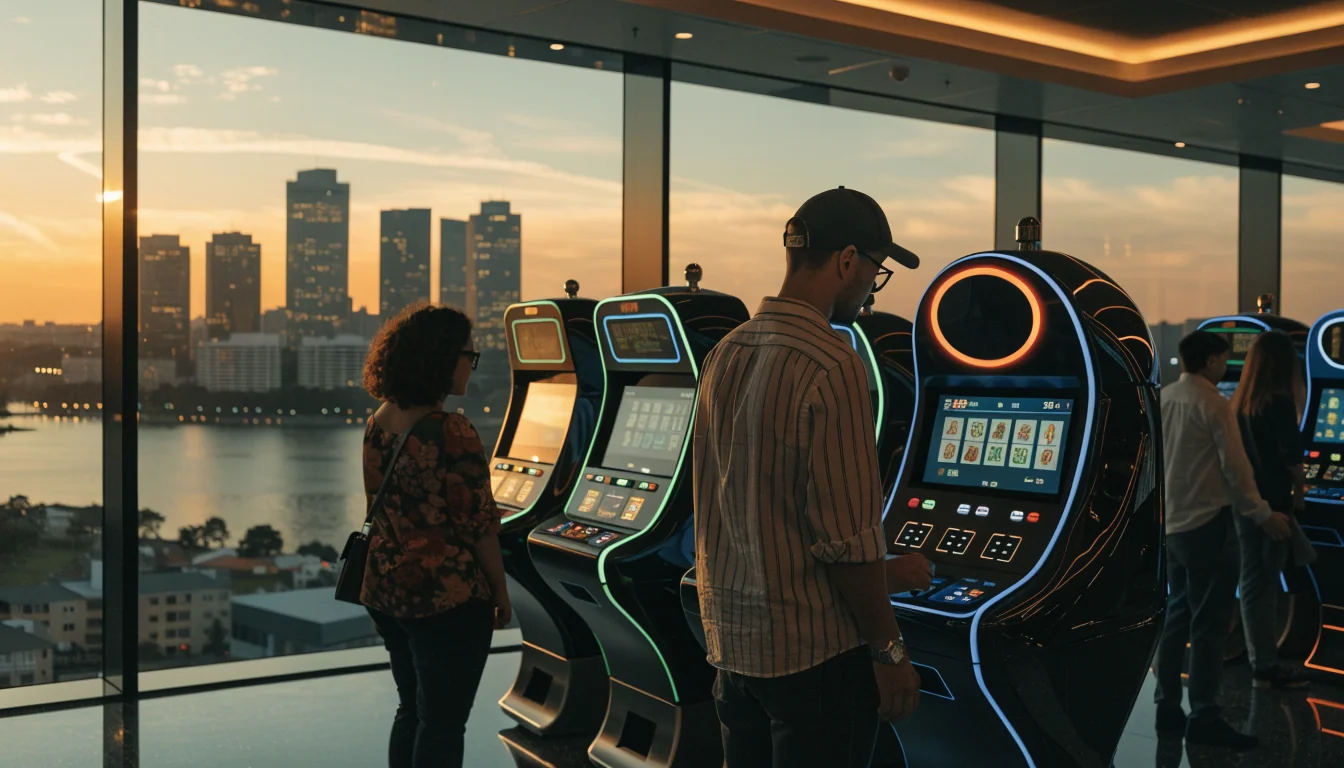
The state has the power to exclude individuals from physical venues. A person who self-excludes via a state program is physically barred from entering the gaming area of a Brisbane club. If they attempt to enter, security staff, operating under state law, can remove them.
The offshore digital market lacks this physical enforcement layer. The ACMA does not have the power to physically exclude an individual from an offshore platform. It can only target the platform itself. This creates a divergence in how harm minimisation is applied. In a Brisbane club, the state acts as a physical barrier. On an offshore platform, the state acts as a digital barrier, attempting to sever the connection at the ISP level rather than at the individual level.
The evolution of the Brisbane market
The market for pokies in Brisbane is not static. On the land-based side, the state government continuously reviews the legislation governing physical machines. The introduction of cashless gaming technology in Brisbane venues is an example of this evolution. By moving away from cash, the state regulator aims to create a more transparent transaction trail, making it easier to identify problem gambling patterns and enforce tax compliance.
On the digital side, the ACMA continuously updates its blocklist. The 1,296 illegal gambling sites and affiliates blocked since 2019 represent a dynamic list. New domains emerge, and the ACMA responds with new ISP blocking orders. Over 220 illegal gambling services have ceased operations in Australia due to ACMA’s enforcement actions, according to reports from industry sources tracking these specific exits.
The divergence between the physical and digital markets is widening. Land-based venues are becoming more heavily regulated at the state level, with increasing focus on harm minimisation and cashless technology. Offshore platforms are becoming more sophisticated at circumventing federal blocklists, utilising mirror domains and alternative routing technologies to maintain access to the Brisbane market.
The mechanics of venue licensing in Brisbane
A venue in Brisbane cannot simply decide to install pokies. The process is governed by the state. A venue must apply to the OLGR for a gaming machine licence. The application process involves a community impact assessment, which evaluates the potential social and economic effects of the machines on the local area.
Venue licensing steps
The venue prepares an assessment evaluating social and economic effects on the local area.
The venue submits the licence application to the Office of Liquor and Gaming Regulation.
OLGR reviews the application and, if approved, grants a specific number of machine entitlements.
The venue purchases or leases state‑approved gaming machines that meet technical standards.
The venue implements responsible gambling signage, age verification procedures and security measures before the machines become operational.
The OLGR assesses the density of existing venues in the area, the demographic profile of the community, and the presence of vulnerable populations. If the application is approved, the venue is granted a specific number of entitlements. An entitlement is the legal right to operate a single gaming machine.
The total number of entitlements in Brisbane is capped by the state government. This cap is designed to prevent the proliferation of machines beyond a certain density. A venue in South Brisbane cannot purchase additional entitlements without state approval, and the state may refuse to grant more if the area is already saturated.
Once the entitlements are granted, the venue must purchase or lease physical machines that have been approved by the state regulator. The machines must adhere to technical standards regarding the Random Number Generator (RNG), the display of information, and the physical integrity of the hardware.
The venue is also responsible for the physical environment. The OLGR mandates that the gaming area must be clearly defined, with restricted access points to prevent minors from entering. Security staff must be present, and the venue must display responsible gambling signage.
This state-level licensing process stands in contrast to the offshore digital market, where a platform can be hosted on a server in Malta or Curacao and made accessible to Brisbane residents without any physical presence in the city. The state cannot license or regulate the offshore platform; it can only regulate the physical access points within its borders.
The tax structure and revenue distribution
The financial mechanics of the Brisbane pokies market differ significantly between the physical and digital sectors. In the land-based market, revenue generated by physical machines is subject to state taxes. The tax rate is tiered, with venues paying a percentage of their net gaming revenue to the Queensland state government.
This tax revenue is used to fund state services, including healthcare, education, and community programs. The state government also allocates a portion of the revenue to responsible gambling initiatives and support services. The financial flow is strictly monitored by the OLGR, and venues are required to submit regular reports detailing their machine revenue.

In the digital market, the financial flow is more opaque. Offshore platforms are not subject to Queensland state taxes. They are subject to the tax laws of their licensing jurisdiction, which may have significantly lower tax rates. The Northern Territory Racing Commission, for example, licenses national online bookmakers who benefit from lower tax compared to other states.
When a Brisbane resident wagers on an offshore digital pokie, the revenue does not flow to the Queensland state government. It flows to the offshore operator, who may pay a portion to their licensing jurisdiction. The Australian Taxation Office (ATO) may pursue corporate tax claims if the operator has a sufficient physical presence in Australia, but most offshore platforms are structured to avoid this.
The divergence in tax structures creates a competitive imbalance. Land-based venues in Brisbane pay significant state taxes, which reduces their profit margins. Offshore platforms, operating under lower-tax jurisdictions, can theoretically offer higher payout percentages or more generous bonus structures because their overhead costs are lower. However, the state cannot regulate or verify these claims, and the offshore platforms are not required to adhere to Australian consumer protection standards.
The role of the Australian Competition and Consumer Commission (ACCC)
The regulatory landscape extends beyond the state and federal gaming authorities. The Australian Competition and Consumer Commission (ACCC) plays a role in the broader consumer protection framework, particularly regarding advertising and misleading claims.
While the ACMA focuses on the legality of the service itself, the ACCC addresses the marketing and promotional practices of businesses operating in Australia. If a land-based venue in Brisbane makes a misleading claim about the odds of a machine, the ACCC can act. If an offshore platform makes a misleading claim, the ACCC’s jurisdiction is limited by the same borders that constrain the state regulators.
The ACCC’s role is primarily focused on domestic businesses. Land-based casinos in Australia are regulated by state government regulators and law enforcement agencies, separate from the federal ACMA regulation of online gambling. The ACCC’s mandate covers general consumer law, but the specific regulation of gambling mechanics falls to the state or the ACMA.
The interaction between federal and state regulators
The division of power between the ACMA and the state regulators creates a complex enforcement environment. The ACMA, as the federal regulator, is responsible for enforcing the Interactive Gambling Act 2001. The state regulators, such as the OLGR, are responsible for enforcing state gaming laws.
The two bodies do not operate in isolation. The ACMA relies on intelligence and reports from state regulators to identify offshore platforms targeting Australian residents. The state regulators, in turn, rely on the ACMA to address the digital services that they cannot reach.
The Victorian Gambling and Casino Control Commission (VGCCC) monitors all wagering service providers, including those based in other states, for compliance with the National Consumer Protection Framework. This framework sets standards for advertising, account verification, and responsible gambling messaging that apply across state borders.
However, the framework applies to licensed operators. Offshore platforms, by definition, operate without an Australian licence. The National Consumer Protection Framework cannot be enforced against a platform hosted in Curacao. The ACMA’s blocking powers are the only mechanism available to address the offshore market.
The limitations of the ACMA’s blocking powers
The ACMA’s ability to order ISPs to block illegal offshore gambling sites is a powerful tool, but it has limitations. The mechanism operates at the domain name system (DNS) level. When an ISP receives a blocking order, it is required to prevent its customers from resolving the domain name of the offending site.
This does not prevent a technically savvy user from circumventing the block. Virtual Private Networks (VPNs) and alternative DNS servers can bypass the ISP-level filter, allowing a Brisbane resident to access a blocked offshore platform. The ACMA does not have the power to prosecute individuals for using VPNs to access offshore gambling sites. The law targets operators, not players.
The blocking powers are primarily aimed at reducing the accessibility of illegal services to the general public. By blocking the domain, the ACMA disrupts the operator’s ability to market to and acquire Australian customers. It is a friction-based enforcement model, designed to make access more difficult rather than impossible.
The ACMA also targets affiliate websites that promote and drive traffic to illegal offshore platforms. By blocking the affiliates, the ACMA severs the marketing pipeline that connects offshore operators to Australian consumers. The 1,296 illegal gambling sites and affiliates blocked since August 2025, according to the International Comparative Legal Guides, include both the platforms themselves and the marketing sites that promote them.
The domestic ban and the offshore market
The legal framework creates a clear distinction between what is prohibited domestically and what is accessible offshore. It is illegal to offer online casino gambling in Australia, and it is not possible to obtain a licence to operate an online casino domestically. This prohibition is absolute. No operator can legally host real-money casino games, including digital pokies, on servers physically located in Australia and offer them to Australian residents.
This domestic ban has driven the entire digital pokies market offshore. Operators seeking to provide these services to Brisbane residents must base their operations in foreign jurisdictions. The licensing process, the technical standards, and the tax structures are all determined by the offshore regulator.
The result is a market where the domestic industry is heavily restricted, while the offshore industry operates with relative freedom, constrained only by the ACMA’s ability to block domains. The state regulators have no power over the offshore industry. The federal regulator has limited power, exercised through ISP blocking.
The legal status of the individual player remains consistent. It is not illegal for individual Australians to play at offshore-licensed online casinos. The law targets operators, not players. An individual in Brisbane can legally access an offshore platform, provided the domain has not been blocked by their ISP. If the domain is blocked, accessing it through a VPN does not constitute a criminal offence under Australian law.
The Brisbane clubs ecosystem and the OLGR
Within Brisbane, the clubs and pubs that offer physical pokies are deeply embedded in the local community structure. The OLGR, as the state regulator, oversees the licensing and operation of these venues. The relationship between the venues and the regulator is ongoing.
The OLGR conducts regular audits of physical venues to ensure compliance with state law. The audits cover the technical integrity of the machines, the adherence to operating hours, the enforcement of responsible gambling codes, and the verification of patron age.

A venue found to be in breach of the state law faces significant penalties. The OLGR can issue fines, suspend a venue’s licence, or revoke the licence entirely. In extreme cases, criminal charges can be brought against the venue’s management.
This strict state oversight is absent in the offshore market. An offshore platform licensed by the Curacao Gaming Control Board or the Kahnawake Gaming Commission is not subject to OLGR audits. The offshore regulator is responsible for ensuring compliance with the licensing jurisdiction’s standards, which may differ significantly from those enforced in Queensland.
The evolution of digital pokies in the Brisbane market
The digital pokies accessible to individuals in Brisbane have evolved significantly over the past decade. The offshore platforms that cater to the Australian market utilise software from a variety of providers. Many software providers are used in Australian-accessible online casinos, reflecting the global nature of the industry.
Providers such as NetEnt, Pragmatic Play, Microgaming, and Evolution Gaming are commonly found on offshore platforms. NetEnt, for example, is a software platform licensed in the UK. The UK Gambling Commission provides the regulatory framework for NetEnt’s operations, but the platform is accessible to Brisbane residents through offshore casino operators.
The games offered on these platforms range from traditional three-reel pokies to complex, multi-line video slots with bonus features. Some pokies are based on popular TV shows and movies, utilising globally recognised intellectual property to attract players. The thematic diversity of digital pokies far exceeds what is typically found in physical Brisbane venues, due to the lower cost of digital distribution and the absence of state-level hardware constraints.
Live casino games, powered by providers like Evolution Gaming, allow players to watch the action in real-time and chat with the dealer and other players. These games bridge the gap between the physical and digital markets, offering a simulated casino experience that is accessible from a device in Brisbane but hosted in a studio located offshore.
The regulatory framework, however, remains rigid. Live casino games, despite their interactive nature, are classified as online casino games under the Interactive Gambling Act 2001. They are prohibited from being offered by domestic operators, and the ACMA actively targets offshore platforms that provide them to Australian residents.
Live casino games
Live casino games are streamed in real time from a studio or casino, allowing players to interact with a human dealer via video link while betting on the outcome.
The National Consumer Protection Framework
The Australian government has attempted to address the divergence between the physical and digital markets through the National Consumer Protection Framework. The framework establishes a set of standards for licensed online wagering operators, including restrictions on advertising, requirements for account verification, and provisions for voluntary self-exclusion.
The Victorian Gambling and Casino Control Commission (VGCCC) monitors all wagering service providers, including those based in other states, for compliance with the framework. This means that a bookmaker licensed in the Northern Territory by the NTRC but offering services to a punter in Brisbane is subject to the National Consumer Protection Framework.
The framework, however, applies only to licensed wagering operators—specifically, online sports betting. Online casino, poker, and in-play betting are prohibited federally under the Interactive Gambling Act 2001. The framework does not apply to offshore casinos, as they operate without an Australian licence.
This creates a situation where the legal digital market—online sports betting—is subject to stringent consumer protection standards, while the illegal digital market—offshore casinos—is not. A Brisbane resident using a licensed Australian bookmaker to bet on a sports event is protected by the framework. The same resident, using an offshore platform to play digital pokies, is not protected.
The ACMA’s blocking powers are the only mechanism available to address the offshore market. The framework cannot be enforced against platforms that do not hold an Australian licence.
The geographical neutrality of the offshore market
A key characteristic of the offshore digital pokies market is its geographical neutrality. A platform hosted in Malta or Curacao does not distinguish between a player in Brisbane, a player in Sydney, or a player in Melbourne. The platform is accessible from any location with an internet connection, provided the domain has not been blocked by the local ISP.
This contrasts with the land-based market, where the physical location of the venue is paramount. A Brisbane club can only offer pokies to individuals who are physically present inside the building. The state regulator can enforce the law because the physical boundary creates a clear jurisdictional limit.
The offshore market has no such boundary. The ACMA’s blocking orders apply nationally, but the offshore platforms can use geolocation technology to identify Australian IP addresses and tailor their services accordingly. If an offshore platform detects a Brisbane-based IP address, it can display content and promotions specifically targeted at the Brisbane market, despite being hosted thousands of kilometres away.
The state regulators, such as the OLGR, have no power over this process. The state cannot prevent an offshore platform from displaying Brisbane-specific content. The state can only regulate the physical access points—the venues—within its borders.
The economic divergence of the two markets
The economic structures of the land-based and offshore pokies markets in Brisbane are fundamentally opposed. The land-based market is a state-regulated industry, where revenue is shared between the venue operator and the state government. The tax revenue funds public services, and the venues are required to adhere to strict operational standards.
The offshore market is an unregulated industry, from the Australian perspective. The revenue flows entirely to the offshore operator and the offshore licensing jurisdiction. The Queensland state government receives no tax revenue from offshore digital pokies. The Australian federal government does not collect corporate tax from the offshore operators, provided they are structured to avoid a taxable presence in Australia.
This economic divergence creates a significant disparity in the operating costs of the two markets. Land-based venues in Brisbane pay state taxes, rent for physical premises, wages for staff, and maintenance costs for physical machines. Offshore platforms pay taxes to their licensing jurisdiction, which are often significantly lower than Australian state taxes, and they do not have the same physical infrastructure costs.
The difference in operating costs is reflected in the products offered. Land-based venues in Brisbane offer physical pokies with payouts determined by state-approved technical standards. Offshore platforms offer digital pokies with payouts determined by the offshore provider’s software, and these platforms can theoretically offer more competitive payout percentages or bonus features due to their lower operating costs. However, the state cannot verify these claims, and the offshore platforms are not subject to Australian consumer protection laws.
The regulatory friction and the consumer experience
The consumer experience in the two markets is shaped by the regulatory friction imposed by the state and federal governments. In the land-based market, the friction is physical. A patron in Brisbane must physically travel to a venue, enter the premises, and interact with a physical machine. The state enforces age checks, responsible gambling messaging, and operating hours.
In the offshore market, the friction is digital. The ACMA orders ISPs to block offshore domains, creating a barrier to access. If the domain is blocked, the consumer must use technical means, such as a VPN, to bypass the block. The ACMA does not have the power to prosecute individuals for bypassing the block, but the friction is intended to deter casual access.
The consumer experience is also shaped by the availability of support. In a land-based venue, the staff are physically present and trained to identify problem gambling. The OLGR mandates that venues provide information about support services, such as Gambling Help Online and BetStop.
In the offshore market, support is accessed via digital channels. Players can access online casino support via email, but the quality and responsiveness of this support are determined by the offshore operator. The National Consumer Protection Framework, which mandates certain consumer protection standards for licensed Australian operators, does not apply to offshore platforms.
The enforcement priorities of the ACMA
The ACMA’s enforcement priorities are reflected in the statistics. The 1,296 illegal gambling sites and affiliates blocked since 2019 represent the regulator’s focus on disrupting the offshore market. The ACMA does not pursue individual players. It targets the platforms and the affiliate marketing networks that drive traffic to them.
The ACMA’s strategy is based on disrupting the business model of offshore operators. By blocking access to the platforms, the regulator reduces the operators’ ability to acquire and retain Australian customers. The voluntary exit of over 220 illegal gambling services from the Australian market, as reported by industry monitoring sources, indicates that the strategy has had some success.
However, the strategy is reactive rather than proactive. The ACMA can only block a site after it has been identified as an illegal offshore gambling service. New platforms can emerge, and the ACMA must identify and block them. The process requires ongoing surveillance and cooperation with ISPs.
The state regulators face a different enforcement challenge. The OLGR must monitor physical venues, conduct audits, and ensure compliance with state law. The state has the power to conduct unannounced inspections of venues, and the physical nature of the industry makes enforcement more straightforward. A physical machine cannot relocate to a different jurisdiction in the time it takes to click a button.
The future of the regulatory framework
The regulatory framework governing pokies in Brisbane is likely to remain divided. The state government will continue to regulate the land-based market, focusing on harm minimisation, cashless technology, and community impact assessments. The federal government, through the ACMA, will continue to enforce the Interactive Gambling Act 2001, blocking offshore platforms and targeting affiliate marketing networks.
The divergence between the physical and digital markets is a structural feature of the Australian regulatory landscape. The law prohibits domestic online casinos, driving the market offshore. The state regulates the physical venues, while the federal government attempts to manage the digital border.
For individuals in Brisbane, the choice between a land-based venue and an offshore digital platform is a choice between two entirely different regulatory environments. The land-based venue is a state-regulated space, with physical controls and local tax revenue. The offshore platform is an unregulated space, accessible through the internet, with the only barrier being the ACMA’s DNS blocking orders.
The landscape is defined by this split. The state controls the physical space. The federal government controls the digital border. The offshore platforms operate in the gaps between the two, accessible to Brisbane residents but beyond the reach of the Queensland regulator. The ACMA’s blocking powers are the only mechanism bridging the gap, and the effectiveness of those powers is measured in blocked domains and voluntary exits rather than absolute prevention.
The mechanics of offshore licensing and Brisbane access
The offshore platforms accessible to Brisbane residents operate under a variety of licensing frameworks. The Malta Gaming Authority, the UK Gambling Commission, the Curacao Gaming Control Board, and the Kahnawake Gaming Commission are among the regulators that license offshore platforms catering to the Australian market.
Each of these regulators has its own standards for technical integrity, player protection, and tax compliance. The UK Gambling Commission, for example, is known for its stringent regulatory standards. The Curacao Gaming Control Board offers a more streamlined licensing process, often favoured by operators seeking lower costs.
The ACMA does not recognise these offshore licences for the purpose of providing online casino games to Australian residents. Under the Interactive Gambling Act 2001, online casino style games, including slots, poker, blackjack, and roulette, are prohibited regardless of the operator’s licensing jurisdiction. The law does not distinguish between a poorly regulated offshore platform and a highly regulated one. Both are illegal if they offer online casino games to Australian residents.
However, the ACMA’s enforcement powers are limited to blocking domains. It cannot revoke an offshore licence or fine an offshore operator. The ACMA can only request that the offshore regulator take action, but the offshore regulator is not obligated to comply.
The integration of sports betting and casino platforms
The division between legal online sports betting and illegal online casino gambling creates a complex landscape for operators. Some offshore platforms offer both sports betting and casino games, using the sports betting product as a customer acquisition tool.
In Australia, online sports betting is legal under state and territory licences. A bookmaker licensed by the Northern Territory Racing Commission can legally offer sports betting to a Brisbane resident. However, if the same platform offers digital pokies or live casino games, it is in breach of the Interactive Gambling Act 2001.
The ACMA targets platforms that offer online casino games, regardless of whether they also offer legal sports betting. The regulator’s focus is on the prohibited elements of the service. A platform that offers both legal sports betting and illegal casino games is subject to blocking orders for the casino games.
This creates a complex compliance environment for operators. An offshore operator seeking to provide services to the Australian market must carefully separate its legal and illegal offerings. If the operator offers digital pokies, the ACMA can block the entire domain, cutting off access to the legal sports betting product as well.
The Northern Territory Racing Commission, as Australia’s de-facto online gambling regulator, licenses most national online bookmakers. These bookmakers benefit from lower tax rates in the Northern Territory. However, the NTRC’s jurisdiction does not extend to online casino games. The NTRC can license a bookmaker to offer sports betting, but it cannot license the same operator to offer digital pokies.
The consumer protection gap
The regulatory framework creates a consumer protection gap. Licensed Australian wagering operators are subject to the National Consumer Protection Framework. The framework requires operators to verify the identity of their customers, provide tools for setting deposit limits, and offer options for voluntary self-exclusion.
Offshore platforms are not subject to these requirements. While some offshore regulators, such as the UK Gambling Commission, impose similar standards on their licensees, the ACMA cannot enforce these standards. If an offshore platform fails to verify the identity of an Australian customer, the ACMA cannot fine the platform. It can only block the domain.
This gap means that a Brisbane resident using an offshore platform has fewer legal protections than one using a licensed Australian bookmaker. If a dispute arises over a wager on an offshore platform, the customer cannot escalate the complaint to the OLGR or the ACMA. The state and federal regulators have no jurisdiction over the offshore platform.
The only avenue for dispute resolution is through the offshore platform’s internal complaints process or through the licensing jurisdiction’s regulator. This requires the customer to navigate a foreign regulatory system, which may not be accessible to Australian residents.
The intersection of physical and digital harm minimisation
Harm minimisation is a central focus of the Australian regulatory framework. The Interactive Gambling Act 2001 was introduced to protect the public with a focus on harm minimisation. However, the approach to harm minimisation differs between the physical and digital markets.
In the land-based market, harm minimisation is physical. The OLGR mandates that venues display responsible gambling signage, provide information about support services, and train staff to identify problem gambling. The state also operates BetStop, a national self-exclusion register that allows individuals to ban themselves from all licensed Australian wagering operators.
In the digital market, harm minimisation is structural. The ACMA blocks access to offshore platforms, reducing the overall availability of illegal online casino games. The federal regulator also targets affiliate marketing networks, disrupting the advertising that drives traffic to the offshore platforms.
However, the structural approach has limitations. It relies on the ISP’s ability to block the domain. If a Brisbane resident uses a VPN, the block is bypassed, and the individual can access the offshore platform. The ACMA cannot prevent the use of VPNs. It can only block the domain at the ISP level.
The state and federal regulators have acknowledged the limitations of the current framework. The continued evolution of offshore technology, including the use of mirror domains and VPNs, has outpaced the regulatory mechanisms available to the ACMA.
The financial mechanics of the land-based market
The financial mechanics of the land-based pokies market in Brisbane are straightforward. A patron inserts cash into a machine, places a wager, and either wins or loses. The machine’s payout percentage is determined by the state-approved technical standards. The venue retains a portion of the revenue, and the state government collects a tax.
The introduction of cashless pokies in Brisbane venues is altering the financial mechanics. By moving away from physical cash, the state regulator aims to create a digital transaction trail. This allows the OLGR to monitor the flow of money more effectively and to identify patterns of problem gambling.
Cashless technology also reduces the physical security risks associated with holding large amounts of cash in a venue. It reduces the risk of theft and the cost of physically transporting cash to a bank. However, the transition to cashless technology is a state-level initiative, driven by the OLGR.
The offshore market has always been cashless. Transactions are conducted via credit cards, debit cards, or digital payment methods. However, the Australian regulatory framework imposes specific restrictions on the types of payments that can be used for gambling.
The Australian Competition and Consumer Commission (ACCC) and other regulatory bodies have implemented restrictions on the use of credit cards for gambling. The restrictions are designed to prevent individuals from accumulating debt while gambling. However, the enforcement of these restrictions is primarily focused on licensed Australian operators. Offshore platforms may not adhere to Australian payment restrictions, further highlighting the consumer protection gap between the two markets.
The structural reality of the Brisbane market
The structural reality of the pokies market in Brisbane is defined by the division between the state-regulated land-based sector and the federally-restricted offshore digital sector. The state government, through the OLGR, controls the physical venues, the machines, and the operating hours. The federal government, through the ACMA, controls the digital border, ordering ISPs to block offshore platforms.
The market is not unified. It is split by design. The law prohibits domestic online casinos, ensuring that the digital pokies market remains offshore. The state regulates the physical pokies, ensuring that the land-based market remains within its jurisdiction.
The ACMA’s enforcement actions, including the blocking of 1,296 illegal gambling sites and affiliates since 2019, represent the federal government’s attempt to manage the offshore market. The voluntary exit of over 220 illegal gambling services, as reported by industry sources, indicates that the enforcement strategy has had some impact.
Main conclusions
- Physical pokies in Brisbane are governed by the Queensland OLGR, with strict licensing and harm‑minimisation rules.
- Online casino pokies are prohibited domestically and are offered only by offshore operators, which the ACMA attempts to block.
- ACMA blocking works at the DNS level and can be circumvented with VPNs or alternative DNS services.
- The state is moving towards cashless pokies to improve transaction tracking and responsible‑gaming controls.
However, the market remains accessible. The law does not criminalise the individual player. It targets the operators. An individual in Brisbane can legally access an offshore platform, provided the domain has not been blocked by their ISP. The state regulator has no power over the offshore platform, and the federal regulator’s power is limited to DNS blocking.
The landscape is characterised by this structural tension. The state controls the physical space. The federal government controls the digital border. The offshore platforms operate in the gaps. The OLGR regulates the machines inside Brisbane venues. The ACMA regulates the internet service providers that connect Brisbane residents to the outside world. The split is the defining feature of the market.
The regulatory framework is not a single, cohesive system. It is a patchwork of state and federal laws, enforced by different regulators with different powers. The OLGR can revoke a venue’s licence. The ACMA can order an ISP to block a domain. The NTRC can license a bookmaker to offer sports betting. The VGCCC can monitor wagering service providers for compliance with the National Consumer Protection Framework.
Each regulator has a specific role, and none has the power to address the entire market. The state regulators are confined to their borders. The federal regulator is confined to the digital infrastructure within those borders. The offshore platforms are beyond the reach of both, accessible through the internet but hosted in foreign jurisdictions under foreign law.
This is the landscape. A physical market regulated by the state. A digital market driven offshore by federal law. A regulatory framework that is divided by design, creating a market that is split between the visible, state-controlled venues and the invisible, offshore platforms.
Online casino pokies available to Brisbane players
When discussing the landscape of digital gambling in Queensland, the conversation often drifts toward the iconic land-based venues along the Brisbane River. Yet the mechanics of what is actually accessible from a desktop or a mobile device in Brisbane operate under an entirely different set of structural limitations.
The legal reality of offshore access
Under the Interactive Gambling Act 2001, providing online casino style games — including slots, poker, blackjack, and roulette — to Australian residents is federally prohibited. There are no domestically licensed real-money online casino operators available to Australian players. The law targets the operators, not the individuals. It is not illegal for individual Australians to play at offshore-licensed online casinos. Because there is no domestic licensing regime for digital casinos, the platforms that Brisbane players access are incorporated and regulated outside of the Commonwealth’s jurisdiction.
Device compatibility and software provision
Despite the legal barriers at the operator level, the platforms that remain accessible to Brisbane players prioritise technical stability. These platforms are compatible and safe for desktop and mobile use, functioning directly through standard web browsers without requiring dedicated applications that would run afoul of local app store policies. The software infrastructure running these libraries is supplied by a variety of game providers. Companies like Pragmatic Play, Microgaming, and Evolution Gaming supply the backend systems, while platforms licensed by the UK Gambling Commission or the Malta Gaming Authority handle the operational front-end.
For those engaging with live casino games, the current software infrastructure allows players to watch the action in real-time and chat with the dealer and other players, bridging the gap between a solitary desktop session and the social environment of a physical floor.
Operator support and market constraints
Without a local regulatory body to mandate service standards, the infrastructure of player support is dictated by the operators themselves. If an issue arises with an account balance or a session disconnecting, players can access online casino support via email. There is no domestic phone hotline, no local ombudsman to escalate a disputed spin to, and no Brisbane-based compliance office to inspect a server.
This absence of local infrastructure also shapes how promotional offers function. While the domestic sports betting market — which operates legally under state and territory licences — is heavily regulated, offshore casino platforms operate outside that oversight. When one industry review highlighted deposit bonus packages tied to major football competitions, it demonstrated how offshore platforms construct promotional structures independently of Australian consumer protection frameworks.
Navigating the offshore environment
The domestic regulatory void means that standard consumer protections assumed in other markets do not apply here. State and territory gambling regulators like the Office of Liquor and Gaming Regulation (OLGR) or the Victorian Gambling and Casino Control Commission (VGCCC) monitor land-based venues and licensed wagering operators, but their remit ends at the border. They hold no authority over an offshore casino’s server. Consequently, anyone accessing these games from Brisbane assumes a higher degree of personal responsibility regarding platform selection and security.
Staying updated with the most recent best practices and services is a necessity. For residents navigating this space, enforcing personal boundaries remains the primary method of ensuring safety. Tools like BetStop, the national self-exclusion register, exist to block access to domestic licensed wagering services, though individuals must manage their own exclusion from offshore sites. Accessing offshore platforms requires players to stay aware of these structural differences and verify the legitimacy of their chosen platform independently.
No local licences. No domestic safety net.
Payout percentages of Brisbane pokies: what to expect
Payout percentages — or return to player (RTP) figures — describe the proportion of wagered money a game returns over time. Looking for exact RTP numbers for specific pokies in Brisbane means running into a wall: operators and software providers do not publish verified, game-by-game payout data for the local market. Any specific figures presented without a regulatory audit trail are marketing claims, not facts.
The actual payout percentage of any pokie depends on the software provider that built it and the internal mathematical model that provider sets. Since many software providers supply the Australian market — including platforms like NetEnt, which is licensed in the UK — the underlying mechanics vary widely. However, the exact configuration applied to games accessible from Brisbane remains undisclosed by the platforms hosting them.
No verified game-by-game numbers. No public audit.
Are my personal and financial details safe?
Online casinos available in Australia are compatible and safe for desktop and mobile use, and you can reach their support via email if an issue arises. Still, remember that no real-money online casino is domestically licensed — operators target Australians from offshore jurisdictions.
Can I play casino games on my mobile device?
Yes, online casinos operating in the Australian market are compatible with both desktop and mobile devices, so you can play on your phone while on the go.
Are there any reputable live casino sites available to Australians?
Live casino games let you watch the action in real time and chat with the dealer and other players, and many offshore-licensed sites accept Australians. Keep in mind, though, that no online casino holds a domestic Australian licence — live dealer games fall under the federal Interactive Gambling Act 2001, which prohibits offering online casino-style gambling to Australian residents.