
Live Baccarat Online Casino Australia Guide

- Online Baccarat Casinos in Australia
- How Baccarat Works in Australian Online Casinos
- Live Baccarat: What Australian Players Can Expect
- Playing Live Dealer Baccarat for Real Money
- Key Criteria for Identifying the Best Baccarat Sites for Australians
- Step‑by‑Step Guide to Playing Baccarat Online
- Cryptocurrency Payments and Bonuses in Australian Baccarat
- Top Features Australian Players Look for in Baccarat Platforms
- Finding an Australian‑Friendly Online Casino Offering Baccarat
- Official Baccarat Rules and House Edge
Online Baccarat Casinos in Australia
When looking for the architecture of Australian gambling regulation, the first thing that becomes apparent is the absence of a single, unified licensing body. There is no single overarching statute or single overarching gambling authority regulating gambling in Australia. Instead, the regulatory burden is split distinctly between the federal level and the state/territory level. For operators, this creates a fractured landscape where compliance is a moving target. For players, it creates a bizarre situation where the legal status of a game depends entirely on the mechanism of its delivery.
For anyone trying to understand baccarat casinos online within this jurisdiction, the federal Interactive Gambling Act 2001 (IGA) is the primary Commonwealth law governing online gambling. It was introduced to protect the public with a focus on harm minimisation. Sources occasionally reference an Interactive Gambling Act 1997 regarding the prohibition of providing online casino games to Australian residents, but this is a historical discrepancy in legislative tracking rather than an active separate regime; the 2001 Act is the operative law. The IGA draws a hard line between wagering on sports and racing—which is permitted under state and territory licences—and online casino style games. The latter category, which encompasses poker, blackjack, roulette, and by extension, casino baccarat, is prohibited federally.
Because of the IGA, it is illegal to offer online casino gambling in Australia. Consequently, it is not possible to obtain a licence to operate an online casino domestically. There are no domestically licensed real-money online casino operators available to Australian players. I have looked through the public registers of the various state regulators, and the pattern is consistent: you will find licenses for wagering and lotteries, but never for digital baccarat or other random number games. The government simply does not issue them.
Regulators and the Illusion of Domestic Licensing
To understand why domestic online baccarat casinos do not exist, one must look at how the state and territory regulators operate. Each Australian state and territory has its own separate gambling regulator. The Victorian Gambling and Casino Control Commission (VGCCC), for instance, monitors all wagering service providers, including those based in other states, for compliance with the National Consumer Protection Framework. But their jurisdiction over digital casino gaming is fundamentally limited by the federal prohibition. The VGCCC and Liquor & Gaming NSW can police land-based venues and licensed wagering operators, but they cannot grant an online casino licence because the federal IGA forbids it.

Interestingly, the Northern Territory Racing Commission (NTRC) has emerged as Australia’s de-facto online gambling regulator. This is not because the NTRC allows online casino baccarat, but because it licenses most national online bookmakers who benefit from lower tax rates in the Territory. This regulatory asymmetry explains why you see nationally advertised wagering brands operating legally under Northern Territory licences, while any operator offering casino baccarat must base their servers and company entirely offshore.
The Enforcement Mechanism: ACMA’s Role
The federal body tasked with enforcing the IGA is the Australian Communications and Media Authority (ACMA). The ACMA is the federal regulator that enforces the Interactive Gambling Act 2001. Its powers are extensive when it comes to blocking access to prohibited services, but its jurisdiction ends at the water’s edge of the Australian internet. ACMA can investigate and block prohibited interactive gambling services, but it cannot recover funds or settle individual disputes with offshore operators.
What ACMA does is issue formal notices to Internet Service Providers (ISPs), compelling them to block offending domains. These are typically online casinos. If a site offers casino baccarat to Australian IP addresses, ACMA has the power to instigate civil proceedings, notify border protection agencies of directors and principals of the offending offshore operators, and liaise with foreign regulators. ACMA has even demonstrated it will serve warning notices and refer matters to the Australian Federal Police where illegal gambling products are offered in Australia. It can also issue letters to software developers and other third parties believed ancillary to a contravention of the IGA. The objective is to sever the connection between the player and the game.
Offshore Operators and the Player Exemption
With domestic licensing impossible, the market for baccarat casino sites targeting Australians is entirely serviced by offshore operators. Companies like PlayAmo, Joe Fortune, Fair Go, King Johnnie, Neo Spin Casino, HellSpin, and Casino Mate operate from outside the Commonwealth’s jurisdiction. They hold licences from other regulatory bodies, such as the Malta Gaming Authority or the UK Gambling Commission, none of which have any legal standing inside Australia.
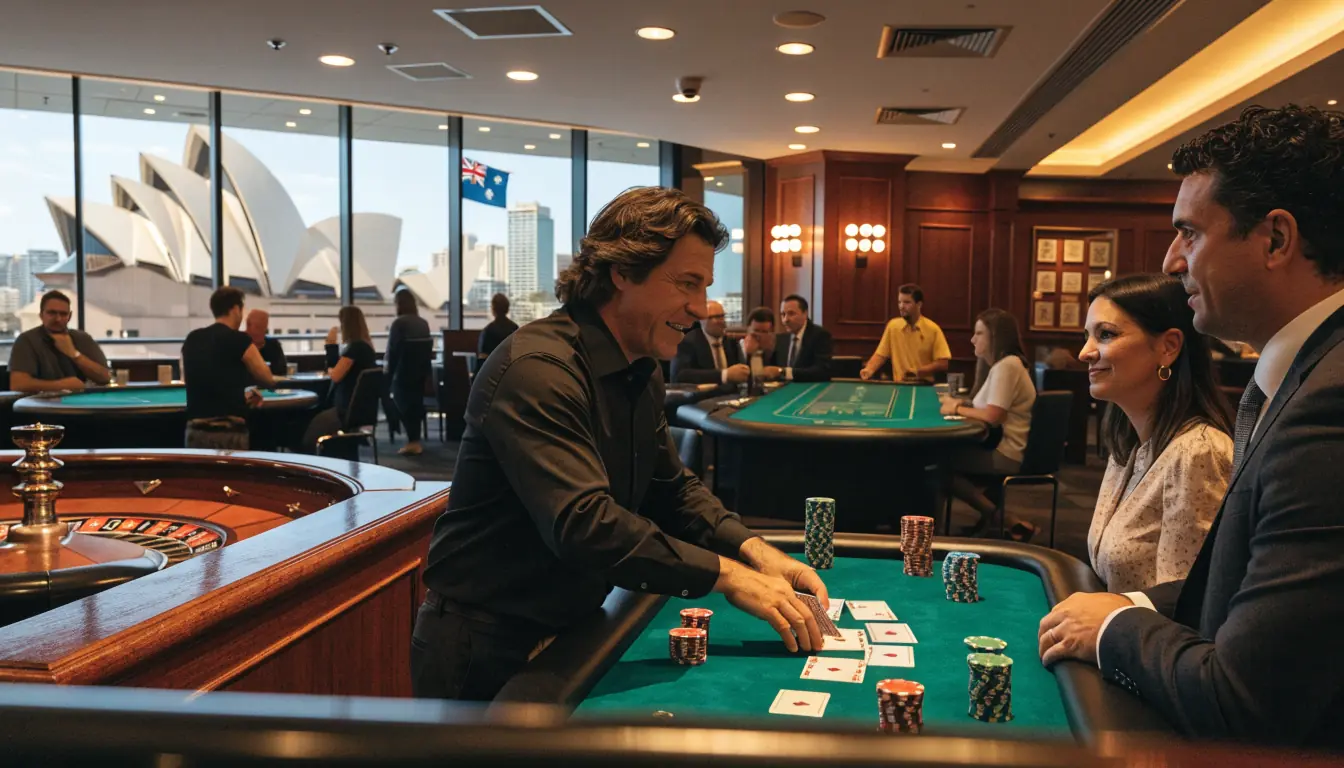
Yet, the law contains a deliberate structural loophole. It is not illegal for individual Australians to play at offshore-licensed online casinos. The IGA explicitly targets the operators and their facilitators, not the individual player. The penalty structure is designed to bankrupt or prosecute the company offering the game, not the person placing a Banker or Player bet. This creates an environment where accessing live baccarat casinos is practically legal for the user, but providing the service is a federal offence.
Operators like those mentioned above navigate this by maintaining no physical assets, servers, or staff within Australia. ACMA can block their web domains, which forces operators to cycle through mirror links, but ACMA cannot shut down a company registered in Curacao or Malta. The regulator is essentially playing a game of digital whack-a-mole. According to data from iclg.com, as of August 2025, ACMA has blocked 1,296 illegal gambling sites and affiliates since 2019, and 220 illegal services have voluntarily exited the Australian market. However, older data published in 2024 cited a different count, stating ACMA had blocked access to 975 illegal gambling and affiliate websites since November 2019. The discrepancy in these figures is not a sign of market growth; it is a reflection of different data collection methodologies and the continuous addition of new mirror domains to the block lists. Sources like theiaga.org have previously noted that over 100 illegal gambling services exited the market following ACMA’s new enforcement rules in 2017, while boomaff.com separately reported that over 220 illegal gambling services have ceased operations due to enforcement actions. The exact number fluctuates based on how "services" and "domains" are counted, but the trend is clear: the blocks are frequent and aggressive.
Access to offshore baccarat sites may be interrupted at any time as the ACMA regularly blocks domains, potentially cutting off gameplay and account access.
What This Means for Casino Baccarat Specifically
When discussing top baccarat casinos in the Australian context, one is inherently discussing offshore platforms. Because the IGA prohibits online casino style games, any platform offering casino baccarat is operating in defiance of Australian federal law. They cannot advertise legally within the country. The law prohibits advertising online casino services on any social media or online platforms, and ACMA has no power to require platforms like Facebook to block gambling advertisements targeting Australia, due to the specific wording of the law prohibiting advertising ‘in Australia’. This wording creates a jurisdictional blind spot that offshore operators exploit by using offshore ad networks and affiliates.
The appeal of baccarat casinos online for Australian players remains high, driven largely by the simplicity of the game and the speed of play. Yet, the absence of a domestic framework means that the infrastructure supporting these games is completely external. Game providers like Pragmatic Play, Microgaming, NetEnt, and Evolution Gaming supply the software and live dealer studios to offshore operators. None of these providers can legally stream live dealer baccarat from a studio located in Sydney or Melbourne to Australian residents. The data centres, the croupiers, and the operational headquarters are all located abroad.
The VGCCC regulates land-based casinos in Victoria, and similar bodies regulate venues in other states. If a player sits at a physical table in a Melbourne casino, they are protected by state law and state regulators. The moment that same player logs into an offshore site to play live casinos baccarat, they leave the protective umbrella of Australian law. The operator does not use the dispute resolution mechanisms mandated by Australian regulators. If a withdrawal is delayed or a bet is incorrectly settled, the player cannot escalate the matter to the NTRC, the VGCCC, or ACMA. ACMA cannot settle individual disputes with offshore operators.
This structural reality forces a different evaluation criteria when looking for the best baccarat casinos. Standard advice like "check for an Australian licence" is redundant, because no such licence exists. Instead, the focus shifts to the external regulators that do hold jurisdiction over the offshore operator. One looks for a licence from the Malta Gaming Authority or the UK Gambling Commission—bodies that enforce their own compliance standards, including anti-money-laundering protocols and dispute resolution frameworks.

The Regulatory Trap for Operators
The reason no legitimate Australian company operates online baccarat casinos is the severity of the IGA’s penalties. The law provides for substantial civil penalties, and ACMA has the explicit power to instigate civil proceedings against any operator caught offering prohibited interactive gambling services. Furthermore, the Australian Competition and Consumer Commission (ACCC) and border protection agencies can be notified of the directors and principals of offending offshore operators. If those individuals have any assets or business interests in Australia, they become vulnerable to federal enforcement.
This is why even operators that heavily market to Australians do so from entirely offshore structures. The companies that run baccarat casino sites for Australian players are typically registered in jurisdictions that do not extradite for civil gambling offences. They use payment processors that operate outside the Australian banking system, because the IGA also restricts the ability of financial institutions to process transactions for illegal gambling services. The friction is pushed entirely onto the operator and the payment provider, not the player.
The Landscape in 2026
As the regulatory environment moves toward 2026, the fundamental structure of the Interactive Gambling Act 2001 remains the dominant force. While digital payment methods evolve and the technology behind live dealer streaming improves, the legal status of casino baccarat is static. The ACMA will continue its blocking regime, expanding the list of prohibited sites. State regulators like the VGCCC and the NTRC will continue to focus their licensing efforts on wagering and land-based operations, leaving the online casino sector firmly in the hands of offshore entities.
For Australians, the baccarat market is defined by this stark dichotomy. The government prohibits the provision of the game, but does not penalise the individual for playing it. Operators provide the game from offshore, accepting the risk of having their domains blocked by Australian ISPs. Understanding this legal framework is the prerequisite to navigating the market. Any discussion of online baccarat casinos in this country begins with acknowledging that the domestic industry is legally non-existent, and the entire ecosystem operates in a grey zone of offshore provision and unpenalised domestic consumption.
There are no Australian‑licensed real‑money online casino operators; all baccarat platforms serving Australian players operate under offshore licences.
When someone searches for top baccarat casinos, they are effectively looking for the most reliable offshore operators who have managed to survive the ACMA blocks. The evaluation is not about who holds an Australian licence, but about who holds a credible international licence, which third-party providers supply their games, and how effectively they manage to bypass the federal infrastructure blocks. The domestic regulators provide the rules for the wagering market; the offshore operators provide the reality of the casino market. The two exist in parallel, separated entirely by the wording of the IGA and the geographic limits of ACMA’s enforcement power.
The reality of casinos baccarat online is that it is a test of regulatory boundaries. The Australian government controls the domestic financial and digital infrastructure, allowing ACMA to order ISPs to block illegal offshore gambling sites. However, the government cannot dictate the laws of foreign jurisdictions where these operators are based. Therefore, the availability of casino baccarat persists, sustained by a legal architecture that treats the player as a passive participant and the operator as an international fugitive.
To engage with live baccarat casinos in Australia is to step outside the domestic regulatory framework entirely. The platforms hosting these games, such as PlayAmo or Neo Spin Casino, operate under foreign licences. The game providers, such as Evolution Gaming or Pragmatic Play, stream their content from overseas studios. The financial transactions that fund the accounts and pay out the winnings pass through international payment gateways. Everything occurs offshore, simply because the domestic law provides no legal pathway for it to occur onshore. The regulatory landscape has ensured that the only viable baccarat casino sites for Australians are those that exist completely beyond the reach of the Commonwealth.

How Baccarat Works in Australian Online Casinos
To understand the position of any baccarat casino game within the Australian digital landscape, one must first look past the mechanics of the cards and examine the mechanics of the law. The operational reality is dictated by a split jurisdictional framework: physical venues operate under one set of rules, while digital wagering falls under another, entirely separate regime.
The federal legislation governing this divide is the Interactive Gambling Act 2001 (IGA). Under this framework, online casino style games—including baccarat casino games, poker, blackjack, and roulette—are explicitly prohibited from being provided to Australian residents. While land-based casinos in Australia are heavily regulated by state government regulators and law enforcement agencies, these state bodies have limited power over offshore digital operators. The federal ACMA regulates online gambling, creating a hard barrier between what a physical venue can offer on premises and what an operator can legally stream into a domestic residence.
The Mechanics of a Baccarat Casino Game
A standard baccarat game casino session revolves around comparing two hands: the "Player" and the "Banker." Each round, or coup, begins with two cards dealt to both sides. The objective is purely numerical; there are no playing decisions made after the cards leave the shoe. The hand with a total closest to nine wins.
Picture cards and tens carry a value of zero. Aces count as one. All other cards hold their face value. If a hand’s total reaches double digits, the first digit is dropped; a hand consisting of a seven and an eight totals fifteen, but the score drops to five.

The only active decision a punter makes is where to place their money before the coup begins. The wagering options are straightforward:
- Player: A bet that the Player hand will finish closer to nine.
- Banker: A bet that the Banker hand will finish closer to nine.
- Tie: A bet that both hands will finish with the exact same total.
The presence of a "house edge" is felt most acutely in the Tie wager. While the payout for a Tie appears highly lucrative on the felt, the underlying mathematics of the game ensure the venue retains a distinct advantage on this specific bet over the long run. The Banker bet carries a commission on winning wagers, a mechanism the house uses to maintain its edge, because the Banker hand mathematically wins more often than the Player hand over an extended sample.
The rest of the baccarat game rules are automated. A predetermined set of drawing tableaus dictates whether a third card is dealt to either side. Players do not influence the draw. If either the Player or the Banker totals eight or nine on the initial two cards, the coup ends immediately. If not, the fixed drawing rules determine the next step based entirely on the combined values.
The Prohibition Framework
The stark reality is that there are no domestically licensed real-money online casino operators available to Australian players. It is illegal to offer online casino gambling in Australia, and obtaining a licence to operate an online casino domestically is simply not a legal possibility. The legislation targets operators, not individual players, meaning the legal risk falls entirely on the entity providing the baccarat casino online game, not the person placing the bet.
Offering live or software‑based baccarat to Australian residents breaches the Interactive Gambling Act and can result in civil penalties for the operator.
When evaluating baccarat online casino games from a domestic legal perspective, the distinction between a random number game and a live-streamed table becomes irrelevant. The law does not discriminate based on the delivery mechanism. Online casino, poker, and in-play betting are prohibited federally under the Interactive Gambling Act 2001. The classification of an online casino game baccarat falls squarely within the definition of a prohibited interactive gambling service, regardless of whether a digital algorithm generates the outcome or a human croupier deals physical cards from a remote studio.
This prohibition exists alongside a legal framework for other forms of wagering. Online sports betting operates legally in Australia, provided the operator holds a valid state or territory licence. The regulatory architecture ensures that sportsbooks face rigorous oversight and contribute to local revenue pools. The IGA, however, drew a firm line at casino-style products. State and territory regulators, such as the Victorian Gambling and Casino Control Commission (VGCCC) and Liquor & Gaming NSW, monitor wagering service providers, but their jurisdiction is tethered to entities holding domestic licences.
When an operator decides to offer baccarat casino games to Australians from an offshore base, they do so entirely outside the domestic regulatory umbrella. The state regulators have no mechanism to enforce local standards on these operators. The federal regulator, the ACMA, addresses this gap through enforcement actions, ordering internet service providers to block access to the domains of these unauthorised services.
The Disparity Between Physical and Digital Access
The structural disparity between the physical and digital environments defines how a baccarat game casino operates in the Australian market. A domestic brick-and-mortar venue holds a state-issued licence, undergoes continuous physical compliance checks, and operates under the direct oversight of state law enforcement. The physical tables are audited, the cards are inspected, and the croupiers are licensed under domestic employment law.
Conversely, an offshore operator providing baccarat online casino games bypasses every layer of this physical oversight. The physical security of the shoe, the auditing of the studio, and the background checks of the staff are handled by a foreign jurisdiction, if they are handled at all. The domestic player accesses these games through a terminal, a stateless digital gateway that exists entirely outside the practical reach of the VGCCC or Liquor & Gaming NSW.
State and territory gambling regulators have limited power over offshore online casinos precisely because the servers, staff, and corporate entities reside in a foreign country. If a dispute arises over a hand in an online casino baccarat game, the domestic regulatory bodies cannot intervene, cannot demand the physical cards for inspection, and cannot compel the operator to alter the software parameters.
The legal landscape ensures that any digital platform offering casino games baccarat to an Australian IP address is doing so in contravention of the IGA. The ACMA maintains the power to request internet service providers to block these offending sites, a mechanism that disrupts the delivery of the stream rather than regulating the content of the game itself.
The fundamental mechanics of the baccarat game rules do not change depending on the jurisdiction; a total of nine beats a total of eight everywhere. What changes is the legal standing of the entity facilitating the wager. A domestic venue operates within a tightly controlled framework designed to enforce harm minimisation and generate state revenue. An offshore operator providing baccarat casino games falls outside this framework, rendering the game legally unsanctioned by the Commonwealth.

The enforcement mechanism targets accessibility, not the fundamental nature of the game. A prohibited interactive gambling service is defined by its classification as an online casino style game. Since the legislation explicitly lists games of this nature as prohibited, any digital offering of baccarat to Australian residents falls under this category. The absence of a domestic licensing pathway for online casinos means no operator can legally establish a baccarat platform within Australian borders, pushing the entire market offshore and placing it firmly in the ACMA’s crosshairs. The cards are the same; the legal exposure is not.
Live Baccarat: What Australian Players Can Expect
When an Australian resident opens a live baccarat online casino australia 2026 stream, they are accessing a service that operates entirely outside the domestic regulatory framework. The live dealer offering, beamed from studios located offshore, provides a real-time video feed of a croupier dealing physical cards on a real table. From a player’s perspective, the visual experience is nearly identical to walking into a land-based venue. However, the legal reality of how these streams reach an Australian screen is heavily dictated by the Interactive Gambling Act 2001 (IGA) and the enforcement actions of the Australian Communications and Media Authority (ACMA).
Live Betting Prohibited
Providing or participating in live‑dealer baccarat betting is expressly prohibited under the Interactive Gambling Act 2001.
The Legal Status of Live Betting
To understand the legal status of a casino live baccarat stream, one must look at how the IGA distinguishes between different types of interactive wagering. The legislation draws a firm line between placing a bet on an event that has already begun. Live, in-play online betting is illegal in Australia. The law specifically targets interactive gambling services that allow individuals to place wagers after a sporting event or race has started.
There is a narrow exception carved out for telephone betting. Australians can legally place an in-play bet by making a physical telephone call to a licensed bookmaker. The legislation views a voice call as a deliberate, non-automated action that provides a natural friction against impulsive gambling. A live baccarat stream, however, does not fit into this exception. The game itself constitutes a continuous, in-play event where each subsequent card drawn alters the state of the game. Because the entire premise of live dealer baccarat relies on placing wagers during an active, unfolding event, the service falls squarely under the definition of prohibited interactive gambling.

The IGA makes it illegal for operators to offer online casino style games to Australian residents. Unlike online sports betting, which can be legally provided under state or territory licences, there is no domestic licensing pathway for an online baccarat casino. The domestic law targets the providers of these services rather than the individuals placing the wagers. It is not illegal for an Australian to sit at an offshore baccarat table, but it is entirely illegal for any entity to facilitate that game within the Australian market.
ACMA Enforcement and Stream Blocking
Because no domestic licence exists for an online casino baccarat, the responsibility for keeping these services out of the Australian market falls to the federal regulator. The ACMA enforces the IGA by investigating and acting against prohibited interactive gambling services. Since November 2019, the ACMA has ordered internet service providers (ISPs) to block access to illegal offshore gambling sites.
For a live baccarat casino, this blocking action presents a direct operational threat. The ACMA does not target the video studios or the croupiers directly; their jurisdiction ends at the Australian border. Instead, they target the digital infrastructure that connects the Australian player to the offshore server. When the ACMA identifies a platform offering live dealer games to Australian residents, it issues a formal notice to Australian ISPs. The ISPs are then legally compelled to block DNS resolution for the offending domains, severing the connection between the player and the live stream.

According to reporting by iclg.com, as of August 2025, the ACMA has blocked 1,296 illegal gambling sites and affiliate marketing pages since 2019, and 220 illegal services have voluntarily exited the Australian market. The scale of this enforcement changes how an online baccarat casino operates. To maintain access to the Australian player base, platforms must constantly adapt. When a domain is blocked, the operator might migrate the live stream to a new URL. This creates a disjointed experience for the player, who might log in to find the casino live baccarat feed inaccessible, requiring them to locate a new access point or mirror domain.
The ACMA’s enforcement extends beyond the immediate gambling platforms. The regulator has the authority to issue letters to software developers, internet service providers, and other third parties believed to be ancillary to a contravention of the IGA. In cases where illegal gambling products are aggressively targeted at the Australian market, the ACMA has demonstrated it will serve warning notices and refer matters to the Australian Federal Police. The regulator can also notify border protection agencies regarding the directors and principals of offending offshore operators, effectively preventing them from entering the country.

This aggressive enforcement posture has reshaped the landscape. According to data from theiaga.org, more than 100 illegal gambling services, including online casinos, have exited the Australian market since the ACMA began enforcing new rules in 2017. While the law does not allow the ACMA to recover funds or settle individual disputes with offshore operators, the sheer volume of blocked domains forces a live baccarat online casino to operate in a state of permanent structural evasion. The streams continue to exist, but accessing them requires navigating a digital environment actively policed by federal authorities.
The Anatomy of an Offshore Live Baccarat Stream
When a player bypasses these ACMA blocks and accesses a baccarat casino online, the mechanics of the game differ significantly from standard random number games. In a computer-generated casino game, a localized server handles the mathematical outcome. In a live dealer environment, the physical action is centralised in a studio, often located in a jurisdiction with permissive online gambling laws.
A croupier physically manages the shoe, dealing cards onto a table equipped with optical recognition technology. This technology reads the suits and values of the cards as they are dealt, transmitting the data to the software interface. The software then resolves the bets placed by players viewing the stream. The live feed is typically broadcast with a delay to ensure that the data processing and betting interface remain synchronised with the physical reality of the table.
Live dealer streams rely on offshore studios and international servers; if the primary domain is blocked, the video feed and transaction path are disrupted for Australian users.
For an Australian player engaging with a baccarat casino online, this setup creates a dependency on a long chain of digital infrastructure. If the ACMA blocks the primary domain, players who have funds deposited on the platform lose access to both the live stream and their account dashboard. The game itself might be physically operating in a studio in Europe or the Caribbean, but the financial transaction and the video feed are routed through servers that the ACMA can effectively sever.
The Illusion of Domestic Protection
A common issue is the assumption that any platform accessible in Australia is subject to Australian consumer protection laws. Offshore platforms offering casino online baccarat operate under the licensing jurisdiction of their host country. If a player experiences a dispute over a wager or a disconnection during a live hand, the Australian regulator cannot intervene. The ACMA explicitly states that it cannot settle individual disputes with offshore operators. The consumer protection frameworks that govern licensed domestic wagering do not extend to prohibited offshore live dealer games.
When a live baccarat stream drops mid-game due to an ISP block, the offshore operator’s terms and conditions dictate how the unsettled bet is handled. The player has no avenue to escalate the complaint to the Victorian Gambling and Casino Control Commission (VGCCC) or Liquor & Gaming NSW, as state regulators have limited power over offshore entities violating federal law.
The reality of accessing an online baccarat casino from Australia is one of constant friction. The games exist, the croupiers are real, and the wagers are processed in real time. But the service is provided by operators who are actively violating the IGA, targeting by a regulator with broad blocking powers, and entirely disconnected from domestic dispute resolution mechanisms. The "live" nature of the game, which makes it so appealing to players seeking an authentic experience, is the exact legal characteristic that renders it prohibited under Australian federal law.
Playing Live Dealer Baccarat for Real Money
Wagering real money on a live dealer baccarat platform from Australia means navigating a specific set of constraints enforced by the federal regulator. The mechanics of funding an account, placing a wager on the baccarat table, and watching a croupier deal physical cards exist in a legally complex space. The Interactive Gambling Act 2001 prohibits the provision of online casino style games to residents, and the enforcement of this law directly impacts how players interact with live dealer services.
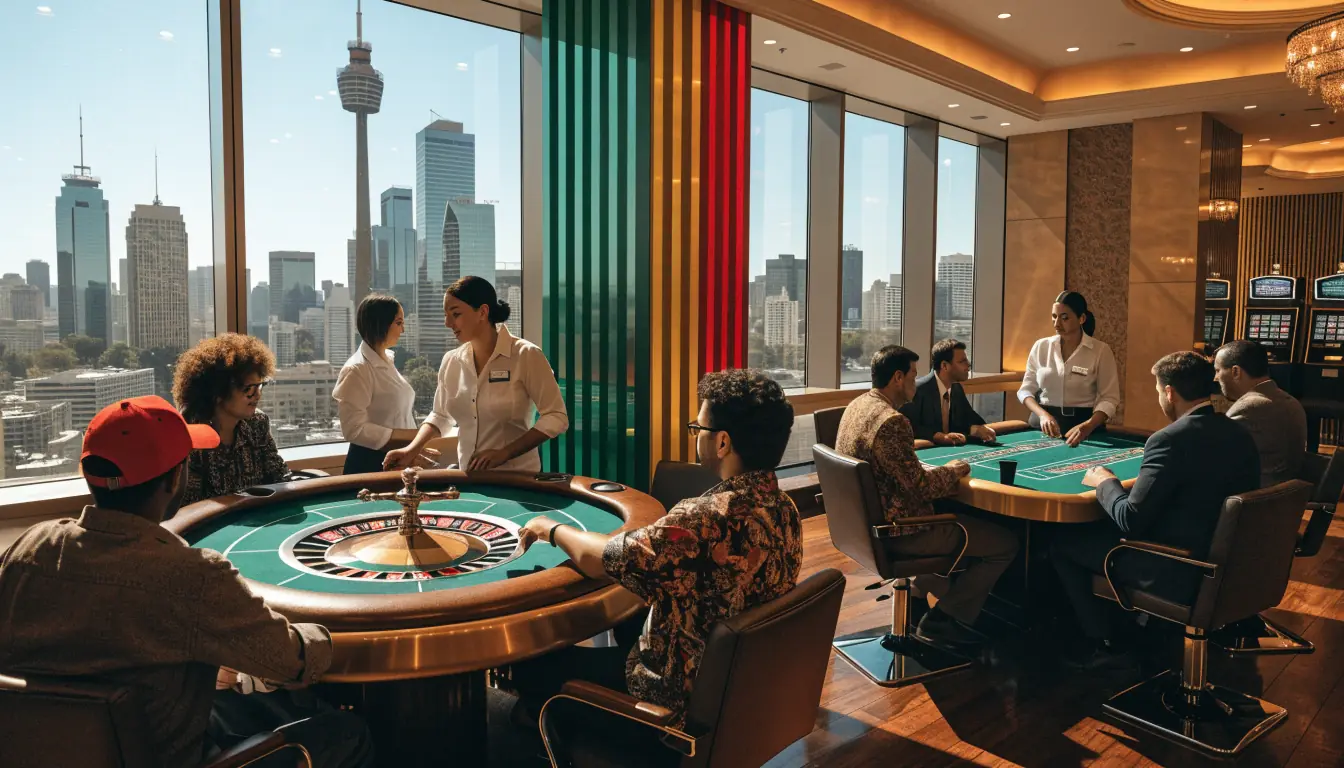
When a player decides to fund an account to play on a casino baccarat table, they are dealing with an offshore operator. There are no domestically licensed real-money online casino operators available to Australian players, and it is impossible to obtain a licence to run an online casino domestically. Consequently, any platform offering live dealer baccarat for real money to Australians does so without a local regulatory framework.
The Reality of ISP Blocking
The Australian Communications and Media Authority (ACMA) is the federal body tasked with enforcing the Interactive Gambling Act 2001. ACMA does not merely monitor the market; it actively disrupts access to services offering prohibited games. ACMA has the power to request the blocking of websites offering games not permitted under Australian law, specifically including online casinos and in-play online sports betting.
To enforce this, ACMA issues formal notices to Internet Service Providers (ISPs). When an ISP receives a notice, it is required to block access to the offending domain, meaning players attempting to reach a live dealer baccarat platform will find the URL inaccessible. Data on the scale of these blocking actions varies depending on the source and reporting period. Some publications tracking enforcement up to 2024 indicate that ACMA has blocked access to 975 illegal gambling and affiliate websites since November 2019. However, more recent data, such as an August 2025 update noted by iclg.com, states that ACMA has blocked 1,296 illegal sites and affiliates since 2019. The discrepancy in the raw numbers reflects different reporting cut-offs, but the regulatory trajectory is unambiguous: access to live dealer baccarat platforms is actively and increasingly obstructed at the network level.
ACMA’s Enforcement Boundaries
While ISP blocking is the primary mechanism used to sever access to a live baccarat table, ACMA’s powers extend beyond domestic internet infrastructure, though they have strict limits. ACMA has the authority to instigate civil proceedings and can notify border protection agencies regarding the directors or principals of offending offshore operators. It can also liaise with foreign regulators and issue letters to software developers and other third parties believed to be ancillary to a contravention of the IGA. Furthermore, ACMA has demonstrated it will serve warning notices and refer matters to the Australian Federal Police when illegal gambling products are offered.
ACMA cannot retrieve lost funds or resolve individual disputes with offshore operators; players bear the financial risk themselves.
However, these powers do not extend to recovering funds or settling individual disputes. If a player wagers real money on a baccarat table at an offshore live dealer casino and a withdrawal is delayed or denied, ACMA cannot intervene to retrieve the funds. The regulator can block the site and pursue the operators, but player funds remain entirely outside the protection of Australian law.
The enforcement framework also has blind spots. ACMA has no power to require platforms like Facebook to block gambling advertisements targeting Australia. This is due to the specific wording of the law, which prohibits advertising "in Australia." Because the targeting mechanisms and servers of these global social media platforms operate outside the strict jurisdictional boundaries defined by the legislation, regulators cannot compel them to censor promotional content for offshore live dealer baccarat services.
This creates a disjointed environment: a player might see a promotional advertisement for a live dealer baccarat platform on a social media site, register an account, and fund it. Yet, when they attempt to access the baccarat table to play, they may find the domain blocked by their ISP following an ACMA directive. The advertisement was legally permissible under the current legislative drafting, but the service it promoted was not. Operators know this; the advertising channels remain open, but the actual gambling services are systematically suppressed.
Key Criteria for Identifying the Best Baccarat Sites for Australians
Evaluating the "best" baccarat platforms requires looking past standard industry marketing. In the Australian market, the conventional criteria shift entirely due to federal legal constraints. Domestic licences for live dealer games and online random number games simply do not exist. Consequently, judging an operator’s legitimacy involves understanding their offshore status, their regulatory exposure in Australia, and how they manage structural prohibitions.
Regulatory Exposure and ACMA Enforcement
The primary measure of a platform’s operational security in Australia is its relationship with the Australian Communications and Media Authority (ACMA). Because offering prohibited interactive gambling services to Australians is illegal, the ACMA issues notices to Internet Service Providers to block offending sites. A venue’s resilience or vulnerability to these blocking actions dictates its long-term reliability.
However, regulatory enforcement carries strict limitations. The ACMA can investigate and block prohibited interactive gambling services, but it cannot recover funds or settle individual disputes with offshore operators. This structural limitation means that even if an operator is targeted and blocked by authorities, the regulator will not intervene to assist a player with trapped balances. The ACMA does hold the power to instigate civil proceedings, notify border protection agencies of directors or principals of offending offshore operators, and liaise with foreign regulators.
Licence Transparency and Jurisdictional Reality
Since domestic licensing for online casinos is unavailable, any operator serving the Australian market relies entirely on an offshore jurisdiction. Evaluating these venues requires acknowledging this reality. A transparent operator will display the specifics of its offshore licence prominently in the website footer.
The absence of an Australian regulatory safety net means that the foreign regulator’s standards are the only baseline. This leaves state and territory gambling regulators, such as the Liquor & Gaming NSW or the Victorian Gambling and Casino Control Commission, with extremely limited power over these offshore entities. Operators who obscure their licensing details or attempt to blur the lines between legally permitted domestic wagering and prohibited offshore casino gaming typically lack the transparency required for a secure playing environment.
Responsible-Gambling Infrastructure
Given the legislative focus of the Interactive Gambling Act 2001 on harm minimisation, the quality of an operator’s responsible-gambling infrastructure serves as a strong indicator of operational standards. Genuine compliance measures demonstrate an operator’s commitment to mitigating gambling-related harm, rather than merely paying lip service to regulatory expectations.
Trustworthy platforms provide robust tools that allow users to set strict bankroll and time limits directly within their account interfaces. Furthermore, they must require government-issued identity verification before processing any withdrawal to comply with anti-money-laundering obligations. An operator’s willingness to integrate these restrictions seamlessly, alongside clear links to domestic support services like BetStop, indicates a functional awareness of the legal landscape.
Practical Constraints over Promotional Claims
Identifying a reliable baccarat venue means filtering out promotional rhetoric and focusing on the legal mechanics that govern the platform. Searching for the best baccarat casino sites often leads players to lists of unlicensed or poorly regulated operators that actively ignore ACMA blocking orders. A serious evaluation instead demands verification of an operator’s official foreign licensing, an assessment of their responsible-gambling toolset, and an understanding of ACMA enforcement protocols.
Promises of immediate payouts and unrestricted access mean very little when a platform can be rendered unreachable locally at any moment through an ISP block.
The ACMA cannot settle disputes. Transparency is the only real metric here.
Australian regulators, including state gambling commissions, have no jurisdiction to intervene in disputes arising from offshore baccarat services.
Step‑by‑Step Guide to Playing Baccarat Online
When explaining how to play baccarat at the casino, the mechanics are straightforward, but the legal environment surrounding the game is anything but. I have watched the mechanics of this industry shift from the inside, and the practical steps for playing baccarat online differ significantly from what you might expect. Understanding the baccarat table layout is the easiest part; navigating the Australian regulatory constraints is where the actual challenge lies.
Understanding the Baccarat Table Layout and the Shoe
The standard baccarat table layout features three primary betting positions: Player, Banker, and Tie. In an online environment, the interface replicates this layout on a screen. To learn how to play baccarat, one must first understand that the game revolves around comparing two hands: the Player hand and the Banker hand.
Players do not control the cards in the traditional sense; they simply place a wager on which hand will win or if the result will be a draw. The cards are dealt from a shoe—a container holding multiple decks. The objective is to reach a hand value closest to nine. Face cards and tens count as zero, aces count as one, and all other cards hold their face value. Only the final digit of the total is counted. For instance, a seven and an eight add up to fifteen, making the hand value five.
Placing Bets in an Online Casino
To play casino baccarat online, an individual selects a chip denomination and places it on one of the three betting areas. In random number games, the software calculates the outcome immediately. In live dealer games, a croupier manages the shoe in real time via a video stream.
It is crucial to understand how to play baccarat casino rules interact with the house edge. The Banker bet carries a slight statistical advantage over the Player bet, which is why venues apply a commission to winning Banker wagers. The Tie bet typically offers a higher payout but carries a significantly higher house edge. The mathematics of the shoe dictate that the Banker hand will win more often over the long term, making it the standard choice for those learning how to play baccarat at the casino.
Settling Winnings and the Australian Legal Reality
When you play baccarat online casino games, settling winnings is instantaneous on the software side. If the Player or Banker bet wins, the payout is added to the account balance. In the case of a Tie, the wager is returned, and the Tie bet pays out. However, the practical constraints of accessing these games in Australia complicate the settlement process.
The Interactive Gambling Act 2001 (IGA) is the primary Commonwealth law governing online gambling in Australia, introduced to protect the public with a focus on harm minimisation. The legislation prohibits the provision of online casino games to Australian residents. It is not illegal for individual Australians to play at offshore-licensed venues, as the law targets operators, not players. However, the Australian Communications and Media Authority (ACMA) enforces the IGA actively.
When you attempt to play baccarat casino games from Australia, you will likely encounter ISP blocks. ACMA has the authority to issue notices to Internet Service Providers, compelling them to block offending offshore sites. This directly affects how residents access and settle winnings. If a site is blocked mid-session, players often must seek alternative, unblocked avenues to access their funds.
The enforcement powers do not stop at the network level. ACMA can issue letters to software developers and other third parties believed to be ancillary to a contravention of the IGA. Furthermore, ACMA has demonstrated it will serve warning notices and refer matters to the Australian Federal Police where illegal gambling products are offered in Australia.
This aggressive enforcement means that while the mechanics of how to play baccarat at the casino remain unchanged globally, the act of doing so online from Australia carries constant access risks. ACMA cannot recover funds or settle individual disputes with offshore operators.
The system is built to deter access, not to protect your bankroll.
Cryptocurrency Payments and Bonuses in Australian Baccarat
Operators catering to the Australian market often advertise cryptocurrency deposits as a frictionless workaround. The advertising works because the legal mechanics are rigid. Under the Interactive Gambling Act 2001 (IGA), the Commonwealth prohibits providing online casino games to residents. The law explicitly prevents operators from obtaining a domestic licence to offer a live baccarat online casino product. Targeting Australians with any online casino service is illegal, full stop.
When operators move offshore to avoid this, they use Bitcoin and Ethereum to bypass the banking friction that the IGA creates. But the regulatory framework extends past the operator to the payment rails themselves. The restrictions governing the market are explicit: platforms must not accept credit cards or digital currencies for deposits or betting.
Using cryptocurrency deposits does not exempt operators or players from the Interactive Gambling Act’s prohibition on online casino games.
An offshore operator offering a Bitcoin baccarat casino experience relies on the fact that state and territory regulators have limited power over foreign jurisdictions. The Australian Communications and Media Authority (ACMA) enforces the IGA federally, ordering internet service providers to block illegal offshore gambling sites. ACMA has demonstrated it will serve warning notices and refer matters to the Australian Federal Police when illegal gambling products are offered locally.
The Reality of Bonus Offers
Search for a baccarat online casino bonus and the results are dominated by offshore platforms. These offers are constructed to look like player advantages. In practice, any bonus attached to a live baccarat online casino comes with rollover requirements that the operator controls.
Australian law dictates that if a platform were operating legally under a state or territory licence—which is only possible for sports betting, not casino games—it would have to display wagering requirements clearly up front before offering any bonus. It would also be prohibited from paying commissions to affiliates for referring gambling customers. The offshore platforms offering a baccarat casino bonus operate outside this framework. They pay affiliates, set their own opaque terms, and dictate the conditions under which bonus funds can be withdrawn.
When an offshore venue promotes a matched deposit for a bitcoin casino live baccarat table, the mathematics of the clearing requirement are set entirely by the house. Official sources do not publish standardised clearing data for these offshore offers. The operator alone decides the terms.
Keeping Score Within the Rules
A baccarat scoreboard tracks the history of the croupier’s drawn hands. In a physical casino, players use it to spot trends. In an offshore live environment, where the stream is routed from a studio abroad, the digital scoreboard serves the same purpose.
Tracking historical outcomes does not change the mathematical reality. The IGA makes no exception for live dealer games. They fall under the same prohibited category as random number games and pokies. ACMA continues to request the blocking of sites offering these services. According to boomaff.com, over 220 illegal gambling services have ceased operations in Australia due to ACMA’s enforcement actions.
Operators that use Bitcoin to accept deposits ignore these boundaries. The law targets the operators, not the individual Australians playing at offshore venues, but it clearly defines the casino product as prohibited. Digital currency does not rewrite the IGA; it just obscures the trail.
Top Features Australian Players Look for in Baccarat Platforms
Before diving into live baccarat tables, it helps to know which platforms offer solid licensing, fair terms, and dependable payouts so your bankroll is in safe hands.
License: Curacao OGL/2024/1335/0780 · Bonus: up to A$1,000 + 150 free spins, wager-free · Min. deposit: EUR 20 Operates under a Curacao OGL license and stands out with a wager-free welcome package of up to A$1,000 plus 150 free spins, backed by a modest minimum deposit.
License: Curacao · Bonus: 100% up to A$500 + 200 free spins, 10x wagering · Payout speed: crypto 30-60 minutes, fiat 1-5 days · Min. deposit: A$10 Licensed in Curacao, this operator pairs a matched bonus with free spins on reasonable wagering terms, and offers notably fast crypto payouts alongside a low minimum deposit.
License: Curacao eGaming (Dama N.V.) · Bonus: up to A$10,000 + 180 free spins, 40x wagering Backed by a Curacao eGaming license under Dama N.V., it offers one of the larger bonus packages on this list with a substantial spins allowance, though wagering requirements are on the higher side.
License: Curacao · Bonus: up to A$10,000 multi-stage + 500 free spins · Min. deposit: A$20 (POLi) Licensed in Curacao, it features a generous multi-stage bonus with a large spins bundle and accepts POLi deposits starting from a low threshold.
Bonus: up to A$7,500 + 550 free spins across 10 deposits, 50x wagering · Payout speed: crypto under 1 hour, PayID 1-3 business days · Min. deposit: A$20 (A$30 to qualify for the bonus) Offers an extensive multi-deposit bonus structure with hundreds of free spins, and is notable for near-instant crypto withdrawals alongside PayID support for Australian players.
License: Curacao Gaming Control Board OGL/2023/176/0095 (Hollycorn N.V.) · Bonus: up to A$5,000 + 300 free spins across 4 deposits Holds a Curacao Gaming Control Board license via Hollycorn N.V. and offers a sizeable bonus spread across multiple deposits with a healthy spins allowance.
License: Curacao · Bonus: up to A$2,000 Licensed in Curacao, this operator keeps things straightforward with a solid welcome bonus, making it a reasonable pick for players who prefer simplicity.
Bonus: 100% up to A$750 + 200 free spins, 35x wagering · Payout speed: crypto 30-120 minutes, fiat 24-72 hours · Min. deposit: A$30 Combines a matched bonus with free spins on moderate wagering terms, and is notable for quick crypto payout turnaround alongside a low minimum deposit.
Bonus: up to A$750 + 50 jackpot spins, 35x wagering · Payout speed: crypto ~90 minutes, fiat 1-5 days · Min. deposit: A$30 Offers a jackpot-spins bonus with moderate wagering requirements and delivers fast crypto payout speeds along with a low minimum deposit.
License: Curacao Gaming Control Board · Bonus: up to A$5,000 + 400 free spins Licensed by the Curacao Gaming Control Board, it offers a generous bonus package combined with a large number of free spins.
When looking for a top baccarat casino site, Australians navigate a fractured regulatory landscape. There is no single overarching statute or overarching gambling authority regulating gambling in Australia; regulation occurs at both state and territory, and federal levels. Domestically, you cannot find a top baccarat casino. It is impossible to obtain a local licence to operate an online casino, so any accessible platform operates offshore.
Instead of domestic licensing, practical security relies on a site’s transparency regarding its offshore regulatory status. The Australian Communications and Media Authority (ACMA) is the federal regulator that enforces the Interactive Gambling Act 2001, actively ordering internet service providers to block illegal offshore gambling domains. A platform genuinely attempting to respect this legal framework does not target Australian residents with "light-hearted" or trivialising advertising regarding problem gambling.
In the context of a crypto casino baccarat offering, Australian players value clear responsible-gambling messaging. Robust platforms provide transparent self-exclusion tools and visible links to national support services, acknowledging the reality that their services are prohibited domestically. They do not mask their offshore status. Securing a venue for baccarat at casino platforms means verifying these harm-minimisation features are present and accessible, rather than trusting a decorative licence badge.
Clear boundaries matter.
Finding an Australian‑Friendly Online Casino Offering Baccarat
Any baccarat casino site operating today relies on an offshore licence. The law makes offering online casino games to Australian residents illegal, and there is no domestic regime to authorise them. So when an operator claims "Australian-friendly" status, that label is marketing shorthand for an offshore licence.
The Australian Communications and Media Authority enforces the federal Interactive Gambling Act 2001 and blocks illegal offshore gambling websites. Players can consult the ACMA register to identify which domains are blocked. Each Australian state and territory has its own separate gambling regulator; the Northern Territory Racing Commission, for example, licenses most national online bookmakers under a different framework for sports wagering.
However, because no domestic authority licences an online casino with live baccarat, checking a "local" register is not possible. Players cannot verify an operator’s local compliance; they can only verify its absence. ACMA cannot settle disputes or recover funds from offshore operators. Verification is strictly negative.
Official Baccarat Rules and House Edge
The core mechanics involve comparing two hands — the "Player" and the "Banker" — to see which achieves a total closest to nine. Card values are fixed: two through nine hold their face value, tens and face cards count as zero, and aces count as one. If a hand totals more than nine, only the second digit of the score is used.
The critical distinction from other table games is the mathematical structure of the house edge. Unlike a game of pure chance where the casino takes a flat percentage, baccarat rules dictate that the Banker bet wins slightly more often than the Player bet. To balance this, the rules impose a commission on Banker bet winnings.
Within Australia, land-based casinos are regulated by state government regulators and law enforcement agencies, separate from the federal ACMA regulation of online gambling. The Victorian Gambling and Casino Control Commission (VGCCC) monitors wagering service providers for compliance with the National Consumer Protection Framework, overseeing how these mathematical advantages are operated locally.
How can a player verify that an online casino holds a valid licence in Australia?
You can check the public registers of the state and territory regulators, but you will only find licences for wagering and lotteries there. Since the Interactive Gambling Act 2001 prohibits online casino gambling, no Australian regulator issues online casino licences, so any site claiming a domestic licence is not being truthful.
Where can I complain about an online casino in Australia?
Complaints about illegal online gambling services should go to the Australian Communications and Media Authority (ACMA), which enforces the Interactive Gambling Act 2001. However, ACMA cannot recover funds or settle individual disputes with offshore operators — it can only investigate and block prohibited services.
What is the step-by-step complaint process for Australian players?
Report the service to ACMA, which will investigate and, if the site is prohibited, issue formal blocking notices to internet service providers. ACMA may also instigate civil proceedings, refer matters to the Australian Federal Police, and notify border protection agencies about the operators’ directors — but it cannot recover your money from an offshore casino.